Loading...
Done
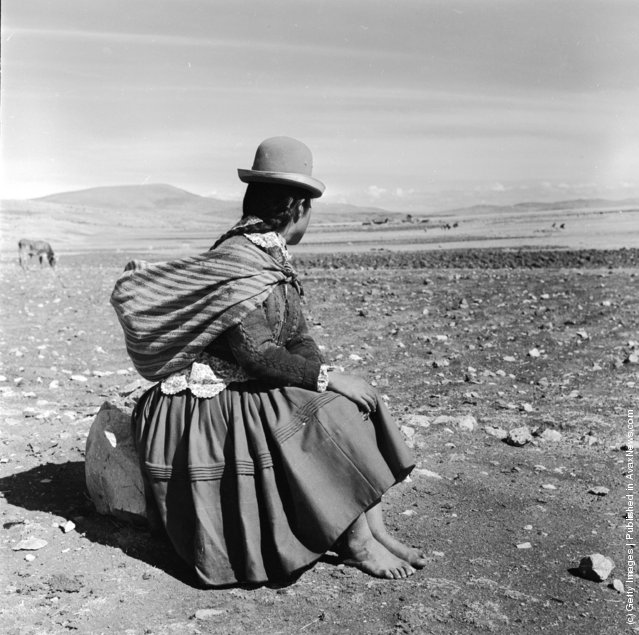
Burdened with a shawl full of her belongings, a woman stops for a rest on the road between Julaca and Puno in Peru, 1955

Burdened with a shawl full of her belongings, a woman stops for a rest on the road between Julaca and Puno in Peru. (Photo by Three Lions/Getty Images). Circa 1955
Details
09 Aug 2011 11:48:00
1936:  Lucie Clayton instructs pupils in the art of correct posture by balancing a glass and book on their heads at her finishing school

Lucie Clayton instructs pupils in the art of correct posture by balancing a glass and book on their heads at her finishing school in Old Cavendish Street, London. (Photo by William Vanderson/Fox Photos/Getty Images). 25th November 1936
Details
06 Sep 2011 12:06:00
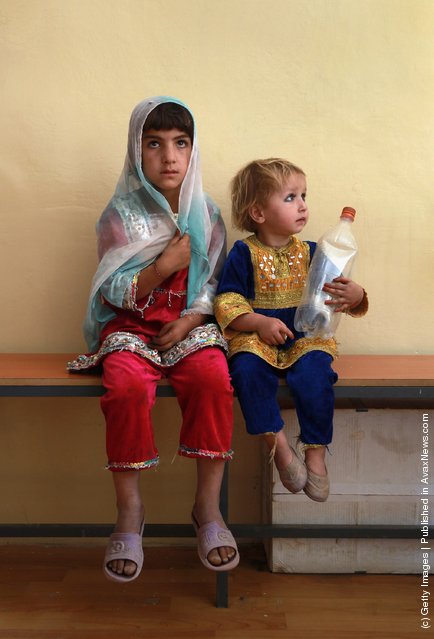
Afghan children wait as their mothers receive treatment at a USAID-funded health center

Afghan children wait as their mothers receive treatment at a USAID-funded health center on September 7, 2011 in Farza, Afghanistan. Almost 10 years after the 9/11 attacks and the U.S. invasion of Afghanistan, the U.S. government funds some of 500 Afghan health facilities nationwide, most run by non-governmental organizations contracted by the Afghan Ministry of Public Health. (Photo by John Moore/Getty Images)
Details
09 Sep 2011 09:54:00
Auxiliary Territorial Service (ATS) plotters at work at Coastal Artillery Headquarters in Dover, December 1942. (Photo by Ted Dearberg/IWM/PA Wire)

Auxiliary Territorial Service (ATS) plotters at work at Coastal Artillery Headquarters in Dover, December 1942. The Auxiliary Territorial Service was the women's branch of the British Army during the Second World War. It was formed on 9 September 1938, initially as a women's voluntary service, and existed until 1 February 1949, when it was merged into the Women's Royal Army Corps. The ATS had its roots in the Women's Auxiliary Army Corps (WAAC), which was formed in 1917 as a voluntary service. During the First World War its members served in a number of jobs including clerks, cooks, telephonists and waitresses. The WAAC was disbanded after four years in 1921. (Photo by Ted Dearberg/IWM/PA Wire)
Details
13 Jul 2017 07:52:00
Participants prepare kimchi, a traditional Korean dish of spicy fermented cabbage and radish, during a kimchi making festival at the Jogyesa Buddhist temple in Seoul on December 2, 2021, before it is distributed among the less privileged from the local neighbourhood. (Photo by Anthony Wallace/AFP Photo)

Participants prepare kimchi, a traditional Korean dish of spicy fermented cabbage and radish, during a kimchi making festival at the Jogyesa Buddhist temple in Seoul on December 2, 2021, before it is distributed among the less privileged from the local neighbourhood. (Photo by Anthony Wallace/AFP Photo)
Details
24 Dec 2021 07:50:00
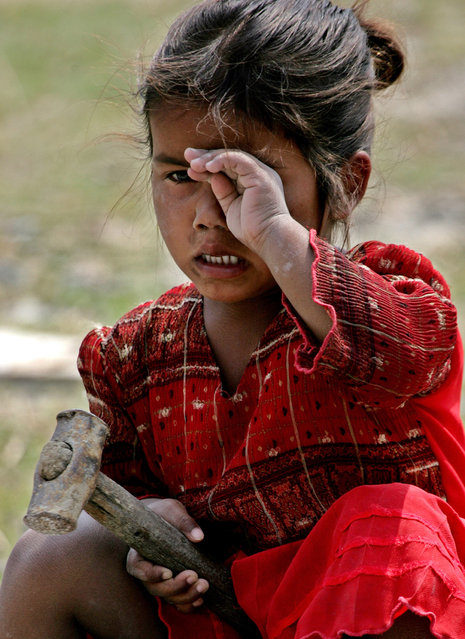
5-year-old Rina Kumari rubs her eye while cracking stones on the banks of Mahananda river in Siliguri, northeast India, March 5, 2005. Over 400 million people in India live below the internationally agreed poverty line (living on less than US $1 per day). According to estimates, several hundred thousand children work as labourers and beg on the streets in India. Photo taken on March 5, 2005. (Photo by Desmond Boylan/Reuters)

5-year-old Rina Kumari rubs her eye while cracking stones on the banks of Mahananda river in Siliguri, northeast India, March 5, 2005. Over 400 million people in India live below the internationally agreed poverty line (living on less than US $1 per day). According to estimates, several hundred thousand children work as labourers and beg on the streets in India. (Photo by Desmond Boylan/Reuters)
Details
13 Jun 2014 12:07:00
Peruvian surfer Domingo Pianezzi rides a wave with his alpaca Pisco at San Bartolo beach in Lima March 16, 2010. Pianezzi has spent a decade training dogs to ride the nose of his board when he catches waves, and now he is the first to do so with an alpaca. (Photo by Pilar Olivares/Reuters)

Peruvian surfer Domingo Pianezzi rides a wave with his alpaca Pisco at San Bartolo beach in Lima March 16, 2010. Pianezzi has spent a decade training dogs to ride the nose of his board when he catches waves, and now he is the first to do so with an alpaca. (Photo by Pilar Olivares/Reuters)
Details
02 Sep 2013 12:49:00
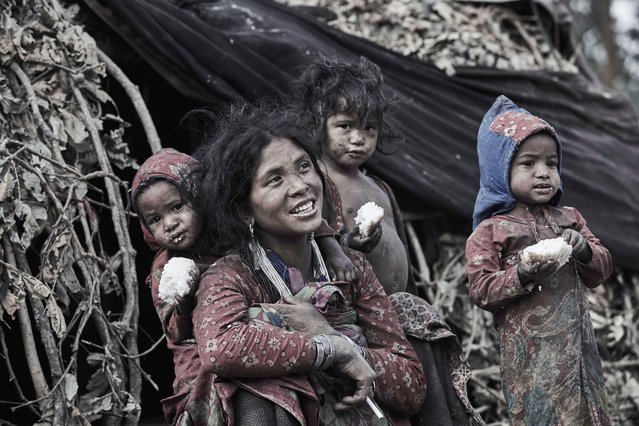
Only 156 people remained in the tribe when Jan visited in Accham District, Nepal, January 2016. (Photo by Jan Moller Hansen/Barcroft Images)

Only 156 people remained in the tribe when Jan visited in Accham District, Nepal, January 2016. Hidden deep in the Himalayan forest is one of the world’s last enduring nomadic tribes who are resisting attempts to move them into permanent settlements. (Photo by Jan Moller Hansen/Barcroft Images)
Details
14 Jan 2017 12:35:00