Loading...
Done
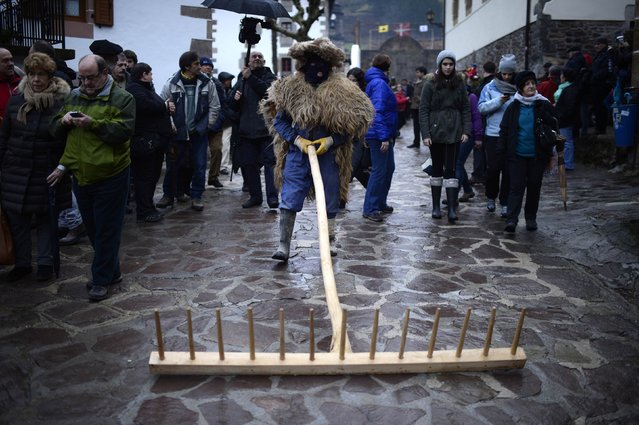
A man walks with a giant rake during carnival celebrations in Zubieta January 27, 2015. Bell carrying dancers known as Joaldunak from Zubieta and neighbouring Ituren visit each other's villages performing a ritual dance to ward off evil spirits and awaken the coming spring. Alongside the dancers, villagers dress in bizarre and frightening costumes to harass and scare visitors. (Photo by Vincent West/Reuters)

A man walks with a giant rake during carnival celebrations in Zubieta January 27, 2015. Bell carrying dancers known as Joaldunak from Zubieta and neighbouring Ituren visit each other's villages performing a ritual dance to ward off evil spirits and awaken the coming spring. Alongside the dancers, villagers dress in bizarre and frightening costumes to harass and scare visitors. (Photo by Vincent West/Reuters)
Details
28 Jan 2015 11:46:00
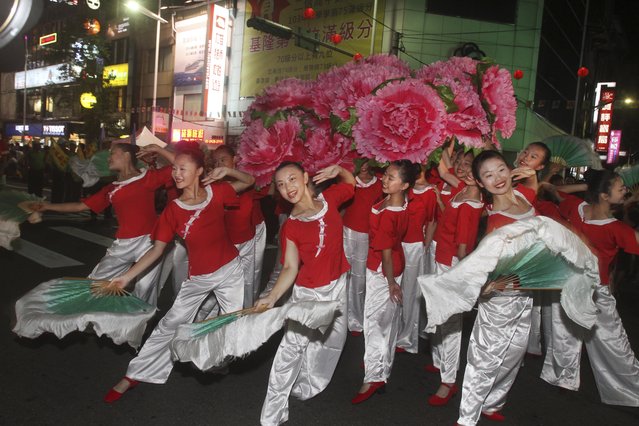
In this photo made late Saturday, August 9, 2014, in Keelung, Taiwan, a traditional Chinese dance troupe performs during a parade marking the beginning of the Chinese folklore's mid-summer's Ghost Month Festival. (Photo by Chiang Ying-ying/AP Photo)

In this photo made late Saturday, August 9, 2014, in Keelung, Taiwan, a traditional Chinese dance troupe performs during a parade marking the beginning of the Chinese folklore's mid-summer's Ghost Month Festival. Fourteen days into the seventh month of the lunar calendar, August 9, in 2014, marks the traditional Chinese Ghost Month where the gates of the underworld are opened and spirits of the deceased are set free to roam the world of the living. The month long festivities are aimed to please the roaming spirits. (Photo by Chiang Ying-ying/AP Photo)
Details
12 Aug 2014 11:57:00
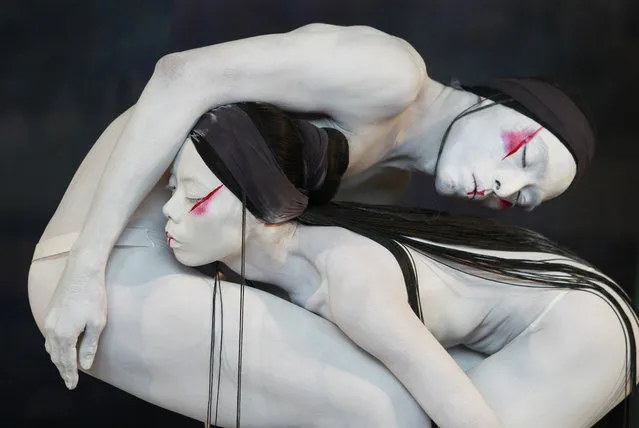
Dancers from the “Legend Lin Dance Theatre” perform the artistic director and choreographer Li-chen Lin's classic works “Hymne aux Fleurs qui Passent, Anthem to the Fading Flowers” during a rehearsal at the National Theater Concert Hall in Taipei, Taiwan, Tuesday, August 18, 2015. “Hymne aux Fleurs Qui Passent” pays tribute to the cycle of the year and the complementary principles of Yin and Yang whose eternal struggle provides the driving force behind the changing of the seasons. (Photo by Chiang Ying-ying/AP Photo)

Dancers from the “Legend Lin Dance Theatre” perform the artistic director and choreographer Li-chen Lin's classic works “Hymne aux Fleurs qui Passent, Anthem to the Fading Flowers” during a rehearsal at the National Theater Concert Hall in Taipei, Taiwan, Tuesday, August 18, 2015. “Hymne aux Fleurs Qui Passent” pays tribute to the cycle of the year and the complementary principles of Yin and Yang whose eternal struggle provides the driving force behind the changing of the seasons. (Photo by Chiang Ying-ying/AP Photo)
Details
19 Aug 2015 12:59:00
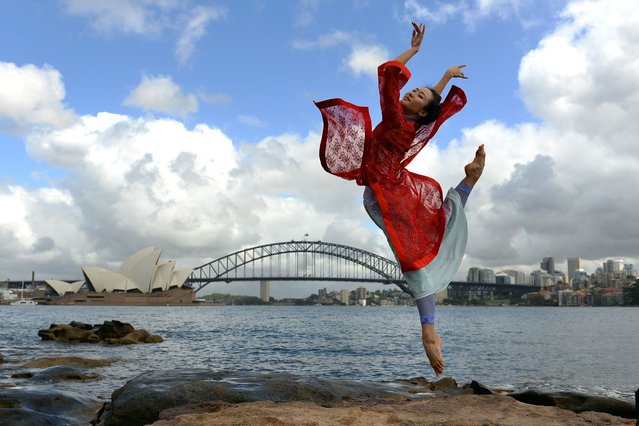
Performer Zhang Yashu from a Chinese ballet company perform during a photo shoot in front of the Australia's iconic landmarks Opera House (L) and Habour Bridge in Sydney on February 17, 2014. One of China's celebrated dance campanies is bringing one of the country's biggest ballet production to Australia for a series of performances in Sydney and Melbourne. (Photo by Saeed Khan/AFP Photo)

Performer Zhang Yashu from a Chinese ballet company perform during a photo shoot in front of the Australia's iconic landmarks Opera House (L) and Habour Bridge in Sydney on February 17, 2014. One of China's celebrated dance campanies is bringing one of the country's biggest ballet production to Australia for a series of performances in Sydney and Melbourne. (Photo by Saeed Khan/AFP Photo)
Details
22 Feb 2014 13:27:00
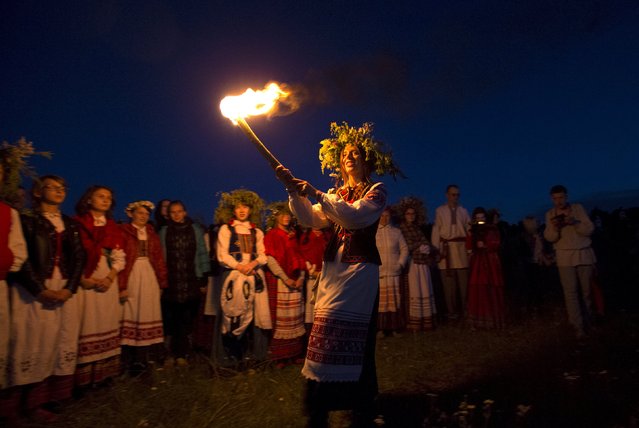
Belarusian people take part in the Ivan Kupala festival near the town of Rakov, west of Minsk June 27, 2015. The ancient tradition, originating from pagan times, is usually marked with grand overnight festivities. On Kupala night, people sing and dance around campfires, believing it will purge them of their sins and make them healthier. (Photo by Vasily Fedosenko/Reuters)

Belarusian people take part in the Ivan Kupala festival near the town of Rakov, west of Minsk June 27, 2015. The ancient tradition, originating from pagan times, is usually marked with grand overnight festivities. On Kupala night, people sing and dance around campfires, believing it will purge them of their sins and make them healthier. (Photo by Vasily Fedosenko/Reuters)
Details
29 Jun 2015 12:35:00
In this February 19, 2017 photo, a couple dances during the “If you don't give me....then you lend me” Carnival street party on Ipanema beach, in Rio de Janeiro, Brazil. The typical view of Carnival in Brazil is anything goes, with no headdress too big, no outfit too small, no song too ribald, but this year some organizers of the world's best known party are drawing the line at lyrics that are sexist, homophobic or racist. (Photo by Silvia Izquierdo/AP Photo)

In this February 19, 2017 photo, a couple dances during the “If you don't give me....then you lend me” Carnival street party on Ipanema beach, in Rio de Janeiro, Brazil. The typical view of Carnival in Brazil is anything goes, with no headdress too big, no outfit too small, no song too ribald, but this year some organizers of the world's best known party are drawing the line at lyrics that are sexist, homophobic or racist. (Photo by Silvia Izquierdo/AP Photo)
Details
24 Feb 2017 00:06:00
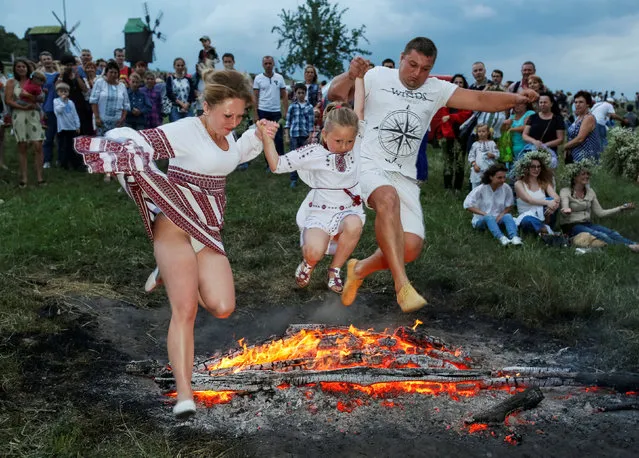
People jump over a campfire during a celebration on the traditional Ivana Kupala (Ivan the Bather) holiday, the ancient tradition, originating from pagan times, is usually marked with grand overnight festivities during which people sing and dance around campfires, believing it will purge them of their sins and make them healthier, in Kiev, Ukraine, July 6, 2016. (Photo by Gleb Garanich/Reuters)

People jump over a campfire during a celebration on the traditional Ivana Kupala (Ivan the Bather) holiday, the ancient tradition, originating from pagan times, is usually marked with grand overnight festivities during which people sing and dance around campfires, believing it will purge them of their sins and make them healthier, in Kiev, Ukraine, July 6, 2016. (Photo by Gleb Garanich/Reuters)
Details
07 Jul 2016 11:33:00
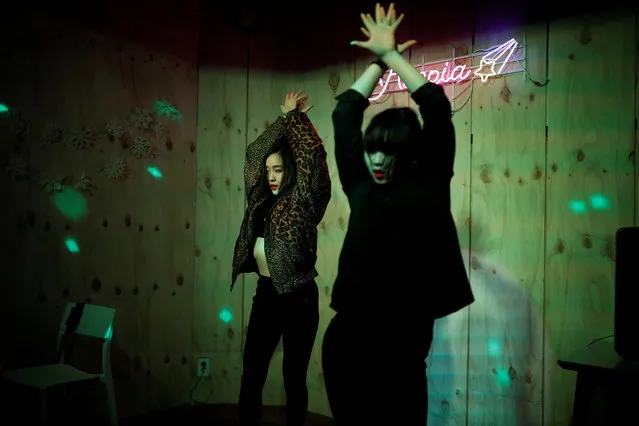
Japanese Yuuka Hasumi, 17, and Ibuki Ito, 17, also from Japan, who want to become K-pop stars, perform at an Acopia School party in Seoul, South Korea, March 16, 2019. Acopia is a prep school offering young Japanese a shot at K-pop stardom, teaching them the dance moves, the songs and also the language. (Photo by Kim Hong-Ji/Reuters)

Japanese Yuuka Hasumi, 17, and Ibuki Ito, 17, also from Japan, who want to become K-pop stars, perform at an Acopia School party in Seoul, South Korea, March 16, 2019. Acopia is a prep school offering young Japanese a shot at K-pop stardom, teaching them the dance moves, the songs and also the language. (Photo by Kim Hong-Ji/Reuters)
Details
06 Jun 2019 00:01:00