Loading...
Done
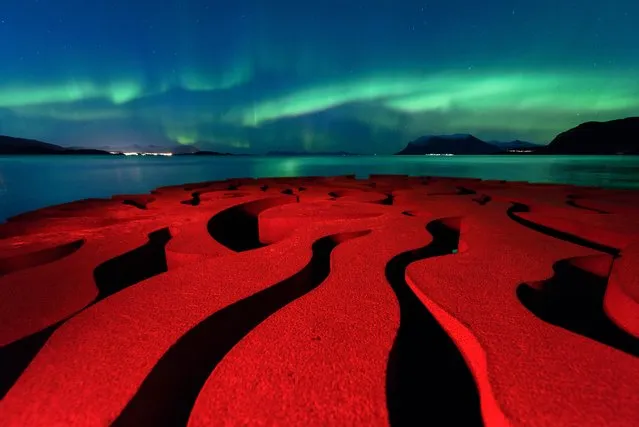
“Seven Magic Points”. The rusty red swirls of the circular, iron sculpture Seven Magic Points in Brattebergan, Norway mirror the rippling aurora above. (Photo by Rune Engebø/Royal Observatory Greenwich’s Astronomy Photographer of the Year 2016/National Maritime Museum)

Gorgeous galaxies and stunning stars make up this selection of pictures from the shortlisted entries for this year’s Insight Astronomy Photographer of the Year award. The winners will be announced on 15 September, and an exhibition of the winning images will be will be displayed in a free exhibition at the Royal Observatory Greenwich’s Astronomy Centre from 17 September. Here: “Seven Magic Points”. The rusty red swirls of the circular, iron sculpture Seven Magic Points in Brattebergan, Norway mirror the rippling aurora above. (Photo by Rune Engebø/Royal Observatory Greenwich’s Astronomy Photographer of the Year 2016/National Maritime Museum)
Details
28 Jul 2016 13:51:00
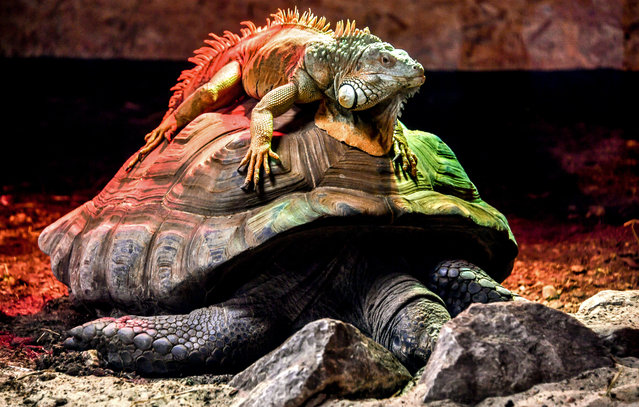
A green iguana, or American iguana sits on an Aldabra giant tortoise, the largest tortoise of the world, in their enclosure at the zoo park of Lille, northern France, on February 11, 2019. (Photo by Philippe Huguen/AFP Photo)

A green iguana, or American iguana sits on an Aldabra giant tortoise, the largest tortoise of the world, in their enclosure at the zoo park of Lille, northern France, on February 11, 2019. (Photo by Philippe Huguen/AFP Photo)

Details
17 Feb 2019 00:03:00
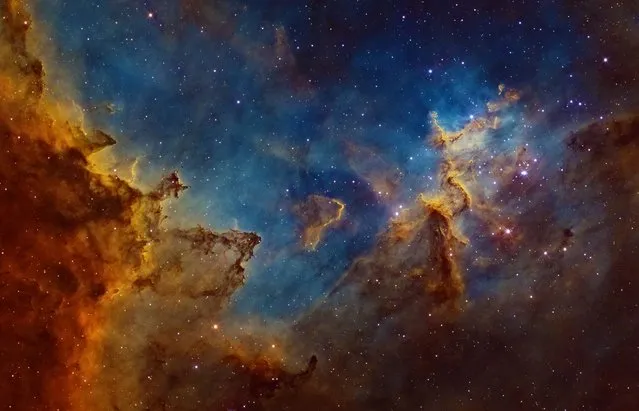
Centre of the Heart Nebula by Ivan Eder (Hungary). Situated 7500 light years away in the ‘W’-shaped constellation of Cassiopeia, the Heart Nebula is a vast region of glowing gas, energized by a cluster of young stars at its centre. The image depicts the central region, where dust clouds are being eroded and moulded into rugged shapes by the searing cosmic radiation. (Photo by Ivan Eder)

The competition, which is run by the Royal Observatory Greenwich in association with BBC Sky at Night Magazine, is now in its sixth year and has received over 2,500 entries. Photo: Centre of the Heart Nebula by Ivan Eder (Hungary). Situated 7500 light years away in the “W”-shaped constellation of Cassiopeia, the Heart Nebula is a vast region of glowing gas, energized by a cluster of young stars at its centre. The image depicts the central region, where dust clouds are being eroded and moulded into rugged shapes by the searing cosmic radiation. (Photo by Ivan Eder)
Details
03 Jul 2014 11:59:00
A Police officer reacts to protestors outside the Piet Retief Magistrates court where the five accused in the shooting of the Coka brothers on the Pampoenkraal farm appeared, Mhkondo, Mpumalanga, South Africa on April 19, 2021. (Photo by Jacques Nelles)

A Police officer reacts to protestors outside the Piet Retief Magistrates court where the five accused in the shooting of the Coka brothers on the Pampoenkraal farm appeared, Mhkondo, Mpumalanga, South Africa on April 19, 2021. (Photo by Jacques Nelles)
Details
28 Apr 2021 08:59:00
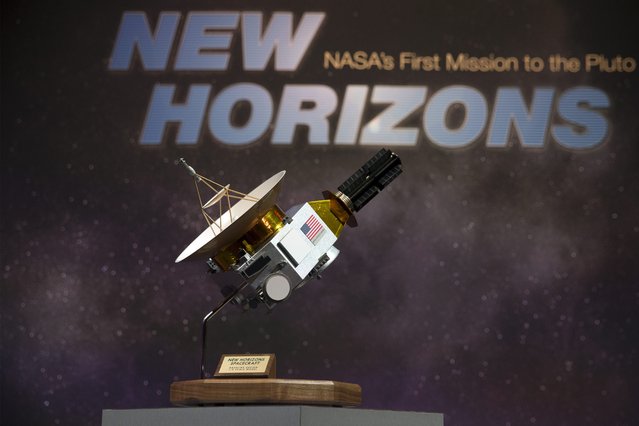
A model of the New Horizons spacecraft is seen at a live television program on NASA television celebrating the spacecraft's closest proximity to Pluto, at Johns Hopkins University Applied Physics Laboratory, site of the mission operations center, in Laurel, Maryland, USA, 14 July 2015. (Photo by Michael Reynolds/EPA)

A model of the New Horizons spacecraft is seen at a live television program on NASA television celebrating the spacecraft's closest proximity to Pluto, at Johns Hopkins University Applied Physics Laboratory, site of the mission operations center, in Laurel, Maryland, USA, 14 July 2015. At approximately 7:49 am ET (11:49 am GMT), 14 July, New Horizons was scheduled to be as close to Pluto as the spacecraft will get; about 7,800 miles (12,500 kilometers) above the surface, following a journey of more than nine years and three billion miles. This is the first mission to the Pluto System and the Kuiper Belt. (Photo by Michael Reynolds/EPA)
Details
15 Jul 2015 10:08:00
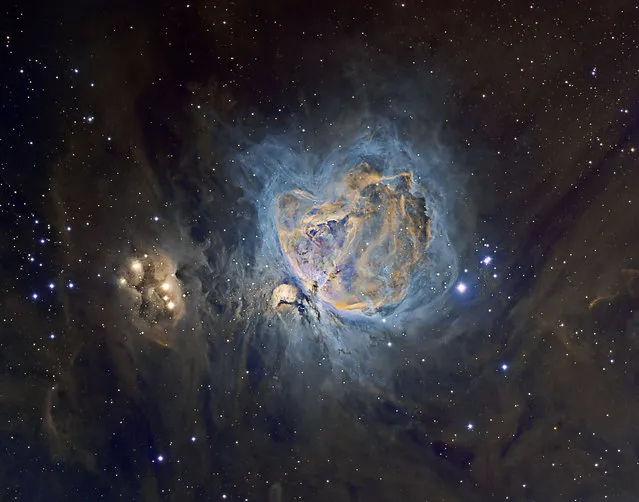
M42 Subtle V1 cropped. One of the most well-known astronomical objects in our universe is the Orion Nebula and this image depicts the wider region of the Orion Molecular Cloud Complex that is its home. This complex also includes another popular target for astrophotographers, the Horsehead Nebula, as well as Barnard’s Loop and the Running Man Nebula, which can be seen to the left of this photograph. (Photo by Patrick Gilliland)

M42 Subtle V1 cropped. One of the most well-known astronomical objects in our universe is the Orion Nebula and this image depicts the wider region of the Orion Molecular Cloud Complex that is its home. This complex also includes another popular target for astrophotographers, the Horsehead Nebula, as well as Barnard’s Loop and the Running Man Nebula, which can be seen to the left of this photograph. (Photo by Patrick Gilliland)
Details
17 Nov 2015 08:05:00
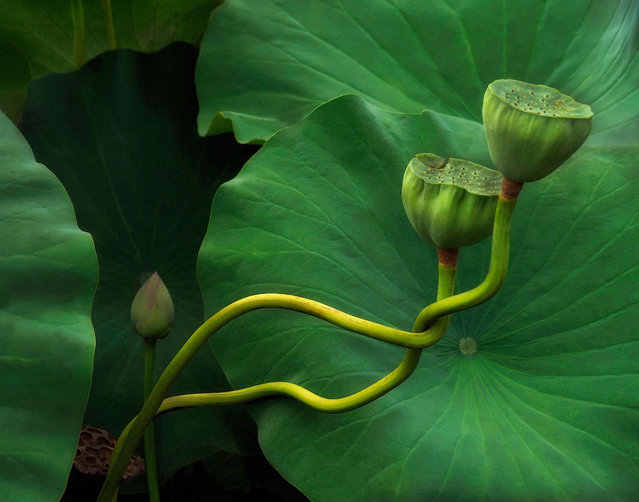
First place, The Beauty of Plants. “There are many stages of lotus growth on display at the Aquatic Gardens, but to come across twotwisted dancing stems of nelumbo nucifera was unexpected and quite magical”. (Photo by Kathleen Furey/The Guardian)

First place, The Beauty of Plants. “There are many stages of lotus growth on display at the Aquatic Gardens, but to come across twotwisted dancing stems of nelumbo nucifera was unexpected and quite magical”. (Photo by Kathleen Furey/The Guardian)
Details
13 Mar 2019 00:03:00
A child playfully jumps into the water accumulated at a flooded area next to a house after rising water levels in the rivers caused flooding at Jhusi area of Allahabad on August 6, 2021. (Photo by Sanjay Kanojia/AFP Photo)

A child playfully jumps into the water accumulated at a flooded area next to a house after rising water levels in the rivers caused flooding at Jhusi area of Allahabad on August 6, 2021. (Photo by Sanjay Kanojia/AFP Photo)
Details
19 Aug 2021 09:32:00