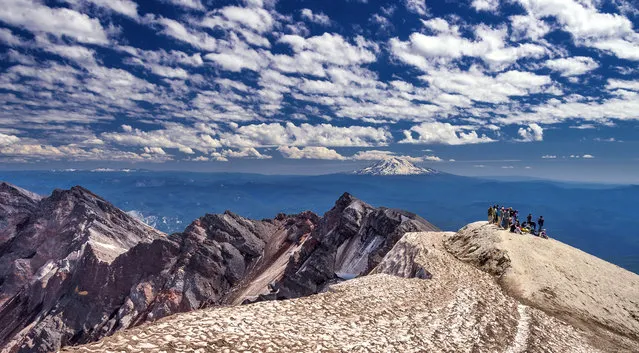
A group of hikers atop Mount St. Helens on July 21, 2016. Mount St. Helens or Louwala-Clough is an active stratovolcano located in Skamania County, Washington, in the Pacific Northwest region of the United States. It is 96 miles south of Seattle, Washington, and 50 miles northeast of Portland, Oregon. (Photo by Raxit Kagalwala)
BAZ-69092-012 special wheeled chassis. Exhibition of military vehicles at Bronnitsy test range (a town in Moscow Oblast, Russia, located 54.5 kilometers (33.9 mi) southeast of central Moscow). Juny 10, 2011. (Photo by Vitaly Kuzmin)
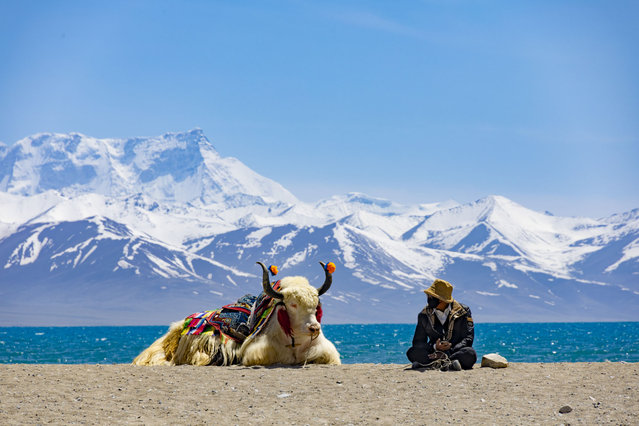
A white yak sits on the lakeside of Namtso on May 19, 2024 in Lhasa, Xizang Autonomous Region of China. As temperature rises and ice melts, Lake Namtso is entering its tourism season. An event celebrating the melting of frozen water of Lake Namtso is held on May 19. (Photo by Jin Wei/VCG via Getty Images)
Zeebra Lisa Thrower, New Zealand is modelled in the Bizarre Bra Section during the 2023 World of WearableArt Awards Night at TSB Bank Arena on September 22, 2023 in Wellington, New Zealand. (Photo by Hagen Hopkins/Getty Images for World of WearableArt)
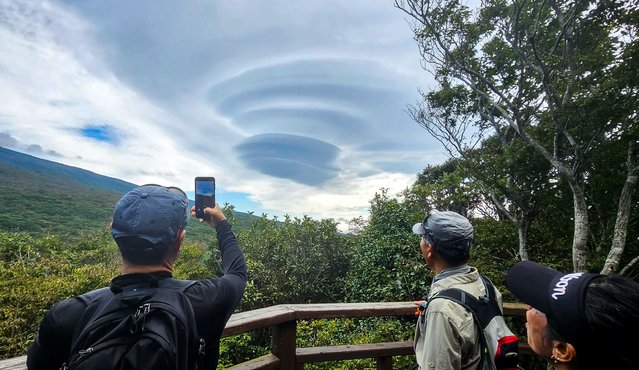
On the morning of the October 4, 2025, the second day of the Chuseok holiday, a lenticular cloud resembling an unidentified flying object (UFO) appeared in the northeastern sky as seen from the Healing Forest in Hogun-dong, Seogwipo-si, Jeju-do, creating a spectacular sight. (Photo by Newsis)
Vendors sell clothes on the roadside at a second-hand street side clothing market in Mumbai January 28, 2015. The market is open daily for three hours and hundreds of vendors gather to barter or sell used clothing. (Photo by Danish Siddiqui/Reuters)
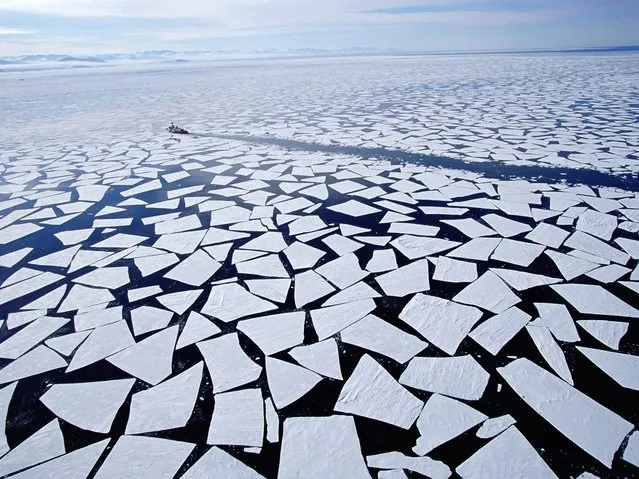
McMurdo Station is a U.S. Antarctic research centre located on the southern tip of Ross Island, which is in the New Zealand-claimed Ross Dependency on the shore of McMurdo Sound in Antarctica. It is operated by the United States through the United States Antarctic Program, a branch of the National Science Foundation. The station is the largest community in Antarctica, capable of supporting up to 1,258 residents, and serves as the United States Antarctic science facility. All personnel and cargo going to or coming from Amundsen–Scott South Pole Station first pass through McMurdo.