Loading...
Done
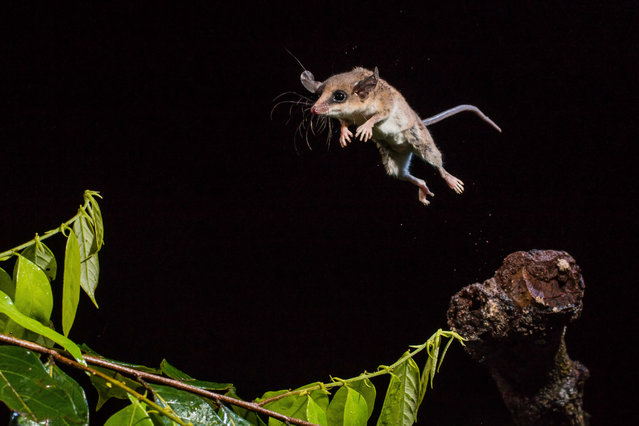
Tropical acrobatics by Adrià López Baucells in Manaus, Brazil. An unidentified South American marsupial, although the characteristic black markings on its face indicate it may be a mouse opossum. These small creatures are nocturnal and feed on bugs, fruit and bird eggs. (Photo by Adrià López Baucells/2019 Royal Society of Biology Photography Competition)

Tropical acrobatics by Adrià López Baucells in Manaus, Brazil. An unidentified South American marsupial, although the characteristic black markings on its face indicate it may be a mouse opossum. These small creatures are nocturnal and feed on bugs, fruit and bird eggs. (Photo by Adrià López Baucells/2019 Royal Society of Biology Photography Competition)
Details
10 Oct 2019 00:03:00
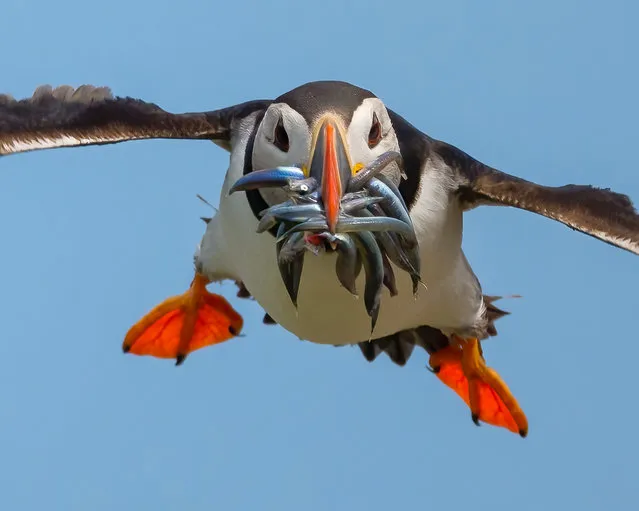
British puffin mid-flight with a beak full of small fish, their favourite foods being sand eels, herring and hake in Farne Islands, United Kingdom in June 2022. These pint-sized creatures are just 12 inches in height and have a wingspan of 25 inches. (Photo by Mathijs van Lisdonk/Media Drum Images)

British puffin mid-flight with a beak full of small fish, their favourite foods being sand eels, herring and hake in Farne Islands, United Kingdom in June 2022. These pint-sized creatures are just 12 inches in height and have a wingspan of 25 inches. (Photo by Mathijs van Lisdonk/Media Drum Images)
Details
16 Dec 2022 05:24:00
This is a portion of the first color 360-degree panorama from NASA's Curiosity rover, made up of thumbnails, which are small copies of higher-resolution images

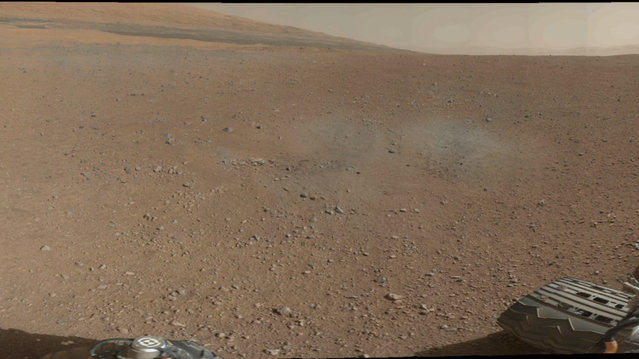
This is a portion of the first color 360-degree panorama from NASA's Curiosity rover, made up of thumbnails, which are small copies of higher-resolution images. The mission's destination, a mountain at the center of Gale Crater called Mount Sharp, can be seen in the distance, to the left, beginning to rise up. The mountain's summit will be imaged later. (Photo by NASA/JPL-Caltech/MSSS)
Details
10 Aug 2012 08:48:00
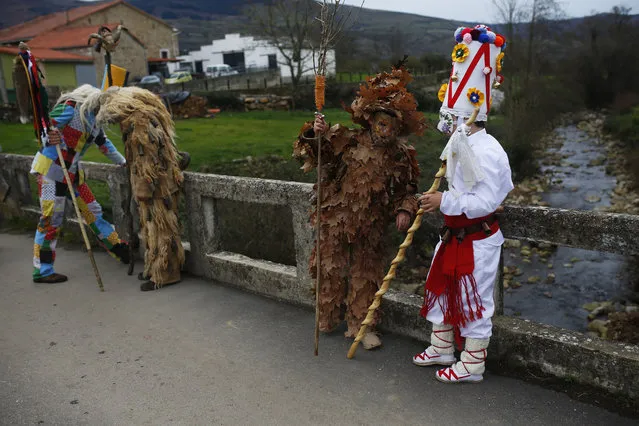
People dressed in costumes have a break while marching during the Vijanera Festival, in the small village of Silio, northern Spain, Sunday, January 3, 2016. The Vijanera masquerade, of pre-Roman origin, is the first carnival of the year in Europe symbolizing the triumph of good over evil and involving the participation of crowds of residents wearing different masks, animal skins and brightly coloured clothing with its own complex function and symbolism and becoming the living example of the survival of archaic cults to nature. (Photo by Francisco Seco/AP Photo)

People dressed in costumes have a break while marching during the Vijanera Festival, in the small village of Silio, northern Spain, Sunday, January 3, 2016. The Vijanera masquerade, of pre-Roman origin, is the first carnival of the year in Europe symbolizing the triumph of good over evil and involving the participation of crowds of residents wearing different masks, animal skins and brightly coloured clothing with its own complex function and symbolism and becoming the living example of the survival of archaic cults to nature. (Photo by Francisco Seco/AP Photo)
Details
04 Jan 2016 10:17:00
Damaged train coaches at the site of a train accident, 180 kilometers from Bhopal near Harda district of Mahdya Pradesh, India, 05 August 2015. At least 25 people died when two passenger trains derailed in central India after heavy monsoon rains flooded railway tracks, officials said. Ten coaches from the trains toppled while approaching a small bridge just before midnight. (Photo by Sanjeev Gupta/EPA)

Damaged train coaches at the site of a train accident, 180 kilometers from Bhopal near Harda district of Mahdya Pradesh, India, 05 August 2015. At least 25 people died when two passenger trains derailed in central India after heavy monsoon rains flooded railway tracks, officials said. Ten coaches from the trains toppled while approaching a small bridge just before midnight. (Photo by Sanjeev Gupta/EPA)
Details
06 Aug 2015 11:58:00
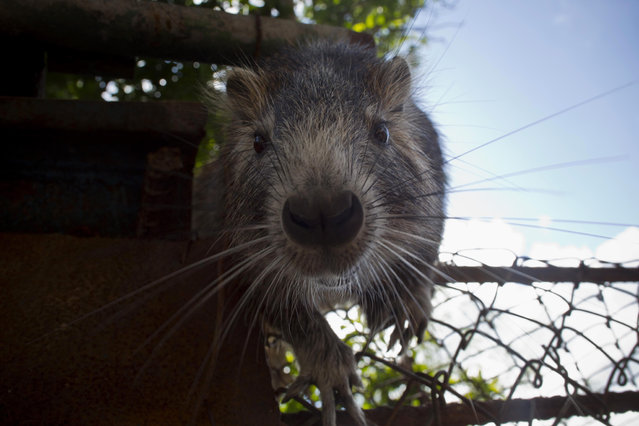
In this November 17, 2014 photo, Pancho, a domesticated huitia, confronts a camera, in Bainoa, Cuba. With their rope-like, dark tails, long front teeth, and whiskers that appear to be vibrating, huitias look like giant rats. They measure nearly a foot long (about 30 centimeters), with the largest ones weighing in bigger than a small dog. (Photo by Ramon Espinosa/AP Photo)

In this November 17, 2014 photo, Pancho, a domesticated huitia, confronts a camera, in Bainoa, Cuba. With their rope-like, dark tails, long front teeth, and whiskers that appear to be vibrating, huitias look like giant rats. They measure nearly a foot long (about 30 centimeters), with the largest ones weighing in bigger than a small dog. (Photo by Ramon Espinosa/AP Photo)
Details
21 Nov 2014 12:58:00
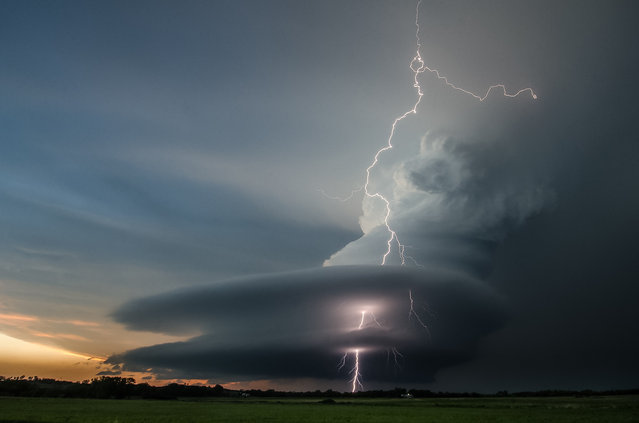
“Strike Through The Mothership”. Every May for the last 3 years I have driven down to Tornado Alley to capture some amazing storms. This supercell held so much promise to drop a tornado but one small shift in the atmosphere and all that it produced was an extreme lightning show. Photo location: Broken Bow, Nebraska. (Photo and caption by Vanessa Neufeld/National Geographic Photo Contest)

“Strike Through The Mothership”. Every May for the last 3 years I have driven down to Tornado Alley to capture some amazing storms. This supercell held so much promise to drop a tornado but one small shift in the atmosphere and all that it produced was an extreme lightning show. Photo location: Broken Bow, Nebraska. (Photo and caption by Vanessa Neufeld/National Geographic Photo Contest)
Details
06 May 2014 09:37:00
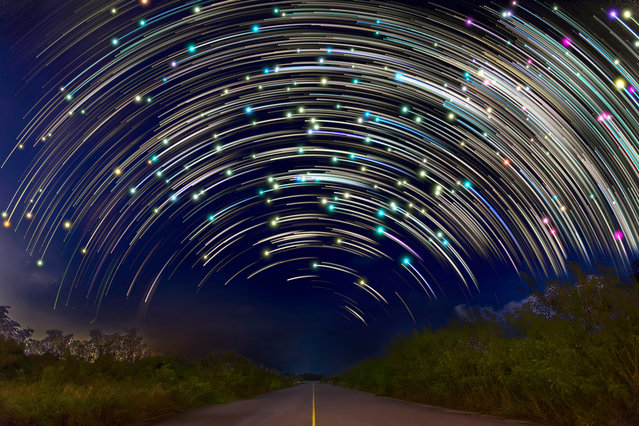
Star trails are pictured from a road in Singapore. These astonishing images of night sky are captured by Singapore based photographer Justin Ng. The pictures were taken between November 2013 to January 2014. It show's star trail caused by the earth's rotation and also can be achieved by zooming the DSLR lens inward or outward in small steps using a dedicated motorized zooming device. (Photo by  Justin Ng/Barcroft Media)

Star trails are pictured from a road in Singapore. These astonishing images of night sky are captured by Singapore based photographer Justin Ng. The pictures were taken between November 2013 to January 2014. It show's star trail caused by the earth's rotation and also can be achieved by zooming the DSLR lens inward or outward in small steps using a dedicated motorized zooming device. (Photo by Justin Ng/Barcroft Media)
Details
16 May 2014 07:41:00