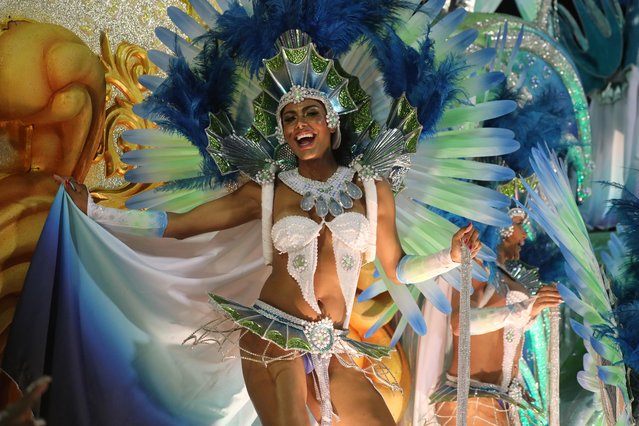
A Beija-Flor samba school member performs during the second night of the Carnival parade at the Sambadrome in Rio de Janeiro, Brazil on February 25, 2020. (Photo by Sergio Moraes/Reuters)
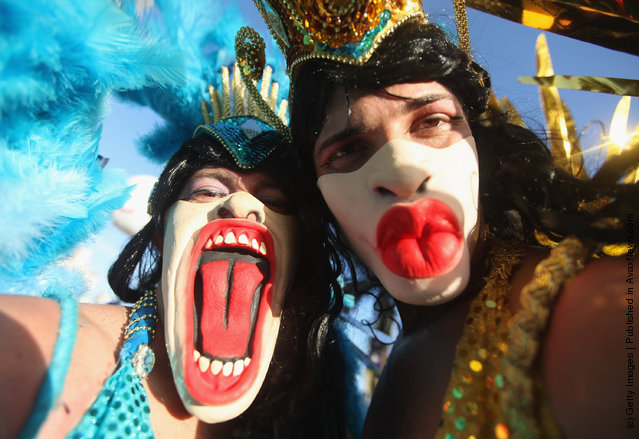
Brazilian revelers pose during Carnival celebrations along Ipanema beach on February 18, 2012 in Rio de Janiero, Brazil. (Photo by Mario Tama/Getty Images)
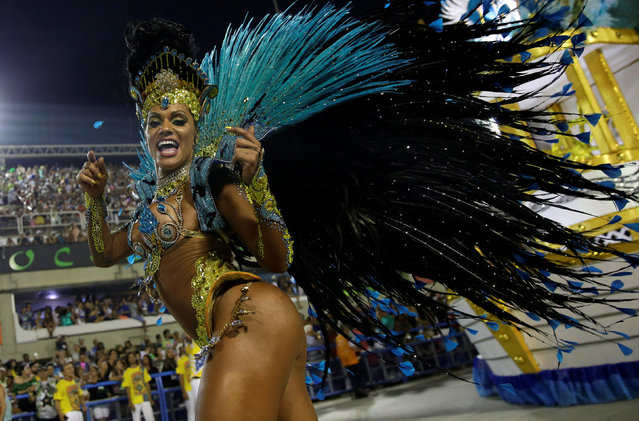
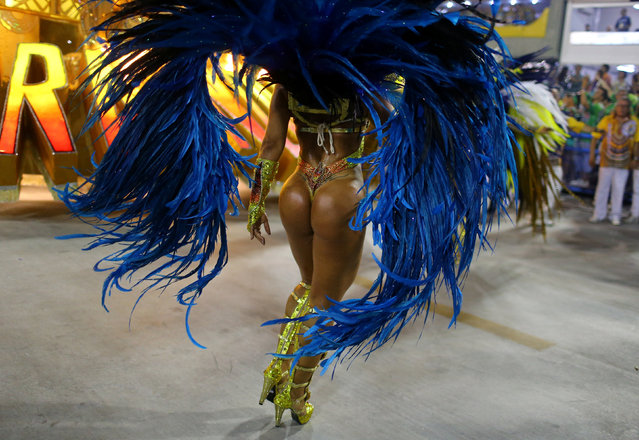
A reveller from Unidos da Tijuca samba school performs during the second night of the carnival parade at the Sambadrome in Rio de Janeiro, Brazil, February 28, 2017. (Photo by Ricardo Moraes/Reuters)
Members of Tom Maior Special Group samba school perform during the carnival parade at the Anhembi Sambadrome in Sao Paulo, Brazil, 22 February 2020. Carnival is the biggest and most popular celebration in Brazil. (Photo by Sebastiao Moreira/EPA/EFE)
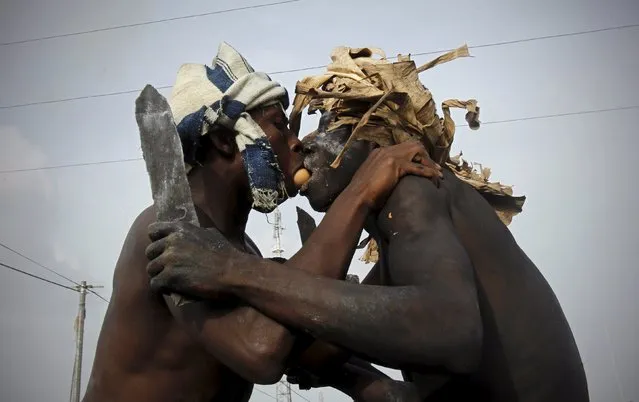
Participants pass an egg using their mouths during a religious ritual as they play the role of traditional fighters in a parade during the Popo (Mask) Carnival of Bonoua, in the east of Abidjan, April 18, 2015. The carnival has its origins in the changes that Aboure youths in Bonoua introduced to the annual festival of yams. (Photo by Luc Gnago/Reuters)
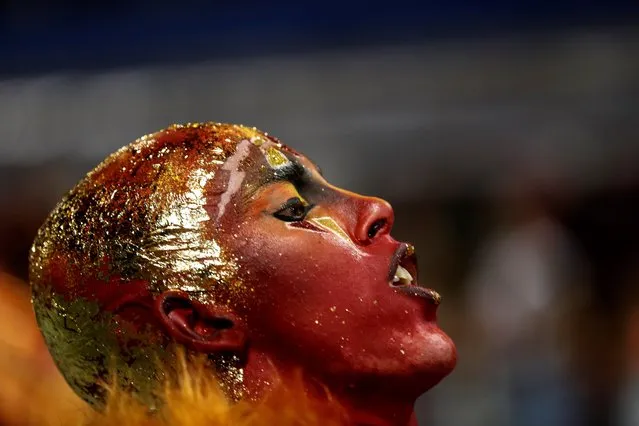
A reveller from Uniao da Ilha samba school performs during the second night of the carnival parade at the Sambadrome in Rio de Janeiro, Brazil February 27, 2017. (Photo by Pilar Olivares/Reuters)
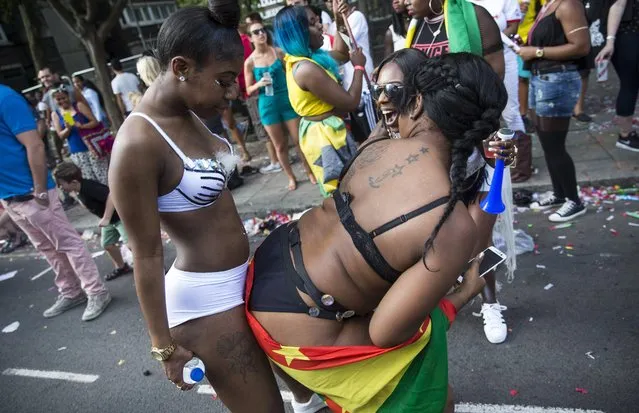
Revellers dance at Notting Hill Carnival on August 29, 2016 in London, England. The Notting Hill Carnival, which has taken place annually since 1964, is expected to attract over a million people. The two-day event, started by members of the Afro-Caribbean community, sees costumed performers take to the streets in a parade and dozens of sound systems set up around the Notting Hill streets. (Photo by Jack Taylor/Getty Images)
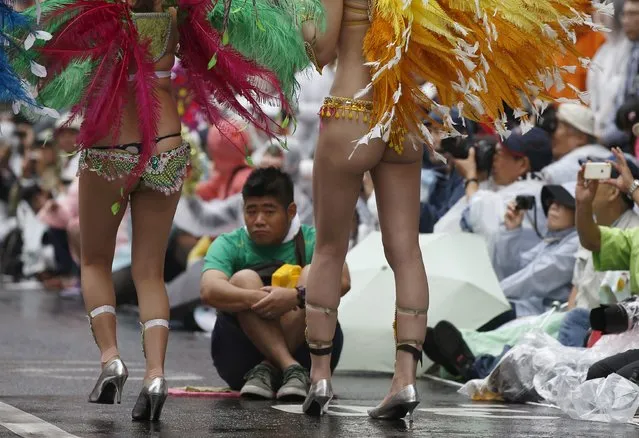
Samba dancers walk past a security staff member during the 34th annual Asakusa Samba Carnival in Tokyo August 29, 2015. About 5,000 people participated in the annual samba carnival on Saturday. (Photo by Toru Hanai/Reuters)