Loading...
Done
The Veteran Art Project By Devin Mitchell

Each day as we look in the mirror, we think that we know ourselves. We are used to the image that we see before us, but the mirror can show us much more than we ever hoped to see. Sometimes it only shows basic emotions, while at other times it can highlight the deepest crevices of our soul. If you wish, in the reflection of the mirror you can see your deepest thoughts, masks that you wear every day, your desires, and of course the people that you think about. But are you brave enough to look deep within your soul? Will you dive headlong or shy away from your true image? Those that will muster up the courage necessary will realize it was well worth the effort. (Photo by Devin Mitchell)
Details
30 Nov 2014 12:42:00
Photo by Shikhei Goh

About Me

My Name Is Shikhei Goh. I was born in Dabo Singkep (Riau Islands) and now I live in Batam Island, an industrial island about 45 minutes by boat from singapore. I started taking pictures using a DSLR in March 2011. I had tried taking pictures of many things but I really have a great passion for Macro photography and I can say I am a macro addict.
I have always said to myself that I must and I can make great photos. After countless of trials and errors, explorations, and criticisms I can say that I am happy enough for what I have achieved now. However, I will keep on exploring as there are always new things in macro photography.
Written by Shikheigoh

Details
28 Nov 2012 09:38:00
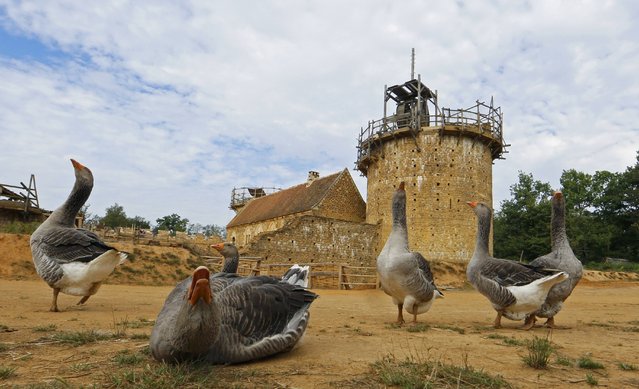
A view of the construction site of the Chateau de Guedelon near Treigny in the Burgundy region of France, September 13, 2016. Blacksmiths, stonemasons and quarry men are hard at work in a Burgundy forest building a 13th-century-style castle using the most basic tools and materials, replicating the methods used hundreds of years ago to better understand them. Forgoing all modern technology, workers use hammers to break stones and forge iron, operate wooden wheels to hoist their materials up to where they are needed, and rely on a quarry for stone, clay and sand as they build up a castle from scratch. Construction on Guedelon Castle in central France began in 1997 after an archaeological survey revealed a medieval fortress hidden inside the walls of nearby Chateau de Saint-Fargeau. Those behind the project hope to answer questions about medieval construction and provide lessons on sustainable building. (Photo by Jacky Naegelen/Reuters)

A view of the construction site of the Chateau de Guedelon near Treigny in the Burgundy region of France, September 13, 2016. Blacksmiths, stonemasons and quarry men are hard at work in a Burgundy forest building a 13th-century-style castle using the most basic tools and materials, replicating the methods used hundreds of years ago to better understand them. (Photo by Jacky Naegelen/Reuters)
Details
15 Sep 2016 09:43:00
Zed Nelson by The Family

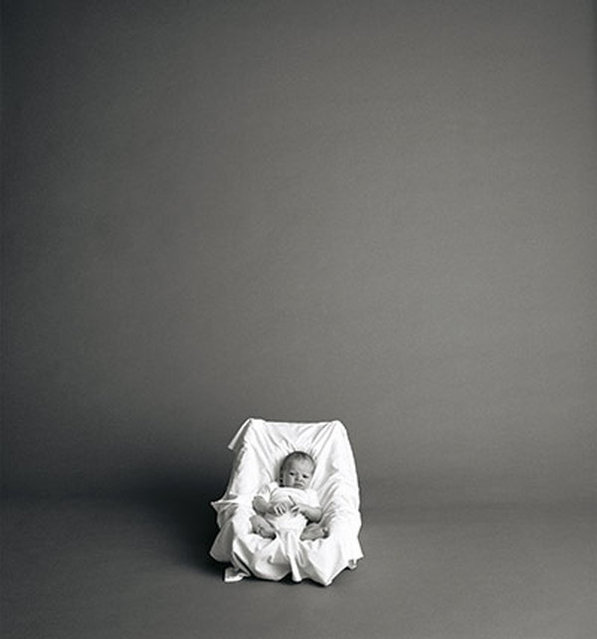
Zed Nelson has photographed the same family, once a year on the same day, for 20 years. I take hundreds of photo’s of my extended family all year round, some just languish on my computer screen unseen by anyone, some get printed, some framed. What is really interesting about this project is not only the obvious time scale but his “ analytical approach“. The same plain background is used for each session and he chooses only 1 frame to represent that years image. My many photographs are a mishmash of family events, his create a family history unfolding . Perhaps less really is more.
Details
22 Jun 2015 10:27:00
Bloodwood Tree

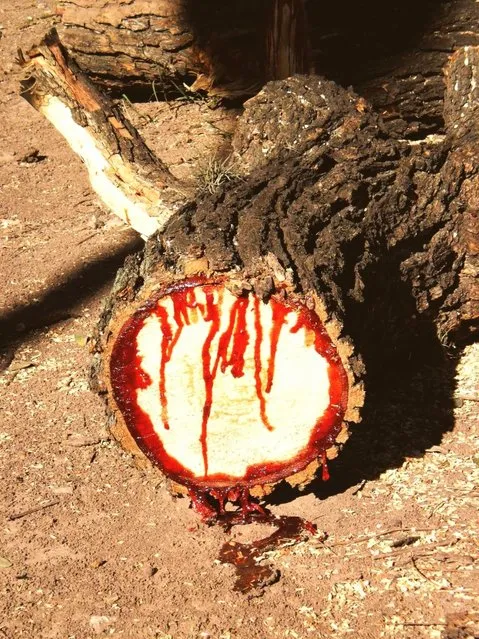
The bloodwood tree (Pterocarpus angolensis) is a deciduous tree with a high canopy, reaching about 15m in height and has dark bark. The red sap is used traditionally as a dye and in some areas mixed with animal fat to make a cosmetic for faces and bodies. It is also believed to have magical properties for the curing of problems concerning blood, apparently because of its close resemblance to blood. The name bloodwood for these trees stems from the dark red to brown sap that accumulates on wounds on the trunks.
Details
14 May 2014 12:44:00
The Lun-class Ekranoplane was used by the Soviet Navy starting in 1987, and wasn't retired until the late 1990s, after the Soviet Union's fall. (Igor113)

“The Lun-class ekranoplan (NATO reporting name Duck) was a ground effect vehicle (GEV) designed by Rostislav Evgenievich Alexeev and used by the Soviet and Russian navies from 1987 until sometime in the late 1990s. It “flew” using the lift generated by the ground effect of its large wings when close to the surface of the water – about four metres or less. Although they might look similar and/or have related technical characteristics, ekranoplans like the Lun are not aircraft, seaplanes, hovercraft, or hydrofoils – ground effect is a separate technology altogether. The International Maritime Organization classifies these vehicles as maritime ships. The name Lun comes from the Russian for harrier”. – Wikipedia (Photo by Igor113)
Details
08 Aug 2014 10:51:00
Deconstructed Objects By Todd McLellan

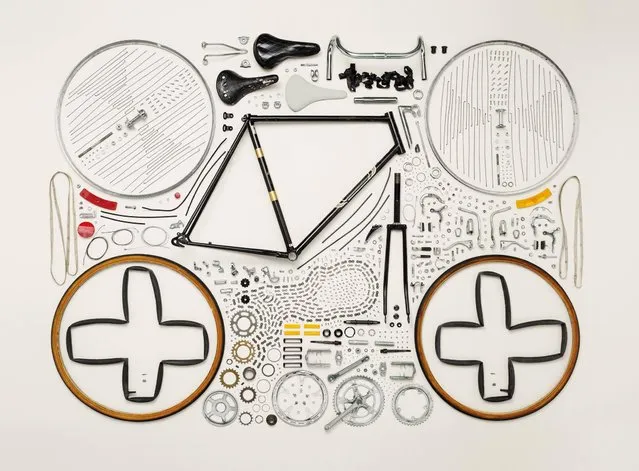
It is simply staggering how complicated some items really are. We never think about it, but some items that we use every day consist of hundreds of parts meticulously put together and working perfectly. Todd McLellan is a photographer who based his newest book “Things Come Apart” on the complexity of various old and new tech. By carefully taking apart various items and arranging all of the parts in perfect order, Todd has allowed us not only to look inside various appliances, but also to appreciate the astounding complexity of these items. Just like the human mind, we are so used to seeing and talking with people that we forget just how complicated their minds really are. It would be great if we could “take apart” the human mind in order to gain some insight into the person’s thoughts and desires. However, very few people are capable of doing it, while the rest will remain blind to the obvious. (Photo by Todd McLellan)
Details
15 Nov 2014 12:30:00
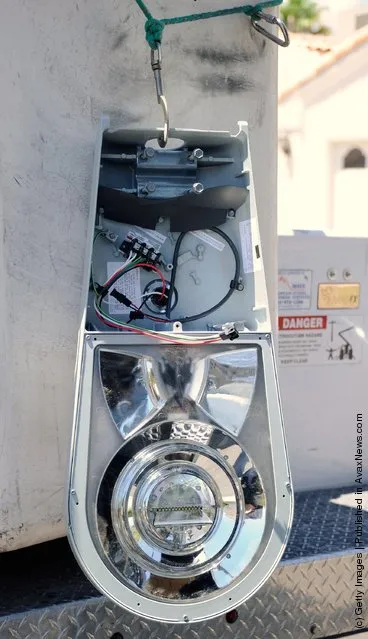
A new LED light fixture is secured to the side of a lift as crews replace existing street lights

A new LED light fixture is secured to the side of a lift as crews replace existing street lights August 1, 2011 in Las Vegas, Nevada. The new energy-efficient fixtures are expected to reduce the city's annual electricity use by eight million kilowatt hours, saving about USD 400,000. The city estimates the LEDs will last about 15 years, nine years longer than the current lights. Funding for the project comes from federal energy conservation bonds and an American Recovery & Reinvestment Act grant. The city plans to replace all of its 50,000 streetlights after more funding is secured. (Photo by Ethan Miller/Getty Images)
Details
02 Aug 2011 14:27:00