Loading...
Done
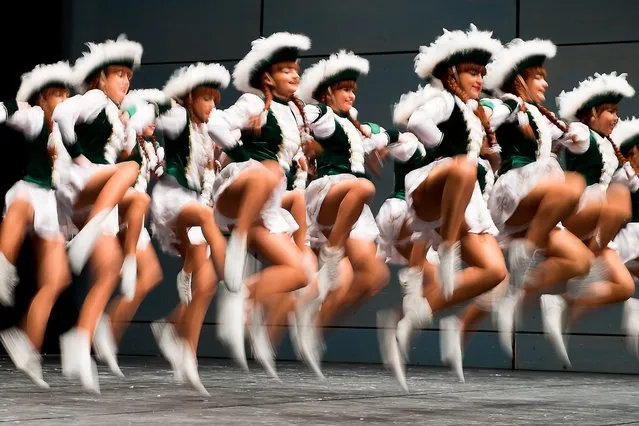
A picture taken with slow shutter speed shows members of the group “The Kattfiller” from Attendorn taking part during the Norddeutsche Championship carnivalesque dance sport in Kassel (Hessen), Germany, 28 February 2016. About 1,100 qualified dancers show in different disciplines their skills. (Photo by Swen Pfoertner/EPA)

A picture taken with slow shutter speed shows members of the group “The Kattfiller” from Attendorn taking part during the Norddeutsche Championship carnivalesque dance sport in Kassel (Hessen), Germany, 28 February 2016. About 1,100 qualified dancers show in different disciplines their skills. (Photo by Swen Pfoertner/EPA)
Details
29 Feb 2016 12:00:00
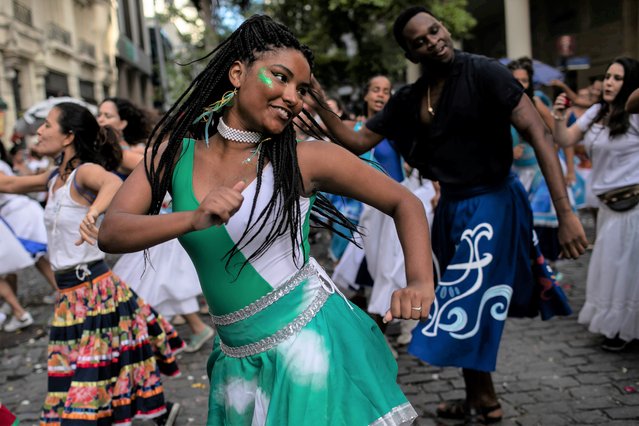
A woman dances during a rehearsal by the group “Tambores de Olokun” in Rio de Janeiro, Brazil, Sunday, April 17, 2022. The Brazilian municipalities of Rio de Janeiro and Sao Paulo postponed the traditional parades of the carnival samba schools to April 22 - 23, as a result of the COVID-19 pandemic. (Photo by Bruna Prado/AP Photo)

A woman dances during a rehearsal by the group “Tambores de Olokun” in Rio de Janeiro, Brazil, Sunday, April 17, 2022. The Brazilian municipalities of Rio de Janeiro and Sao Paulo postponed the traditional parades of the carnival samba schools to April 22 - 23, as a result of the COVID-19 pandemic. (Photo by Bruna Prado/AP Photo)
Details
19 Apr 2022 05:56:00
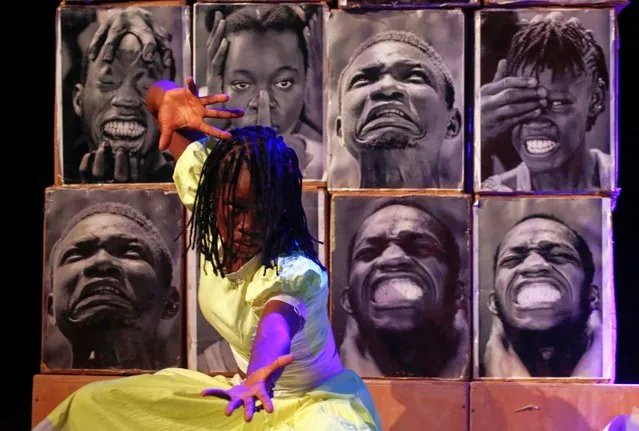
A member of the Fientan group, a contemporary dance company of young deaf and mute people from Burkina Faso, performs during the Market for Performing Arts in Abidjan (MASA), at the Culture Palace in Abidjan, Ivory Coast on April 17, 2024. (Photo by Luc Gnago/Reuters)

A member of the Fientan group, a contemporary dance company of young deaf and mute people from Burkina Faso, performs during the Market for Performing Arts in Abidjan (MASA), at the Culture Palace in Abidjan, Ivory Coast on April 17, 2024. (Photo by Luc Gnago/Reuters)
Details
27 Apr 2024 05:34:00
A model presents a creation from the collection by Amato Couture, of the United Arab Emirates, during the Arab Fashion Week in Gulf emirate of Dubai, United Arab Emirates, 28 March 2022. (Photo by Ali Haider/EPA/EFE)

A model presents a creation from the collection by Amato Couture, of the United Arab Emirates, during the Arab Fashion Week in Gulf emirate of Dubai, United Arab Emirates, 28 March 2022. (Photo by Ali Haider/EPA/EFE)
Details
30 Mar 2022 05:54:00
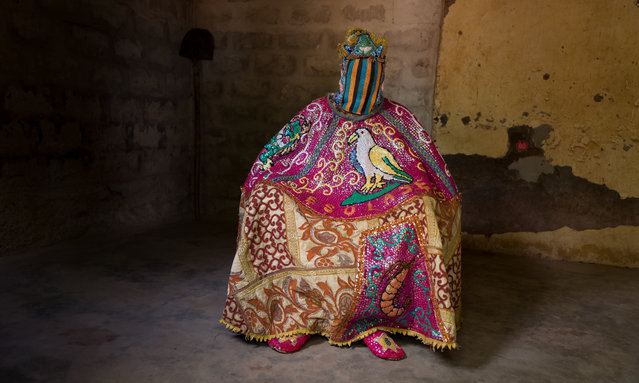
A member of an Egungun masquerade group, his identity obscured under his ornate costume in Ouidah, Benin on March 13, 2019. The exclusively male practitioners, found across Yoruba culture, use dance and spinning in the belief that they will summon the spirits of ancestors. (Photo by Massimo Rumi/Barcroft Images)

A member of an Egungun masquerade group, his identity obscured under his ornate costume in Ouidah, Benin on March 13, 2019. The exclusively male practitioners, found across Yoruba culture, use dance and spinning in the belief that they will summon the spirits of ancestors. (Photo by Massimo Rumi/Barcroft Images)
Details
26 Mar 2019 00:01:00
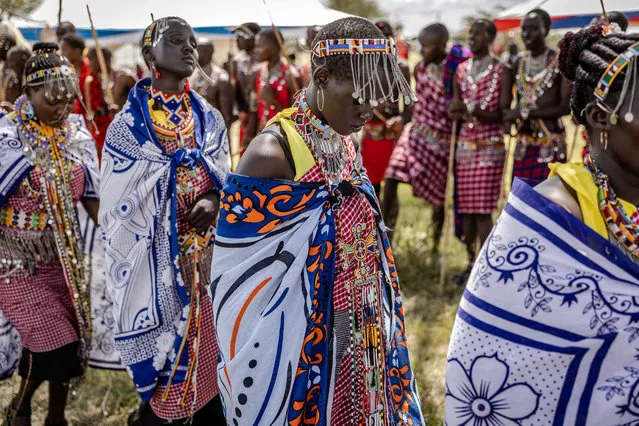
A group of Maasai women march while dancing traditional songs during a Maasai cultural festival in Sekenani, on June 10, 2023. The Maasai people are a Nilotic ethnic group inhabiting Kenya and northern Tanzania. The Maasai cultural festival is a popular gathering and celebration of the Maasai cultural heritage and aims to showcase the community's traditional activities and fashion. (Photo by Luis Tato/AFP Photo)

A group of Maasai women march while dancing traditional songs during a Maasai cultural festival in Sekenani, on June 10, 2023. The Maasai people are a Nilotic ethnic group inhabiting Kenya and northern Tanzania. The Maasai cultural festival is a popular gathering and celebration of the Maasai cultural heritage and aims to showcase the community's traditional activities and fashion. (Photo by Luis Tato/AFP Photo)
Details
20 Jun 2023 03:57:00
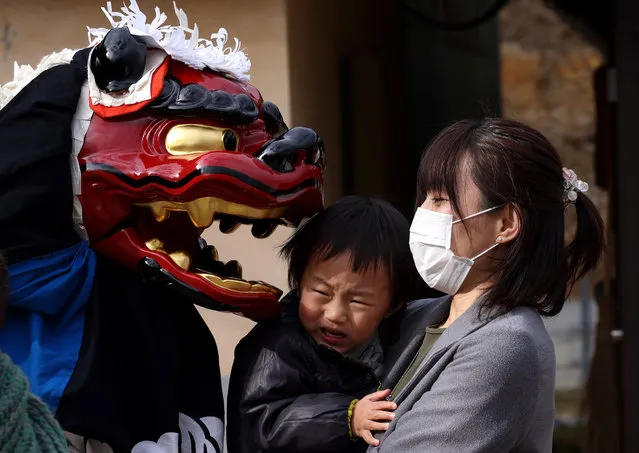
A performer wearing a lion mask performs the Ise Daikagura lion dance at the remote village of Yamanawa on February 08, 2021 in Ryuo, Japan. Ise Daikagura is a group of traditional Lion Dance performers who pray in front of farmers houses and businesses for good grain harvests and disease-free lives. Performers play sacred music using drums and flutes with two lion mask dancers. A lion mask is considered a symbol of God, who enters the house and performs in front of the Shinto God, a statue placed inside the house, mostly in the kitchen. These prayers are called “Kamodo Barai”. After the prayers, they are gifted with money, rice, sake and Japanese sweets from the householders. A group can travel for more than one hundred days to thousands of households and businesses throughout rural-villages in western Japan, and pray to those who are unable to visit the country’s most sacred shrine, the Grand Ise Shrine in Mie Prefecture. The group started its performance in the Edo era between 1603 to 1868 according to Japanese history. The Japanese government designated it as an important folk cultural national property in 1981. (Photo by Buddhika Weerasinghe/Getty Images)

A performer wearing a lion mask performs the Ise Daikagura lion dance at the remote village of Yamanawa on February 08, 2021 in Ryuo, Japan. Ise Daikagura is a group of traditional Lion Dance performers who pray in front of farmers houses and businesses for good grain harvests and disease-free lives. (Photo by Buddhika Weerasinghe/Getty Images)
Details
18 Feb 2021 09:27:00
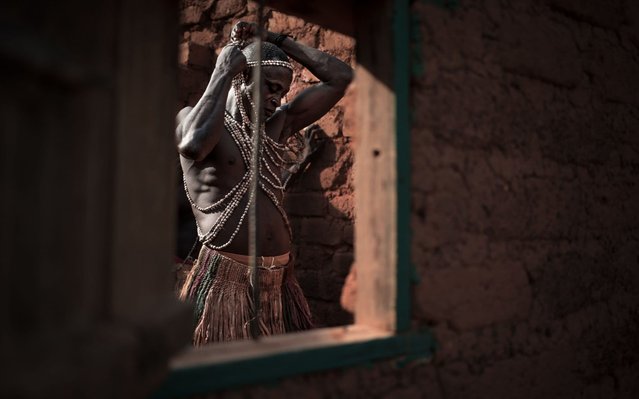
A Broto dancer prepares himself in a disused house of Bambari, in the centre of Central African Republic, before performing on March 14, 2019. The Broto, belonging to the Banda ethnic group, are known for their traditional dances accompanied by heavy horns made of tree roots. Today this tradition falls into disuse and its history is now forgotten by the new generations. (Photo by Florent Vergnes/AFP Photo)

A Broto dancer prepares himself in a disused house of Bambari, in the centre of Central African Republic, before performing on March 14, 2019. The Broto, belonging to the Banda ethnic group, are known for their traditional dances accompanied by heavy horns made of tree roots. Today this tradition falls into disuse and its history is now forgotten by the new generations. (Photo by Florent Vergnes/AFP Photo)
Details
05 Apr 2019 00:01:00