Loading...
Done
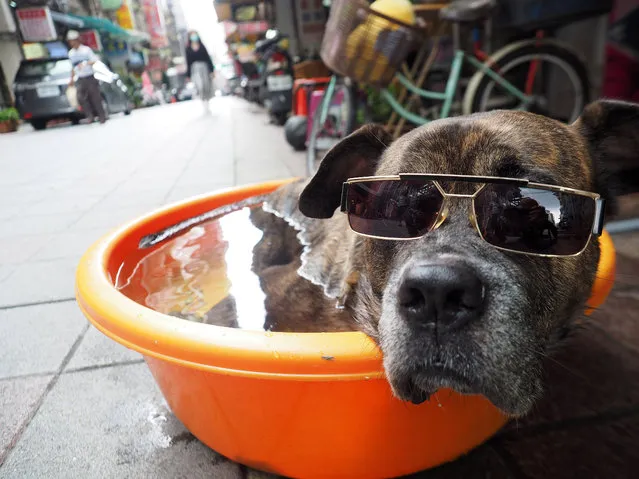
A dog sits in a plastic tub filled with water in Taipei, Taiwan, 28 July 2020. Betel nut seller Mr Luo, the dog's owner, said he puts his dog, a 12-year-old mixed breed called Ah Dai (Stupid), in a plastic tub filled with water whenever the weather gets hot. Ah Dai enjoys the bath and can sit in the basin for hours, according to Mr Luo. Luo has a dozen pairs of glasses for Ah Dai, so the dog wears different glasses every day and many tourists take photos of Ah Dai. (Photo by David Chang/EPA/EFE)

A dog sits in a plastic tub filled with water in Taipei, Taiwan, 28 July 2020. Betel nut seller Mr Luo, the dog's owner, said he puts his dog, a 12-year-old mixed breed called Ah Dai (Stupid), in a plastic tub filled with water whenever the weather gets hot. Ah Dai enjoys the bath and can sit in the basin for hours, according to Mr Luo. Luo has a dozen pairs of glasses for Ah Dai, so the dog wears different glasses every day and many tourists take photos of Ah Dai. (Photo by David Chang/EPA/EFE)
Details
15 Aug 2020 00:05:00
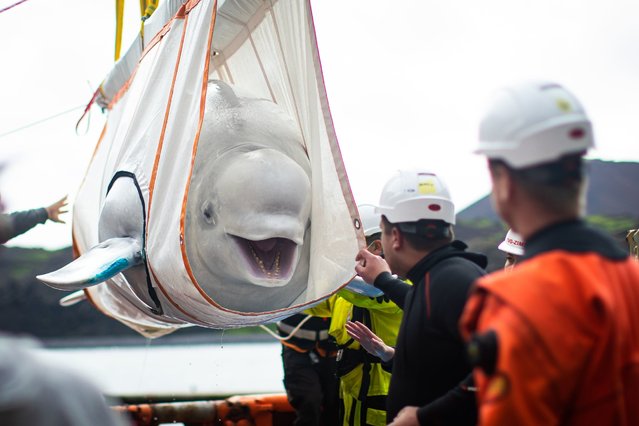
The Sea Life Trust team move Beluga Whale Little Gray from a tugboat during transfer to the bayside care pool where they will be acclimatised to the natural environment of their new home at the open water sanctuary in Klettsvik Bay in Iceland on August 7, 2020. The two Beluga whales, named Little Grey and Little White, are being moved to the world's first open-water whale sanctuary after travelling from an aquarium in China 6,000 miles away in June 2019. (Photo by Aaron Chown/PA Images via Getty Images)

The Sea Life Trust team move Beluga Whale Little Gray from a tugboat during transfer to the bayside care pool where they will be acclimatised to the natural environment of their new home at the open water sanctuary in Klettsvik Bay in Iceland on August 7, 2020. The two Beluga whales, named Little Grey and Little White, are being moved to the world's first open-water whale sanctuary after travelling from an aquarium in China 6,000 miles away in June 2019. (Photo by Aaron Chown/PA Images via Getty Images)
Details
28 Aug 2020 00:03:00
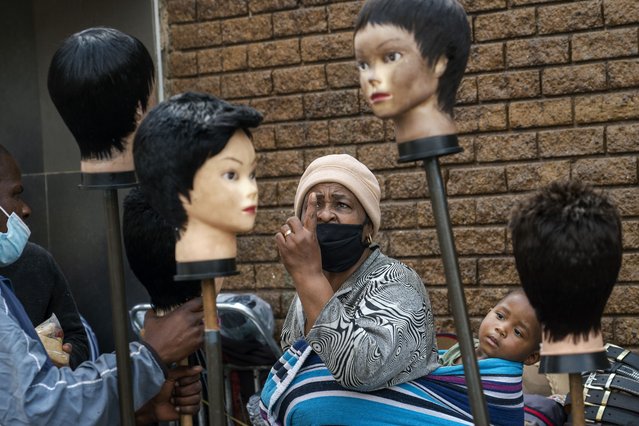
A woman carrying a child on her back looks at wigs on sale at the Baragwanath Taxi Rank in Soweto, South Africa, Wednesday, September 16, 2020. South African president Cyril Ramaphosa is scheduled to address the nation later in the day, as case numbers and death from COVID-19 hit the lowest in months. (Photo by Jerome Delay/AP Photo)

A woman carrying a child on her back looks at wigs on sale at the Baragwanath Taxi Rank in Soweto, South Africa, Wednesday, September 16, 2020. South African president Cyril Ramaphosa is scheduled to address the nation later in the day, as case numbers and death from COVID-19 hit the lowest in months. (Photo by Jerome Delay/AP Photo)
Details
24 Sep 2020 00:03:00
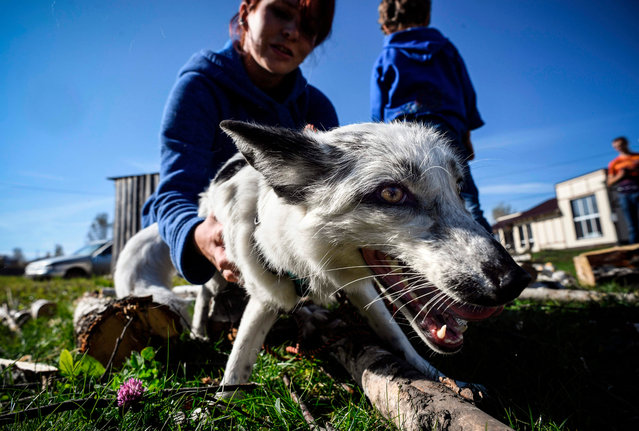
Tatyana Abramova, 33, plays with her home fox Plombir at her countryside house outside Siberian city of Novosibirsk on September 12, 2020. The official start of the Soviet experiment to better understand the domestication of animals by humans began in 1959, and was initiated by geneticists Dmitri Beliaiev and Lioudmila Trout on a farm in Akademgorodok, the scientific center of excellence in Siberia. Their primary objective was to domesticate foxes, to understand how the ancestor of wolves, another canine, evolved into a loyal and loving dog. And understand what this domestication tells us about the genetic evolution of species. (Photo by Alexander Nemenov/AFP Photo)

Tatyana Abramova, 33, plays with her home fox Plombir at her countryside house outside Siberian city of Novosibirsk on September 12, 2020. The official start of the Soviet experiment to better understand the domestication of animals by humans began in 1959, and was initiated by geneticists Dmitri Beliaiev and Lioudmila Trout on a farm in Akademgorodok, the scientific center of excellence in Siberia. Their primary objective was to domesticate foxes, to understand how the ancestor of wolves, another canine, evolved into a loyal and loving dog. And understand what this domestication tells us about the genetic evolution of species. (Photo by Alexander Nemenov/AFP Photo)
Details
25 Oct 2020 00:05:00
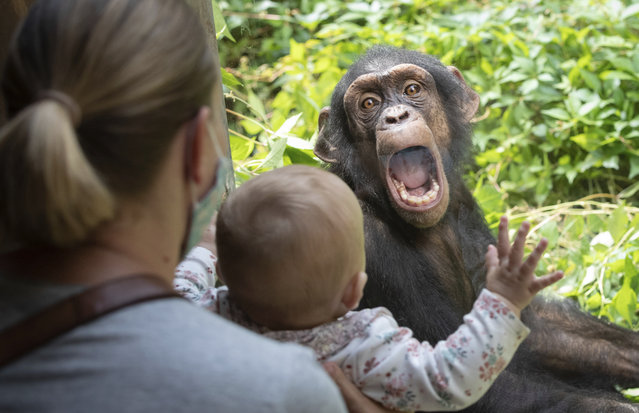
A chimpanzee in the Osnabrück Zoo in Lower Saxony makes contact with a small zoo visitor sitting in front of a pane on September 1, 2020. The two males Lobo and Lome moved from Leipzig Zoo to Osnabrück Zoo to strengthen the social structure of the existing group. (Photo by Friso Gentsch/dpa)

A chimpanzee in the Osnabrück Zoo in Lower Saxony makes contact with a small zoo visitor sitting in front of a pane on September 1, 2020. The two males Lobo and Lome moved from Leipzig Zoo to Osnabrück Zoo to strengthen the social structure of the existing group. (Photo by Friso Gentsch/dpa)
Details
10 Sep 2020 00:03:00
A woman tries to take selfie photos in front of a photo spot featuring Christmas season scene and masks at Tokyo Mask Land, a face-mask theme exhibition and its speciality shop, amid the coronavirus disease (COVID-19) outbreak, in Yokohama, Japan on December 1, 2020. (Photo by Issei Kato/Reuters)

A woman tries to take selfie photos in front of a photo spot featuring Christmas season scene and masks at Tokyo Mask Land, a face-mask theme exhibition and its speciality shop, amid the coronavirus disease (COVID-19) outbreak, in Yokohama, Japan on December 1, 2020. (Photo by Issei Kato/Reuters)
Details
03 Dec 2020 00:03:00
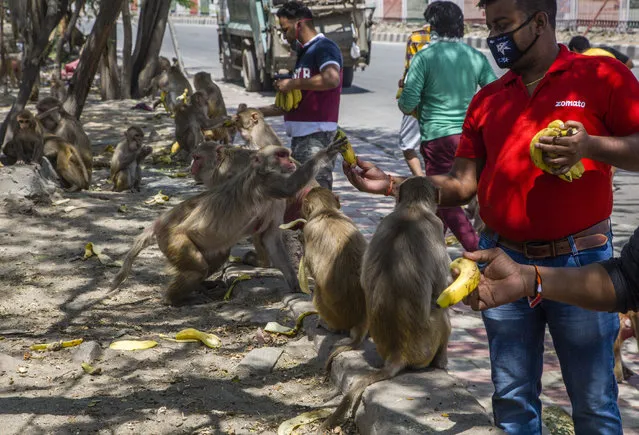
Men give bananas to monkeys gathered on the side of the road as India remains under an unprecedented lockdown over the highly contagious coronavirus (COVID-19) on April 08, 2020 in New Delhi, India. Wild animals, including monkeys, are roaming human settlements in India as people are staying indoors due to the 21-day lockdown. With India's 1.3 billion population and tens of millions of cars off the roads, wildlife is moving towards areas inhabited by humans. Wild animals in many countries have been seen roaming streets. A study says some 60 percent of the new diseases found around the globe every year are zoonotic, meaning they originate in animals and are passed on to humans. COVID-19 is a zoonotic disease that is suspected to have come from the wet markets of Wuhan, China. (Photo by Yawar Nazir/Getty Images)

Men give bananas to monkeys gathered on the side of the road as India remains under an unprecedented lockdown over the highly contagious coronavirus (COVID-19) on April 08, 2020 in New Delhi, India. Wild animals, including monkeys, are roaming human settlements in India as people are staying indoors due to the 21-day lockdown. (Photo by Yawar Nazir/Getty Images)
Details
12 Apr 2020 00:05:00
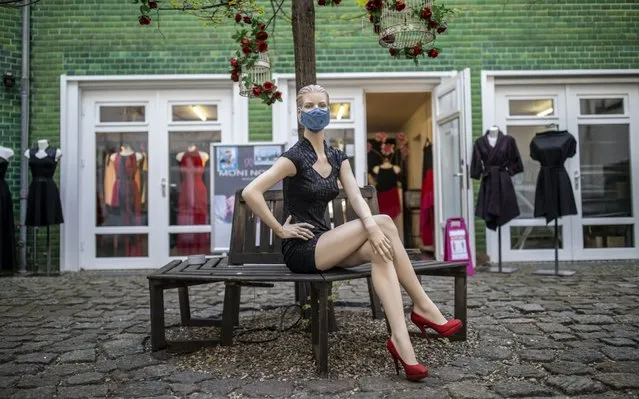
A store mannequin with a protective mask stands before a clothes store as they open for the first time since March during the novel coronavirus (COVID-19) pandemic on April 22, 2020 in Berlin, Germany. Small to midsized-shops are opening across Germany this week as state authorities follow a recommendation by the federal government to ease restrictions imposed in March meant to slow the spread of the coronavirus. Some schools are also planning to reopen soon, as are museums and hair salons in coming weeks. (Photo by Maja Hitij/Getty Images)

A store mannequin with a protective mask stands before a clothes store as they open for the first time since March during the novel coronavirus (COVID-19) pandemic on April 22, 2020 in Berlin, Germany. Small to midsized-shops are opening across Germany this week as state authorities follow a recommendation by the federal government to ease restrictions imposed in March meant to slow the spread of the coronavirus. Some schools are also planning to reopen soon, as are museums and hair salons in coming weeks. (Photo by Maja Hitij/Getty Images)
Details
24 Apr 2020 00:01:00