Loading...
Done
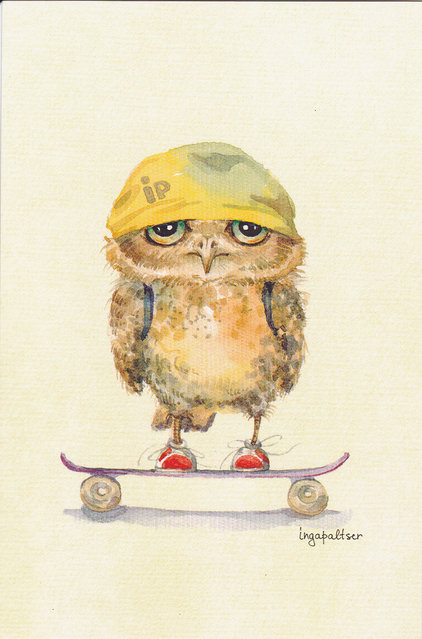
Owlets By Inga Paltser

Inga Paltser is a young painter from Severodvinsk known for her watercolor illustrations and paintings of owls. Inga prefers working with paper, but sometimes also creates on textile, wood, and canvas. She started painting in her childhood at the local school of arts. However, after high school Inga decided to become a biologist and now she works as a researcher. Even though art hasn’t become her profession, Inga finds time to create wonderful paintings presented on this website. Her first owls were painted spontaneously – Inga decided to utilize small pieces of watercolor and pastel paper and created two cute owls called “Friends”. Inga’s owls instantly received recognition across the web and social networks and now are greatly loved by thousands of people around the world.
Details
18 Nov 2013 10:08:00
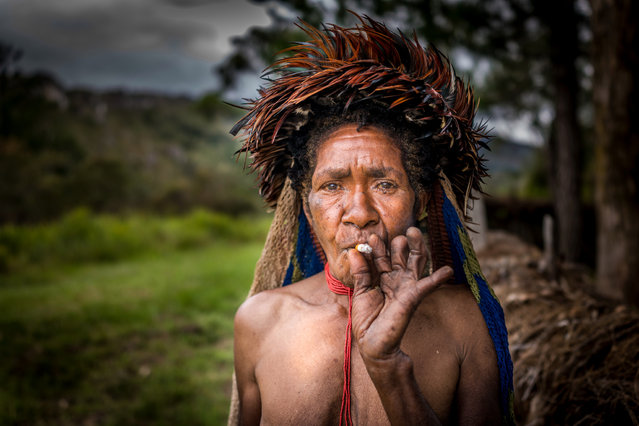
Dani tribeswoman smokes a cigarette and shows her amputated fingers in, Western New Guinea, Indonesia, August 2016. (Photo by Teh Han Lin/Barcroft Images)

Dani tribeswoman smokes a cigarette and shows her amputated fingers in, Western New Guinea, Indonesia, August 2016. Deep in the highlands of Western New Guinea, Indonesia, lives one of the world’s most isolated tribes. Known as the Dani people, the tribe was unwittingly discovered by American philanthropist, Richard Archbold, after an expedition in 1938. (Photo by Teh Han Lin/Barcroft Images)
Details
18 Nov 2016 11:03:00
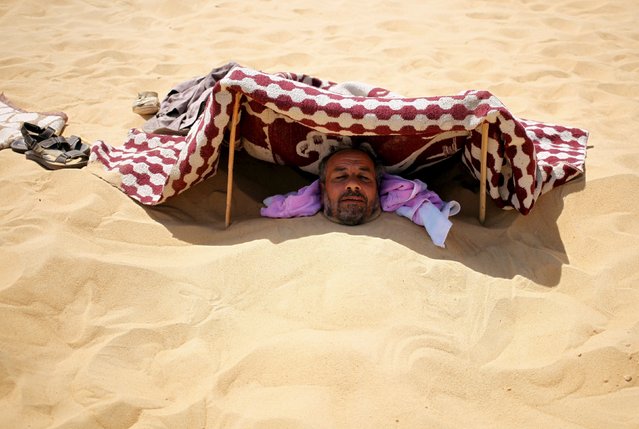
A patient buried in the hot sand looks out from under a shade that protects his face from the sun in Siwa, Egypt, August 12, 2015. (Photo by Asmaa Waguih/Reuters)

A patient buried in the hot sand looks out from under a shade that protects his face from the sun in Siwa, Egypt, August 12, 2015. In the searing heat of summer in western Egypt, at the hottest time of the day, sufferers of rheumatism, joint pain, infertility or impotence lie buried neck-deep in the sand of Siwa near Dakrour Mountain. Locals say taking a sand bath is a natural therapy with powers to cure many medical conditions. (Photo by Asmaa Waguih/Reuters)
Details
28 Aug 2015 12:07:00
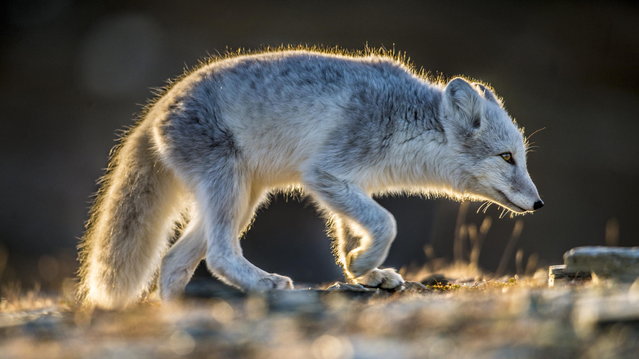
Arctic Fox. (Photo by Trond Eriksen)

“The arctic fox (Vulpes lagopus), also known as the white fox, polar fox, or snow fox, is a small fox native to the Arctic regions of the Northern Hemisphere and is common throughout the Arctic tundra biome. It is well adapted to living in cold environments. It has a deep thick fur which is brown in summer and white in winter. It averages in size at about 85.3 cm (33.6 in) in body length, with a generally rounded body shape to minimize the escape of body heat. – Wikipedia. (Photo by Trond Eriksen)
Details
26 May 2014 14:09:00
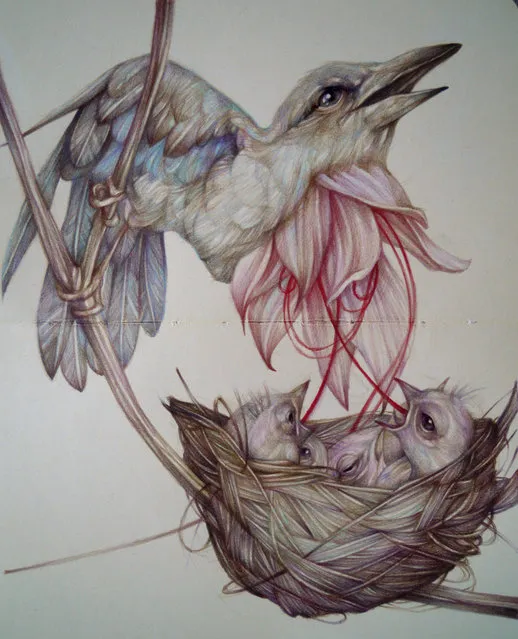
Surrealistic Animal By Marco Mazzoni

Italian pencil artist Marco Mazzoni‘s work goes far beyond technical perfection. His representation of historical healing women is enigmatic and sublime. Often leaving the eyes blank or covered with an abundance of birds, butterflies and flowers, he gives the impression of a deeper inward focused sight, as well as obscuring the identity of the individual. Many female healers in the past – both medicine woman and midwives – were brutally persecuted by religion, some even burnt as witches… Mazzoni’s work captures their deep connection with nature and their innate power and femininity with delicacy and beautiful detail.
Details
01 Apr 2015 07:43:00
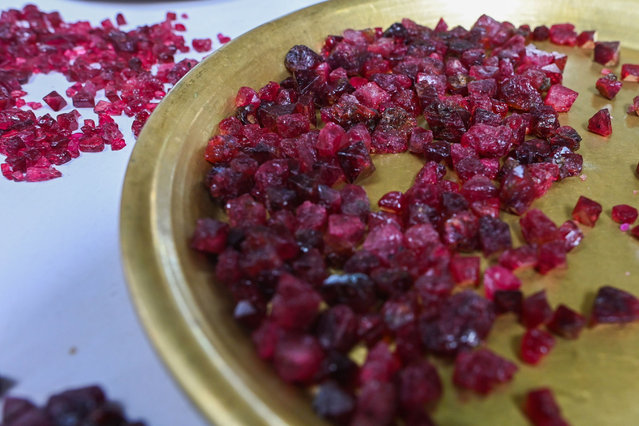
This photo taken on May 17, 2019 shows rough rubies displayed at the gems market in Mogok town, north of Mandalay. (Photo by Ye Aung Thu/AFP Photo)

This photo taken on May 17, 2019 shows rough rubies displayed at the gems market in Mogok town, north of Mandalay. Burrowing deep underground, thousands of informal miners risk their lives to find gleaming red gems as a law change spurs opportunity in Myanmar's “land of rubies”. (Photo by Ye Aung Thu/AFP Photo)
Details
29 May 2019 00:01:00
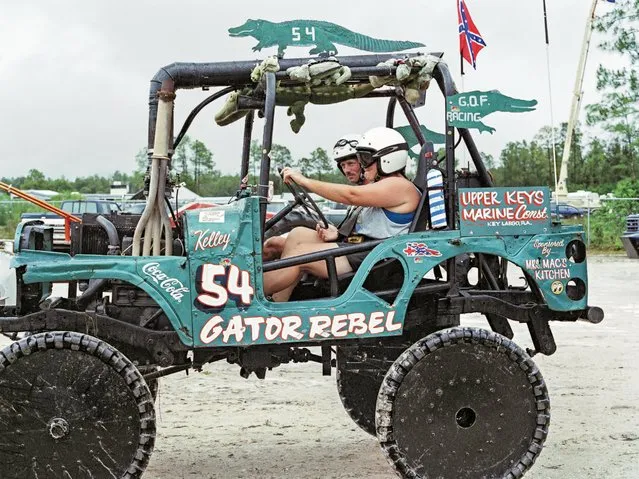
Kelley McMann, Gator Rebel, 2002. (Photo by Malcolm Lightner)

The Mile O' Mud is a 7/8-mile oval track with a 1/8-mile diagonal lane slashed through the center. The racing lanes are approximately 60 feet wide. On average, the muddy water is four to six feet deep, with three strategically placed holes. The largest hole, located in front of the grandstand, is the treacherous “Sippy Hole”, named for the legendary driver “Mississippi” Milton Morris, Swamp Buggy King 1955, who repeatedly got stuck in it. (Photo by Malcolm Lightner)
Details
19 May 2016 11:20:00
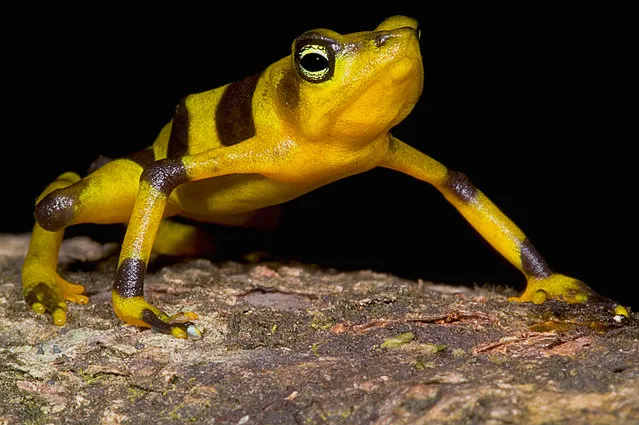
The golden harlequin toad has vanished from the wild, and only a small number live on in captivity. A fungus caused them, and many other amphibians, to die out in their home in Central America. (Photo by Danté Fenolio/The Guardian/Johns Hopkins University Press)

Wildlife photographer Danté Fenolio has headed into areas untouched by sunlight – deep seas, caves and underground – and found creatures that are exploding with colour. Here: The golden harlequin toad has vanished from the wild, and only a small number live on in captivity. A fungus caused them, and many other amphibians, to die out in their home in Central America. (Photo by Danté Fenolio/The Guardian/Johns Hopkins University Press)
Details
20 Jun 2016 12:19:00