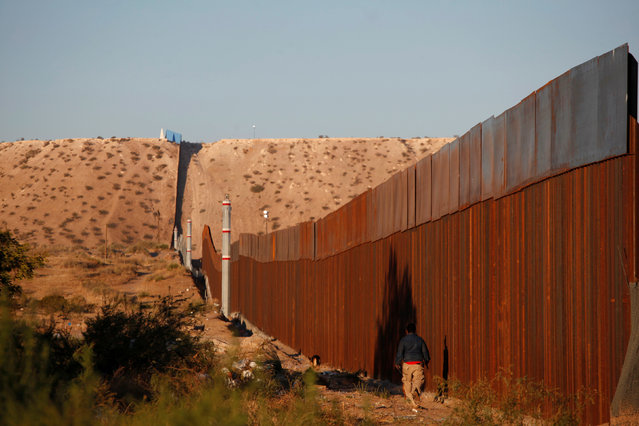
A man walks next to a section of the wall separating Mexico and the United States, on the outskirts of Ciudad Juarez, Mexico, November 12, 2016. (Photo by Jose Luis Gonzalez/Reuters)
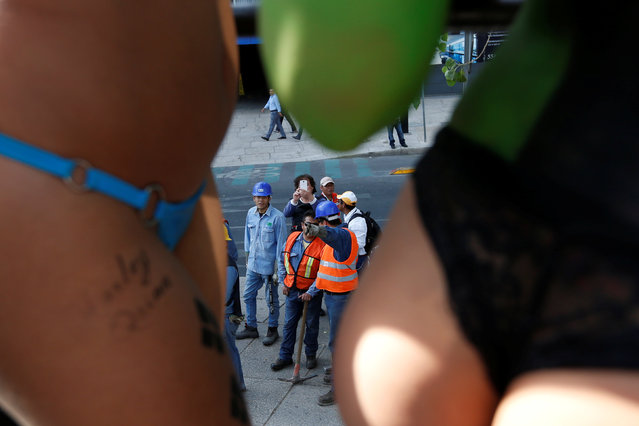
Workers look at exotic models and p*rn actresses standing on the top of a bus waving to people to promote the “Expo Sеx and Eroticism” adult exhibition in Mexico City, Mexico March 1, 2017. (Photo by Carlos Jasso/Reuters)
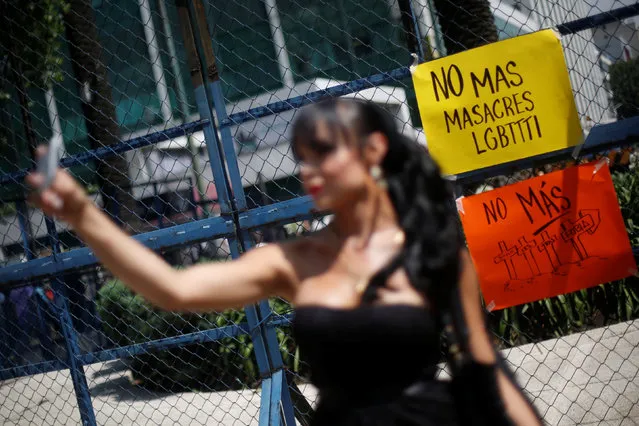
A sign that reads “No more massacres LGBT” is seen to remember the victims of the Pulse nightclub mass shooting in Orlando, near the U.S. Embassy in Mexico City, Mexico, June 14, 2016. (Photo by Edgard Garrido/Reuters)
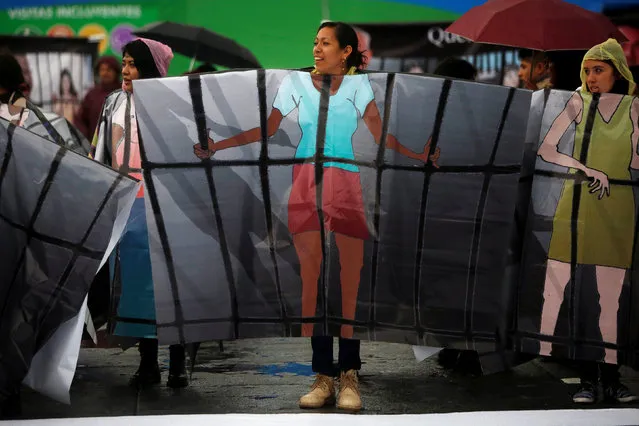
A pro-abortion activist wearing a poncho with an illustration of a woman in jail, demonstrates to demand the decriminalization of abortion in Mexico City, Mexico September 28, 2016. (Photo by Carlos Jasso/Reuters)
A nurse shows a syringe with a dose of the COVID-19 vaccine to a citizen who is about to receive it during a vaccination day as part of the campaign in Mexico City at Pepsi Center WTC on May 25, 2021 in Mexico City, Mexico. According to the head of Govermnment, Claudia Sheinbaum, seven municipalities will start their campaign today which plans to apply the first dose to over 500,000 citizens between 50 and 59 years old. (Photo by Hector Vivas/Getty Images)
Mexico City resident Romina Montoya takes a playful selfie wearing a protective face mask over her eyes and nose, in Playa del Carmen, Quintana Roo state, Mexico, Wednesday, January 6, 2021. Concern is spreading that the critical winter holiday tourism success could be fleeting because it came as COVID-19 infections in both Mexico and the United States were reaching new heights. (Photo by Emilio Espejel/AP Photo)
Adam Ghiggio from Australia poses next to mutant mannequins which are lined up to be used as displays for the new video game “Rage” at the Los Angeles Convention Center on June 5, 2011 in Los Angeles, California. The Electronic Entertainment Expo officially starts on Tuesday. (Photo by Kevork Djansezian/Getty Images)
Guiyu, China is known as the “Town of E-waste.” Thousands of its residents depend on processing electronic waste for a living. Guiyu receives its e-waste from China and from abroad, including places like Japan, Europe and America. Under Chinese law, most of the e-waste imported from overseas is illegal.