Loading...
Done
In this  October 27, 1983 file photo, soldiers brandish captured AK-47 rifles from the windows of a civilian vehicle as they drive near Point Salines Airport in St. George, Grenada. In 1983, U.S. forces invaded the Caribbean island of Grenada after accusing the government of allying itself with Communist Cuba. (Photo by Doug Jennings/AP Photo)

In this October 27, 1983 file photo, soldiers brandish captured AK-47 rifles from the windows of a civilian vehicle as they drive near Point Salines Airport in St. George, Grenada. In 1983, U.S. forces invaded the Caribbean island of Grenada after accusing the government of allying itself with Communist Cuba. (Photo by Doug Jennings/AP Photo)
Details
01 Feb 2019 00:01:00
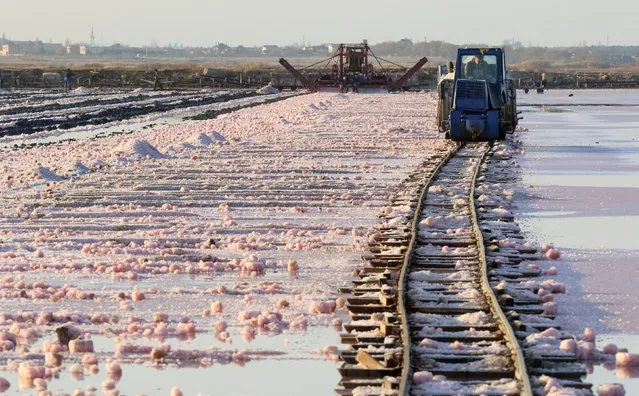
A train drives along a field at a salt production site at the Sasyk-Sivash lake near the city of Yevpatoria, Crimea, November 14, 2017. (Photo by Pavel Rebrov/Reuters)

A train drives along a field at a salt production site at the Sasyk-Sivash lake near the city of Yevpatoria, Crimea, November 14, 2017. A saltwater lagoon known as Lake Sasyk-Sivash on Ukraine's Crimea peninsula is the source of a rare resource: pink salt. The mineral is tinted by tiny algae that produce the pigment beta-carotene. Each autumn, seasonal workers collect thousands of tons of pink salt for processing and export. (Photo by Pavel Rebrov/Reuters)
Details
16 Nov 2017 08:18:00
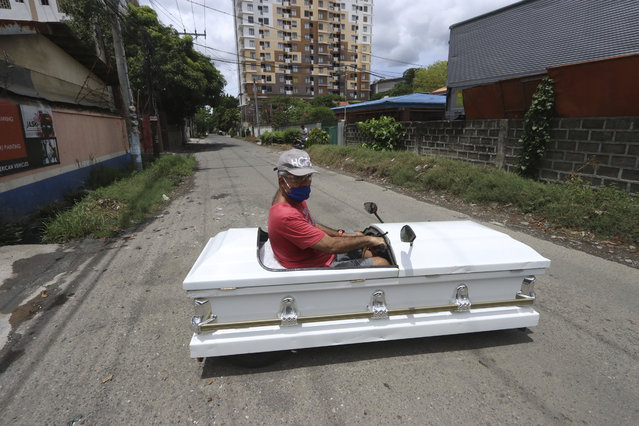
Gabriel Berendo, a businessman and car enthusiast, drives a casket converted into a car on Sunday May 31, 2020 in Cebu city, central Philippines as he goes around streets to remind residents to stay at home as lockdown measures to prevent the spread of the new coronavirus eases next week. (Photo by AP Photo/Stringer)

Gabriel Berendo, a businessman and car enthusiast, drives a casket converted into a car on Sunday May 31, 2020 in Cebu city, central Philippines as he goes around streets to remind residents to stay at home as lockdown measures to prevent the spread of the new coronavirus eases next week. (Photo by AP Photo/Stringer)
Details
02 Jun 2020 00:07:00
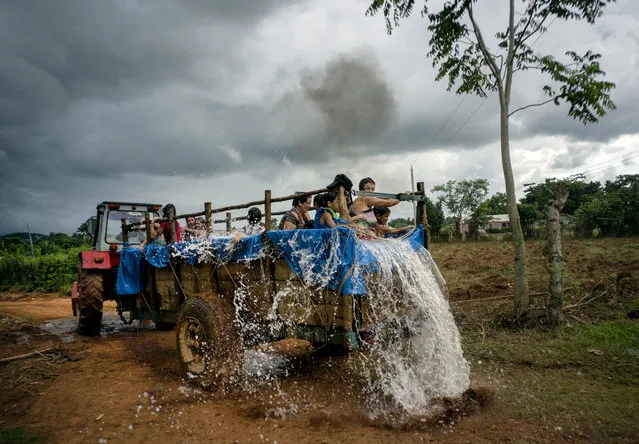
In this August 24, 2019 photo, a tractor pulls a trailer that was converted into a swimming pool as it drives along the roads of El Infernal neighborhood in San Andres in the province of Pinar del Río, Cuba. The idea for the mobile tractor-pool was hatched by local parents, to make their kids happy and fight the harsh Caribbean heat. (Photo by Ramon Espinosa/AP Photo)

In this August 24, 2019 photo, a tractor pulls a trailer that was converted into a swimming pool as it drives along the roads of El Infernal neighborhood in San Andres in the province of Pinar del Río, Cuba. The idea for the mobile tractor-pool was hatched by local parents, to make their kids happy and fight the harsh Caribbean heat. (Photo by Ramon Espinosa/AP Photo)
Details
10 Sep 2019 00:01:00
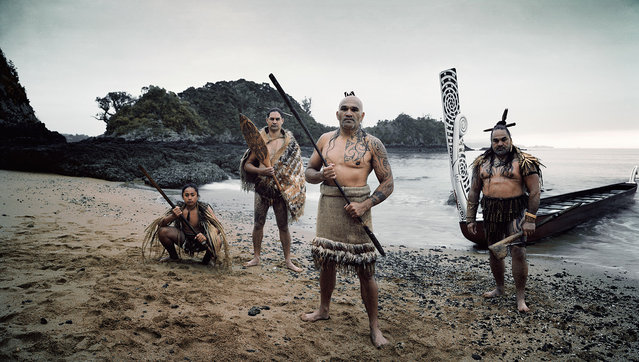
Maori  People New Zealand

The long and intriguing story of the origine of the indigenous Maori people can be traced back to the 13th century, the mythical homeland Hawaiki, Eastern Polynesia. Due to centuries of isolation, the Maori established a distinct society with characteristic art, a separate language and unique mythology. Defining aspects of Maori traditional culture include art, dance, legends, tattoos and community. While the arrival of European colonists in the 18th centure had a profound impact on the Maori way of life, many aspects of traditional society have survived into the 21th century.
Details
11 Mar 2014 14:40:00
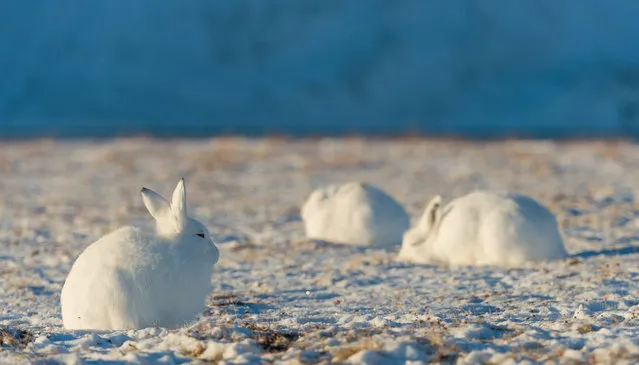
Arctic Hare

The arctic hare, or polar rabbit, is a species of hare which is adapted largely to polar and mountainous habitats. The arctic hare survives with a thick coat of fur and usually digs holes in the ground or under snow to keep warm and sleep. Arctic hares look like rabbits but have shorter ears, are taller when standing, and, unlike rabbits, can thrive in cold climates. They can travel together with many other hares, sometimes huddling with dozens or more, but are usually found alone, taking, in some cases, more than one partner. The arctic hare can run up to 60 kilometres per hour (40 mph). Its predators include the arctic wolf, arctic fox, and ermine.
Details
17 Mar 2014 13:56:00
How swimming, and lots of love, saved Harper the puppy’s life

On August 31, 2011, a puppy was rescued from a garbage bag in Central Florida. She was afflicted by a condition dubbed “swimmer puppy syndrome”, formally, pectus excavatum. It's rare in puppies, but when it happens it causes them to lie flat on their chests with their legs perpetually splayed out. It's usually a symptom of serious neurological problems that most puppies cannot survive. Veterinarians recommended putting her to sleep... (Photo by Flyin Fur Pet Photography)
Details
23 Jun 2012 09:10:00
Of all the species affected by river regulation in Australia, the ibis is one of the few that has changed its behaviour and moved to coastal cities. (Photo by Rick Stevens/The Guardian)

Tip turkey, dumpster chook, rubbish raptor – the Australian white ibis goes by many unflattering names. But it is a true urban success story, scavenging to survive in cities across Australia as wetlands have been lost. Wildlife photographer Rick Stevens captured them in Sydney. Here: Of all the species affected by river regulation in Australia, the ibis is one of the few that has changed its behaviour and moved to coastal cities. (Photo by Rick Stevens/The Guardian)
Details
11 Apr 2018 00:03:00