Loading...
Done
Swiss Company Turns People’s Ashes Into Diamonds

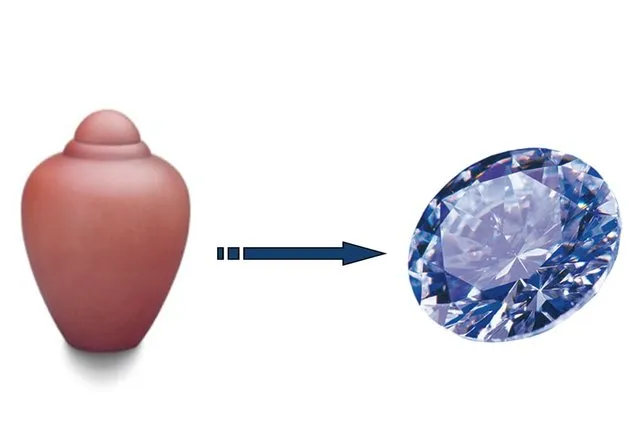
In the past people used to bury their loved ones or turn them into ashes. However, now there is a completely new possibility. Since having an urn with ashes in your house may be a bit weird, you may want to choose the option of turning your deceased relative into a diamond. Yes, diamond! You’ve heard us correctly. By using immense heat and pressure, the ashes you get after cremating a person can be turned into a real diamond. After this, the diamond can be left as it is, and stored in a jewelry box, or it can be used as a piece of jewelry, such as a ring or a pendant, allowing you to always keep your loved one close to your heart. (Photo by djd/Algordanza memorial diamonds)
Details
20 Oct 2014 08:52:00
A deserted alley in the ghost town of Apice, in the province of Benevento, southern Italy, 22 November 2016. (Photo by Cesare Abbate/EPA)

A deserted alley in the ghost town of Apice, in the province of Benevento, southern Italy, 22 November 2016. After the Irpinia earthquake that took place in southern Italy on 23 November 1980, leaving at least 2,500 people dead, 8,000 injured and 250,000 homeless, the town in the heart of the Sannio area was evacuated and its residents moved into what has become the new Apice. Only recently the narrow streets and the tragically abandoned buildings have started, slowly, to repopulate. (Photo by Cesare Abbate/EPA)
Details
23 Nov 2016 11:30:00
«Brides Of March» flash mob

A man looks at members of the flash mob group calling themselves the «Brides of March» (“Grab a wedding dress and join the brides as we parade through the heart of San Francisco, strolling through Union Square, shopping at fancy stores and drinking at local bars!”) as they stand outside a bar March 18, 2006 in San Francisco. The flash mob group made their way through the streets stopping at bars, cafes, and several stores. (Photo by Justin Sullivan/Getty Images)
Details
17 Jan 2012 10:31:00
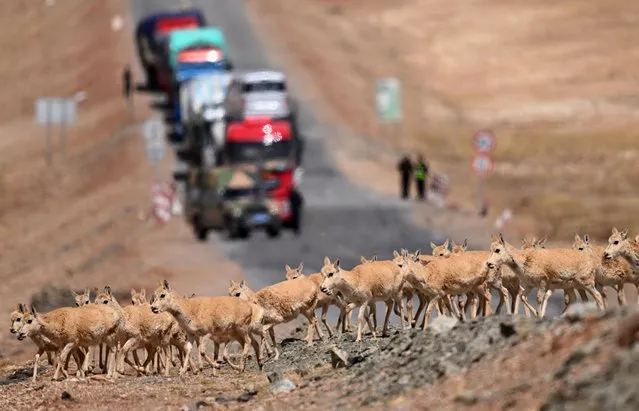
Pregnant Tibetan antelopes move across the Qinghai-Tibet highway in Hoh Xil, northwest China's Qinghai Province, May 29, 2023. A growing number of pregnant Tibetan antelopes are migrating to the heart of northwest China's Hoh Xil National Nature Reserve to give birth, according to the reserve's management office. Every year, tens of thousands of pregnant Tibetan antelopes start their migration to Hoh Xil in around May to give birth and leave with their offspring in late July. Under the first-class state protection in China, the once-endangered species is found in Tibet Autonomous Region, Qinghai Province, and Xinjiang Uygur Autonomous Region. Their population has increased over the past three decades thanks to the ban on illegal hunting and other measures implemented to improve its habitat. (Photo by Xinhua News Agency/Rex Features/Shutterstock)

Pregnant Tibetan antelopes move across the Qinghai-Tibet highway in Hoh Xil, northwest China's Qinghai Province, May 29, 2023. A growing number of pregnant Tibetan antelopes are migrating to the heart of northwest China's Hoh Xil National Nature Reserve to give birth, according to the reserve's management office. Every year, tens of thousands of pregnant Tibetan antelopes start their migration to Hoh Xil in around May to give birth and leave with their offspring in late July. (Photo by Xinhua News Agency/Rex Features/Shutterstock)
Details
08 Jun 2023 02:20:00
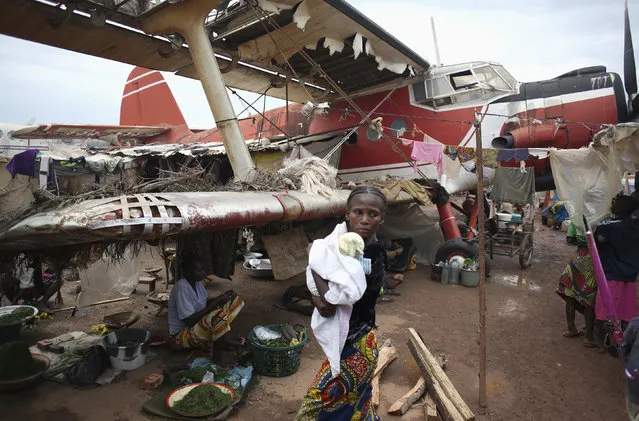
An internally displaced woman carries her child in a camp for internally displaced people (IDPs), located at Bangui International Airport, April 10, 2014. (Photo by Goran Tomasevic/Reuters)

Scores of internally displaced Muslims are at the heart of the humanitarian crisis in Central African Republic, where violence between Christians and Muslims has threatened to spiral into genocide. Photo: An internally displaced woman carries her child in a camp for internally displaced people (IDPs), located at Bangui International Airport, April 10, 2014. (Photo by Goran Tomasevic/Reuters)
Details
18 Apr 2014 08:41:00
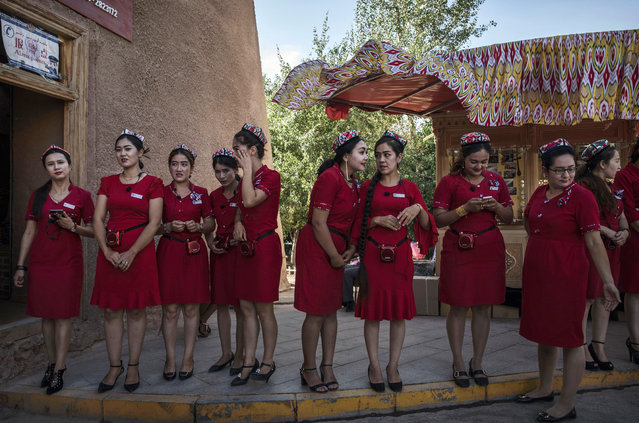
Ethnic Uyghur tourists guides wait to perform in a show for Chinese tourists on June 29, 2017 in the old town of Kashgar, in the far western Xinjiang province, China. (Photo by Kevin Frayer/Getty Images)

Ethnic Uyghur tourists guides wait to perform in a show for Chinese tourists on June 29, 2017 in the old town of Kashgar, in the far western Xinjiang province, China. Kashgar has long been considered the cultural heart of Xinjiang for the province's nearly 10 million Muslim Uyghurs. (Photo by Kevin Frayer/Getty Images)
Details
03 Aug 2017 08:59:00
In this Wednesday, August 2, 2017 photo, Borre, an 8-year-old cat sits in a basket next to the canal on the Catboat shelter in Amsterdam, Netherlands. (Photo by Muhammed Muheisen/AP Photo)

In this Wednesday, August 2, 2017 photo, Borre, an 8-year-old cat sits in a basket next to the canal on the Catboat shelter in Amsterdam, Netherlands. In the heart of the Dutch capital, on a canal near one of the busiest shopping streets, a floating animal sanctuary called The Catboat provides refuge for about 50 stray and abandoned felines. (Photo by Muhammed Muheisen/AP Photo)
Details
09 Aug 2017 07:31:00
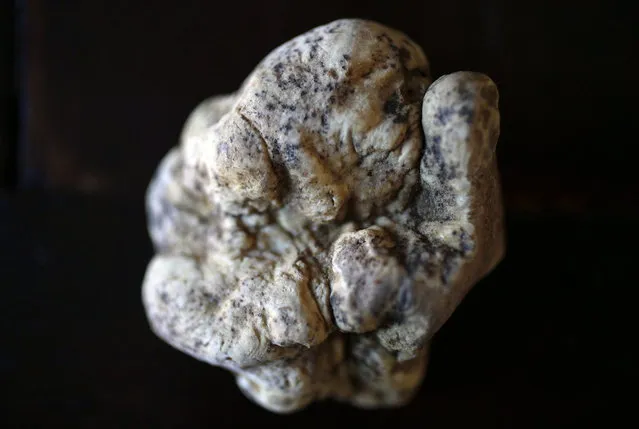
A truffle is seen on a table in Alba, north-western Italy November 11, 2013. Located in the heart of the Langhe – the hilly southern area of Italy's northwestern Piedmont region – Alba is the country's capital of white truffles, a variety of the prized fungus which grows underground. Truffles are found two to eight inches (5-20cm) below the ground near the roots of trees. (Photo by Stefano Rellandini/Reuters)

A truffle is seen on a table in Alba, north-western Italy November 11, 2013. Located in the heart of the Langhe – the hilly southern area of Italy's northwestern Piedmont region – Alba is the country's capital of white truffles, a variety of the prized fungus which grows underground. Truffles are found two to eight inches (5-20cm) below the ground near the roots of trees. They give off an odour which lasts for a limited period of time and can be detected with the assistance of well-trained dogs and experienced hunters. Output of white truffles, which are not cultivated and only grow naturally in forests, has fallen in Italy over the past few years, largely because climate change has brought a damaging mix of drought and torrential rains. (Photo by Stefano Rellandini/Reuters)
Details
31 Dec 2013 11:22:00