Loading...
Done
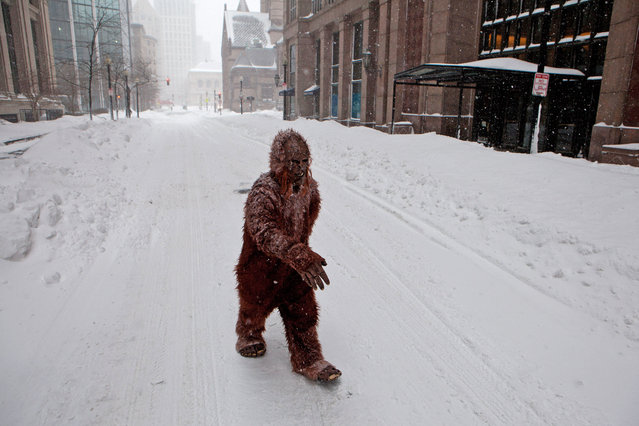
A person dressed as “bigfoot” makes their way through the strong wind and snow in the Back Bay neighborhood during a blizzard on January 27, 2015 in Boston, Massachusetts. (Photo by Kayana Szymczak/Getty Images)

A person dressed as “bigfoot” makes their way through the strong wind and snow in the Back Bay neighborhood during a blizzard on January 27, 2015 in Boston, Massachusetts. (Photo by Kayana Szymczak/Getty Images)
Details
31 Jan 2015 12:27:00
In this handout photo provided by Warner Brothers Pictures and Village Roadshow Pictures, Tom Cruise plays Lieutenant Colonel Bill Cage, a soldier who replays his last day while trying to fight aliens, in director Doug Liman's “All You Need Is Kill”. The film is set to premiere on March 14, 2014. (Photo by David James/Warner Brothers Pictures)

In this handout photo provided by Warner Brothers Pictures and Village Roadshow Pictures, Tom Cruise plays Lieutenant Colonel Bill Cage, a soldier who replays his last day while trying to fight aliens, in director Doug Liman's “All You Need Is Kill”. The film is set to premiere on March 14, 2014. (Photo by David James/Warner Brothers Pictures)
Details
26 Nov 2012 13:14:00
Two women pose as they drink real ale at the Great British Beer Festival in the Olympia exhibition centre on August 13, 2013 in London, England. The festival, which runs until August 17, 2013, has over 24 bars serving over 800 different beers, ciders and perries. (Photo by Oli Scarff/Getty Images)

Two women pose as they drink real ale at the Great British Beer Festival in the Olympia exhibition centre on August 13, 2013 in London, England. The festival, which runs until August 17, 2013, has over 24 bars serving over 800 different beers, ciders and perries. (Photo by Oli Scarff)
Details
04 Sep 2013 08:18:00
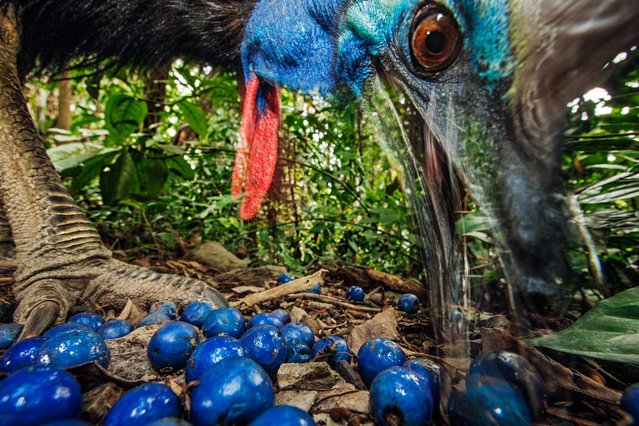
“Cassowaries are large, flightless birds related to emus and (more distantly) to ostriches, rheas, and kiwis”, writes Olivia Judson in the September issue of National Geographic magazine. (Photo by Christian Ziegler/National Geographic)

“Cassowaries are large, flightless birds related to emus and (more distantly) to ostriches, rheas, and kiwis”, writes Olivia Judson in the September issue of National Geographic magazine. How large? People-size: Adult males stand well over five foot five and top 110 pounds. Females are even taller, and can weigh more than 160 pounds. Dangerous when roused, they’re shy and peaceable when left alone. But even birds this big and tough are prey to habitat loss. The dense New Guinea and Australia rain forests where they live have dwindled. Today cassowaries might number 1,500 to 2,000. And because they help shape those same forests – by moving seeds from one place to another – “if they vanish”, Judson writes, “the structure of the forest would gradually change” too. (Photo by Christian Ziegler/National Geographic)

Details
06 Jan 2014 12:21:00


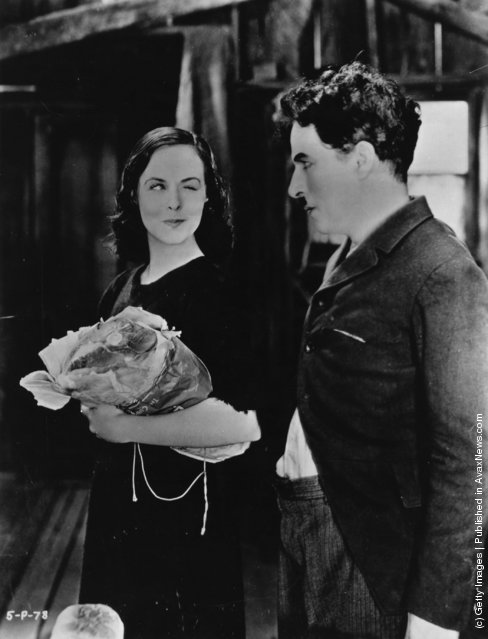
British comedian and director Charles Chaplin (1889–1977) and actress Paulette Goddard (1911–1990), to whom he was married for seven years, star in the comedy “Modern Times”, directed by Chaplin himself. (Photo by Hulton Archive/Getty Images). 1936
Details
17 Apr 2011 09:07:00
Undated handout photo issued by Guinness World Records of Fabio Reggiani from Italy who has made it into the Guinness Book of World Records for constructing the worlds largest rideable motorcycle measuring 5.10 meters (16ft 8.78 in) from the ground to the top of the handlebars. Six times larger than a normal motorcycle, it's 10.03 m long, 2.5 m wide, and weighs approximately 5,000 kg (5 tonnes). (Photo by Guinness World Records/PA Wire)

Undated handout photo issued by Guinness World Records of Fabio Reggiani from Italy who has made it into the Guinness Book of World Records for constructing the worlds largest rideable motorcycle measuring 5.10 meters (16ft 8.78 in) from the ground to the top of the handlebars. Six times larger than a normal motorcycle, it's 10.03 m long, 2.5 m wide, and weighs approximately 5,000 kg (5 tonnes). (Photo by Guinness World Records/PA Wire)
Details
14 Sep 2013 11:39:00
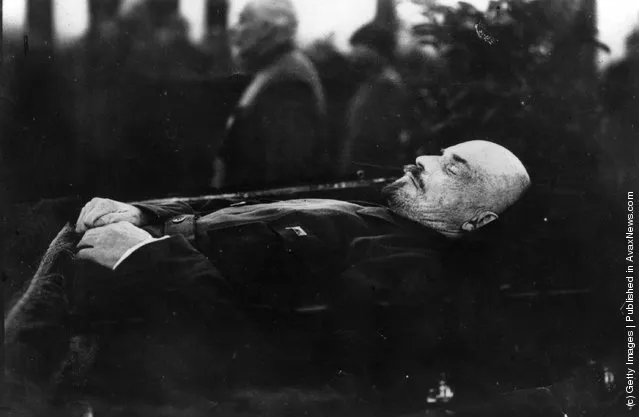
1924:  Vladimir Ilyich Lenin lying in state in the Kremlin

Photo: Vladimir Ilyich Lenin (1870 – 1924) lying in state in the Kremlin. (Photo by Hulton Archive/Getty Images). 1924

Important! For the same article in Russian language click here.

Something quite intriguing is happening within Russian-speaking internet during the last few – should you type a fully academic inquiry (at least, according to Russian academic requirements) in national search engines for "Lenin's mausoleum" – the first thing you get (even in top 10 searches) is website pages talking about black magic and occult. Website authors view this construction differently, but unconditionally agree on one thing: the mausoleum of the "leader of the world proletariat” – the essence of a magical artifact, a sort of “energy vampire”. It was built with a certain purpose: to drain the energy out of miserable Soviet citizens on one hand; and to poison the anthroposphere of one-sixth part of the earth with its vibes (the exact territory that was occupied by the former Soviet Union), depriving the Russian people of will to resist on the other hand. Complete nonsense? No doubt. Nevertheless, an intriguing one. Well, probably because some oddities do exist in mausoleum's history. These oddities are the thing we are going to discuss this time. First, let me refresh you memory on the subject.
Details
16 Oct 2011 11:27:00
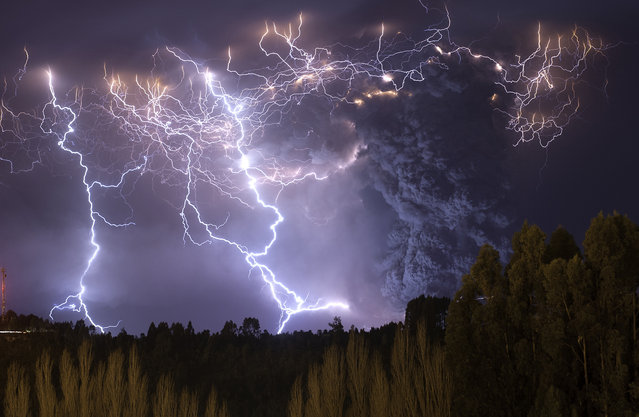
The eruption of Cordon Caulle began on June 4, 2011, located in the Region of Los Rios in Chile. For about 12 months, people and animals became accustomed to living with the daily fall of ash, which also caused problems in the air traffic in South America. The explosions and lightning during first days of the eruption could be seen from hundreds of miles around. This photograph was taken on the second night of eruption from the town of Lago Ranco. (Photo and caption by Francisco Negroni/National Geographic Traveler Photo Contest)

The eruption of Cordon Caulle began on June 4, 2011, located in the Region of Los Rios in Chile. For about 12 months, people and animals became accustomed to living with the daily fall of ash, which also caused problems in the air traffic in South America. The explosions and lightning during first days of the eruption could be seen from hundreds of miles around. This photograph was taken on the second night of eruption from the town of Lago Ranco. (Photo and caption by Francisco Negroni/National Geographic Traveler Photo Contest)

ATTENTION! All pictures are presented in high resolution. To see Hi-Res images – just TWICE click on any picture. In other words, click small picture – opens the BIG picture. Click BIG picture – opens VERY BIG picture.
Details
23 Jun 2013 11:24:00