Loading...
Done
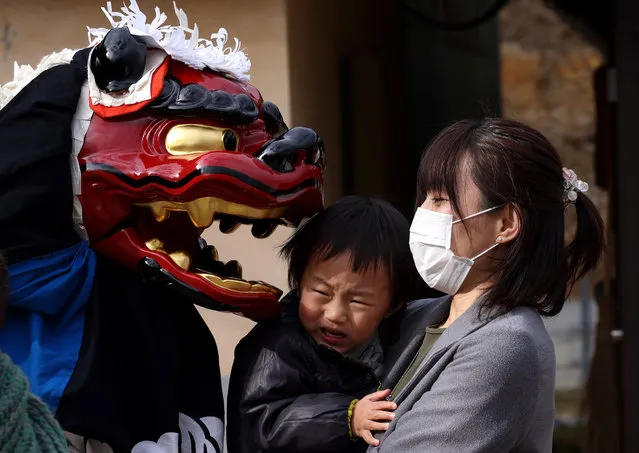
A performer wearing a lion mask performs the Ise Daikagura lion dance at the remote village of Yamanawa on February 08, 2021 in Ryuo, Japan. Ise Daikagura is a group of traditional Lion Dance performers who pray in front of farmers houses and businesses for good grain harvests and disease-free lives. Performers play sacred music using drums and flutes with two lion mask dancers. A lion mask is considered a symbol of God, who enters the house and performs in front of the Shinto God, a statue placed inside the house, mostly in the kitchen. These prayers are called “Kamodo Barai”. After the prayers, they are gifted with money, rice, sake and Japanese sweets from the householders. A group can travel for more than one hundred days to thousands of households and businesses throughout rural-villages in western Japan, and pray to those who are unable to visit the country’s most sacred shrine, the Grand Ise Shrine in Mie Prefecture. The group started its performance in the Edo era between 1603 to 1868 according to Japanese history. The Japanese government designated it as an important folk cultural national property in 1981. (Photo by Buddhika Weerasinghe/Getty Images)

A performer wearing a lion mask performs the Ise Daikagura lion dance at the remote village of Yamanawa on February 08, 2021 in Ryuo, Japan. Ise Daikagura is a group of traditional Lion Dance performers who pray in front of farmers houses and businesses for good grain harvests and disease-free lives. (Photo by Buddhika Weerasinghe/Getty Images)
Details
18 Feb 2021 09:27:00
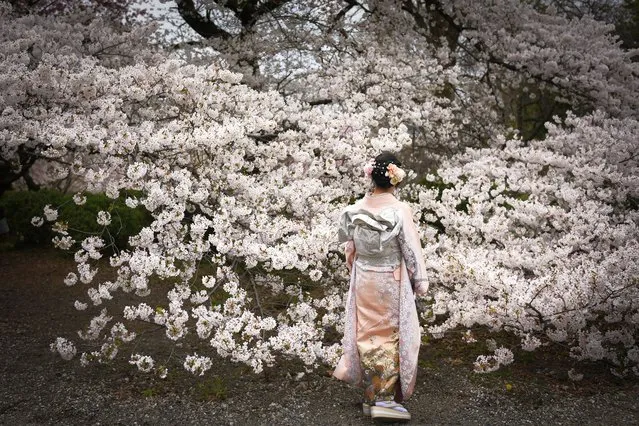
A woman with Kimono looks at cherry trees in bloom in Shinjuku Gyoen in Tokyo, Japan on Thursday, April 4, 2024. (Photo by Noriko Hayashi for The Washington Post)

A woman with Kimono looks at cherry trees in bloom in Shinjuku Gyoen in Tokyo, Japan on Thursday, April 4, 2024. (Photo by Noriko Hayashi for The Washington Post)
Details
29 Apr 2024 05:21:00
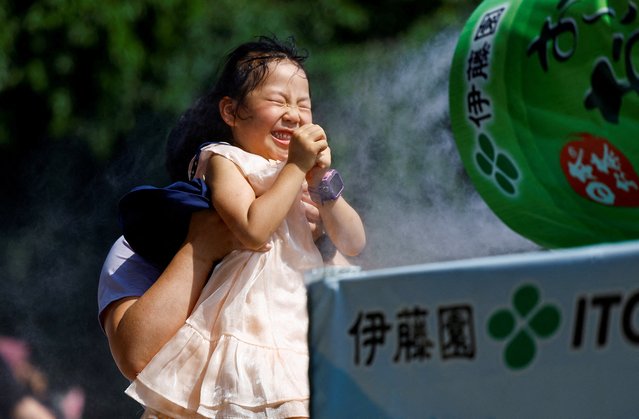
A child reacts as a family takes a break next to a cooling mist at the Sensoji temple as Japanese government issued heat stroke alerts in 39 of the country's 47 prefectures in Tokyo, Japan on July 22, 2024. (Photo by Issei Kato/Reuters)

A child reacts as a family takes a break next to a cooling mist at the Sensoji temple as Japanese government issued heat stroke alerts in 39 of the country's 47 prefectures in Tokyo, Japan on July 22, 2024. (Photo by Issei Kato/Reuters)
Details
29 Jul 2024 03:37:00
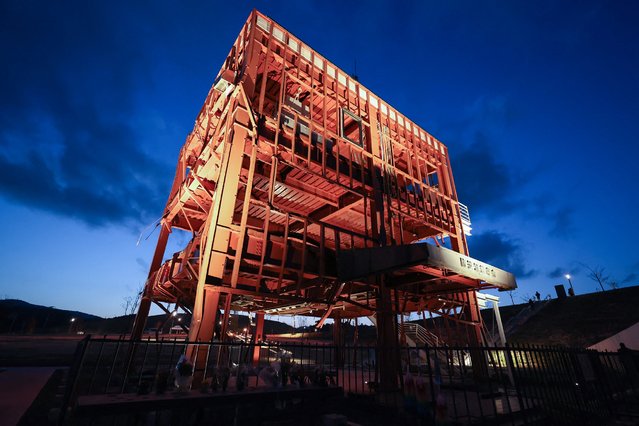
This photo taken on March 10, 2025 shows the former disaster prevention office building in Minamisanriku Town, Miyagi Prefecture, lit up on the eve of the 14th anniversary of the 2011 earthquake and tsunami disaster. (Photo by JIJI Press/AFP Photo)

This photo taken on March 10, 2025 shows the former disaster prevention office building in Minamisanriku Town, Miyagi Prefecture, lit up on the eve of the 14th anniversary of the 2011 earthquake and tsunami disaster. (Photo by JIJI Press/AFP Photo)
Details
14 Apr 2025 03:54:00
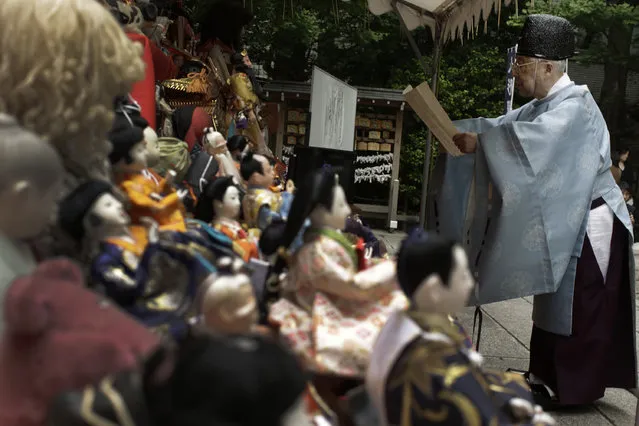
A Shinto priest prays to the dedicated dolls during the Festival of Repayment of Kindness at Dairoku-tensakaki Shrine in Tokyo, Saturday, May 16, 2015. (Photo by Eugene Hoshiko/AP Photo)

A Shinto priest prays to the dedicated dolls during the Festival of Repayment of Kindness at Dairoku-tensakaki Shrine in Tokyo, Saturday, May 16, 2015. Traditionally, it is believed that the dolls can give good health and happiness to children by absorbing sickness and ill fate. The dolls are then sacrificed during the festival after they have protected their young owners. (Photo by Eugene Hoshiko/AP Photo)
Details
18 May 2015 12:33:00
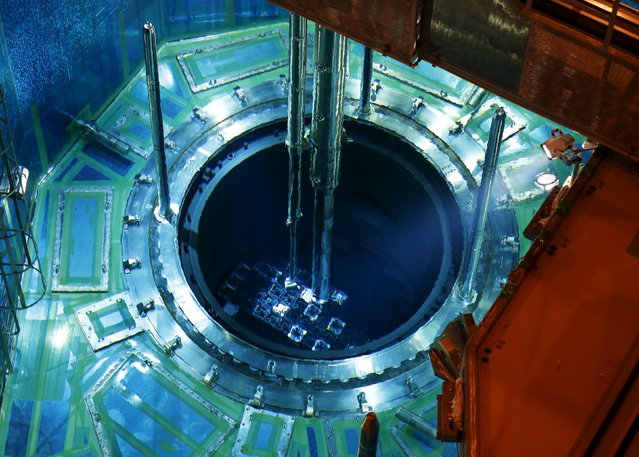
A fuel rod is inserted into a reactor vessel inside the No. 1 reactor building at Kyushu Electric Power's Sendai nuclear power station in Satsumasendai, Kagoshima prefecture, Japan, July 8, 2015. (Photo by Issei Kato/Reuters)

A fuel rod is inserted into a reactor vessel inside the No. 1 reactor building at Kyushu Electric Power's Sendai nuclear power station in Satsumasendai, Kagoshima prefecture, Japan, July 8, 2015. Kyushu Electric Power Co started loading uranium fuel rods into a reactor on Tuesday, marking the first attempt to reboot Japan's nuclear industry in nearly two years after the sector was shutdown following the 2011 Fukushima disaster. (Photo by Issei Kato/Reuters)
Details
09 Jul 2015 11:52:00
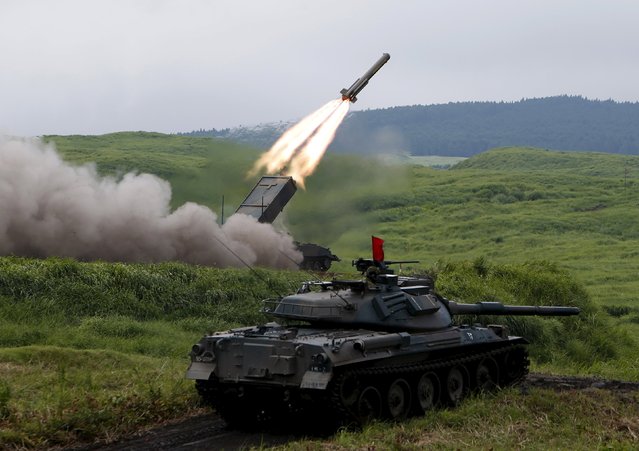
A Japanese Ground Self-Defense Force Type 92 Mine sweeping vehicle fires a rocket behind a Type 74 armoured tank during an annual training session, which is based on a scenario to defend or retake islands in Japanese territory, near Mount Fuji at Higashifuji training field in Gotemba, west of Tokyo, August 18, 2015. (Photo by Yuya Shino/Reuters)

A Japanese Ground Self-Defense Force Type 92 Mine sweeping vehicle fires a rocket behind a Type 74 armoured tank during an annual training session, which is based on a scenario to defend or retake islands in Japanese territory, near Mount Fuji at Higashifuji training field in Gotemba, west of Tokyo, August 18, 2015. (Photo by Yuya Shino/Reuters)
Details
19 Aug 2015 12:18:00
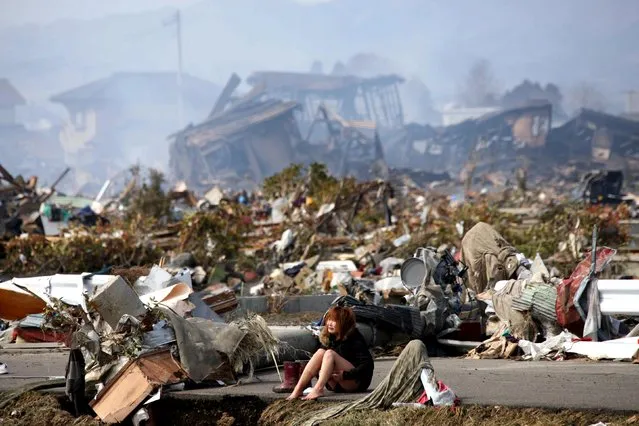
A woman cries while sitting on a road amid the destroyed city of Natori, Miyagi Prefecture in northern Japan March 13, 2011, after a massive earthquake and tsunami that are feared to have killed more than 10,000 people. (Photo by Asahi Shimbun/Reuters)

A woman cries while sitting on a road amid the destroyed city of Natori, Miyagi Prefecture in northern Japan March 13, 2011, after a massive earthquake and tsunami. Five years on from the tsunami that triggered meltdowns at Japan's Fukushima nuclear plant, the page is anything but turned. A magnitude 9 earthquake and towering tsunami on March 11, 2011 killed nearly 16,000 people along Japan's northeastern coast and left more than 2,500 missing. The 10-metre (33-foot) tsunami swept away everything in its path, including houses, ships, cars and farm buildings. (Photo by Asahi Shimbun/Reuters)
Details
09 Mar 2016 12:40:00