Loading...
Done
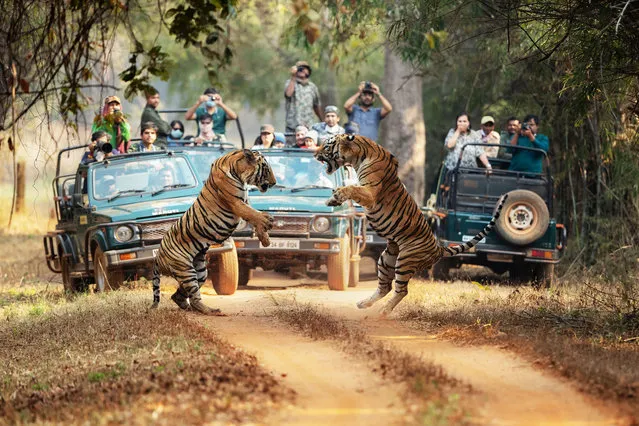
Pic shows two males tigers sparring for dominance over a female in the Tadoba Andhari Tiger Reserve in Chandrapur district of Maharashtra state in India on Monday,  January 16, 2023. The spectacular images of the big cats were taken by Narayan Malu who was just 150 yards from the action. (Photo by Narayan Malu/Magnus News)

Pic shows two males tigers sparring for dominance over a female in the Tadoba Andhari Tiger Reserve in Chandrapur district of Maharashtra state in India on Monday, January 16, 2023. The spectacular images of the big cats were taken by Narayan Malu who was just 150 yards from the action. (Photo by Narayan Malu/Magnus News)
Details
29 Jan 2023 00:42:00
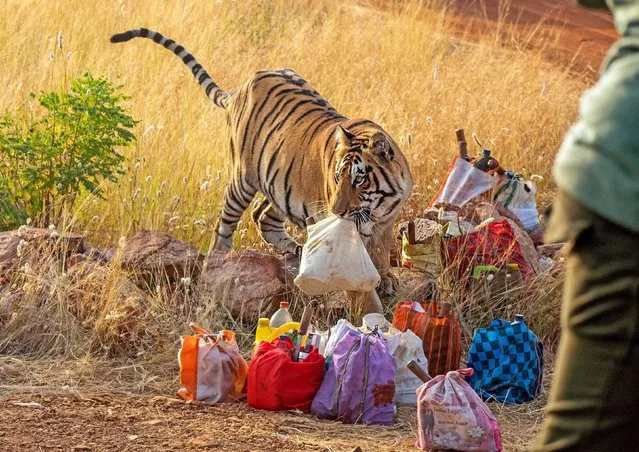
A Bengal tiger grabs a bag of food belonging to labourers at the Tadoba Andhari Tiger Reserve in Chandrapur, India in the first decade of February 2024. The workers were cutting the grass to avoid forest fires in the area. The wild feline, watched on by its family, later dropped the bag without any harm caused. (Photo by Jignesh Patel/Solent news)

A Bengal tiger grabs a bag of food belonging to labourers at the Tadoba Andhari Tiger Reserve in Chandrapur, India in the first decade of February 2024. The workers were cutting the grass to avoid forest fires in the area. The wild feline, watched on by its family, later dropped the bag without any harm caused. (Photo by Jignesh Patel/Solent news)
Details
20 Feb 2024 03:22:00
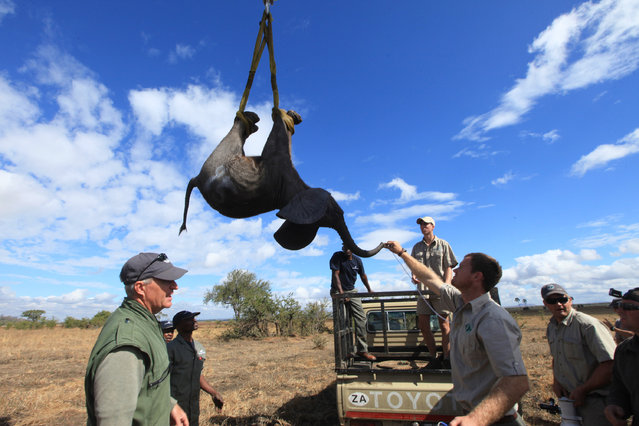
In this Tuesday July 12, 2016 photo, an elephant is lifted by a crane in an upside down position in Lilongwe, Malawi, in the first step of an assisted migration of 500 of the threatened species. African Parks, which manages three Malawian reserves is moving the 500 elephants from Liwonde National Park, this month and next, and again next year when vehicles can maneuver on the rugged terrain during Southern Africa's dry winter. (Photo by Tsvangirayi Mukwazhi/AP Photo)

In this Tuesday July 12, 2016 photo, an elephant is lifted by a crane in an upside down position in Lilongwe, Malawi, in the first step of an assisted migration of 500 of the threatened species. African Parks, which manages three Malawian reserves is moving the 500 elephants from Liwonde National Park, this month and next, and again next year when vehicles can maneuver on the rugged terrain during Southern Africa's dry winter. (Photo by Tsvangirayi Mukwazhi/AP Photo)
Details
20 Jul 2016 10:19:00
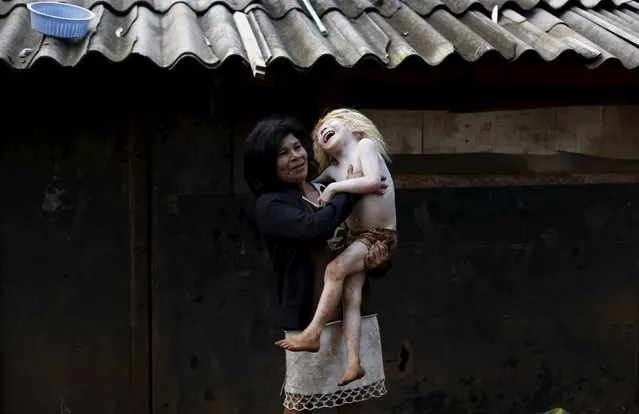
A Guarani Indian woman jokes with her son in the village of Pyau at Jaragua district, in Sao Paulo April 27, 2015. The National Indian Foundation (FUNAI) has recognised 521 hectares of this area as indigenous territory, making it the smallest indigenous reserve in Brazil. Members of the Guarani community have now established a new village outside the demarcation and are being threatened with an eviction through a court order. (Photo by Nacho Doce/Reuters)

A Guarani Indian woman jokes with her son in the village of Pyau at Jaragua district, in Sao Paulo April 27, 2015. The National Indian Foundation (FUNAI) has recognised 521 hectares of this area as indigenous territory, making it the smallest indigenous reserve in Brazil. Members of the Guarani community have now established a new village outside the demarcation and are being threatened with an eviction through a court order. (Photo by Nacho Doce/Reuters)
Details
01 May 2015 12:42:00
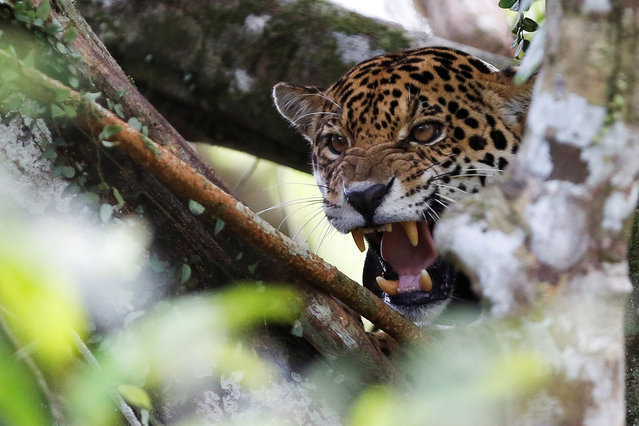
A female adult jaguar, which has a cub, growls at the Mamiraua Sustainable Development Reserve in Uarini, Amazonas state, Brazil, June 5, 2017. (Photo by Bruno Kelly/Reuters)

Brazilian jaguars, imperilled by hunters, ranchers and destruction of their habitat, have learned to survive at least one menace – flooding in the Amazon. They take to the trees. Although they can be six feet long and 200 pounds, the largest South American cats nimbly navigate treetops where they stay from April to July when the rainforest floor is under meters-deep water. Here: A female adult jaguar, which has a cub, growls at the Mamiraua Sustainable Development Reserve in Uarini, Amazonas state, Brazil, June 5, 2017. (Photo by Bruno Kelly/Reuters)
Details
07 Apr 2018 00:03:00
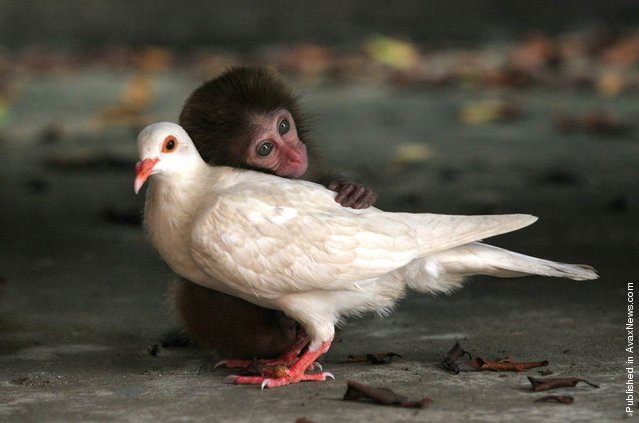
An orphaned rhesus monkey and white dove that seemed to have lost its mate forged a special bond at the Neilingding Island-Futian National Nature Reserve in China. The monkey was born on the island but had strayed from its mother. Luckily, it was taken in by work staff in the protection center and became friends with the pigeon that had lingered there after possibly losing its mate

An orphaned rhesus monkey and white dove that seemed to have lost its mate forged a special bond at the Neilingding Island-Futian National Nature Reserve in China. The monkey was born on the island but had strayed from its mother. Luckily, it was taken in by work staff in the protection center and became friends with the pigeon that had lingered there after possibly losing its mate. (Photo by CNImaging/Photoshot)
Details
16 Apr 2012 11:44:00
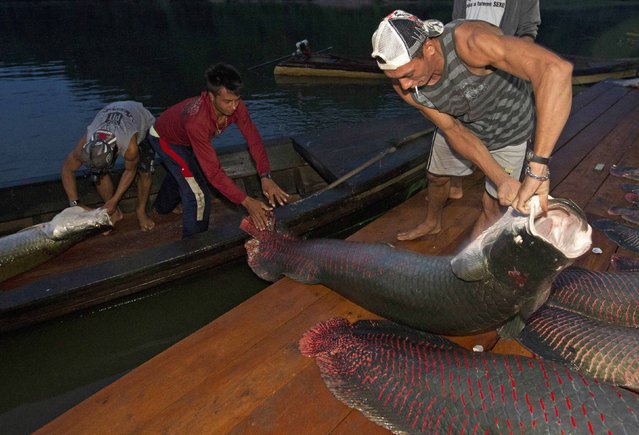
Villagers from the Medio Jurua nature reserve of Brazil's Amazon rainforest arrive with their catch of pirarucus, the largest freshwater fish in South America, after a night of fishing in Manaria Lake, Carauari municipality, September 3, 2012. Catching the pirarucu, a fish that is sought after for its meat and is considered by biologists to be a living fossil, is only allowed once a year by Brazil's environmental protection agency. (Photo by Bruno Kelly/Reuters)

Villagers from the Medio Jurua nature reserve of Brazil's Amazon rainforest arrive with their catch of pirarucus, the largest freshwater fish in South America, after a night of fishing in Manaria Lake, Carauari municipality, September 3, 2012. Catching the pirarucu, a fish that is sought after for its meat and is considered by biologists to be a living fossil, is only allowed once a year by Brazil's environmental protection agency. (Photo by Bruno Kelly/Reuters)
Details
19 Jul 2013 08:53:00
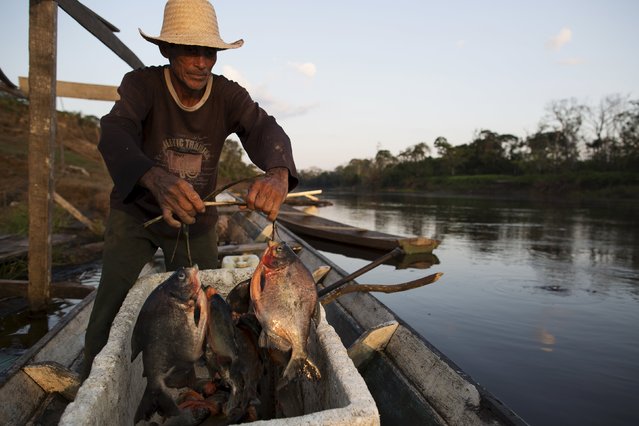
Francisco da Silva Vale, 61, cools off fish with ice produced on solar-powered ice machines at Vila Nova do Amana community in the Sustainable Development Reserve, in Amazonas state, Brazil, September 23, 2015. Three solar-powered machines, are producing about ninety kilos of ice per day, in a region with poor access to electric energy, which used to be produced only with diesel oil, in the Amazon rain forest. (Photo by Bruno Kelly/Reuters)

Francisco da Silva Vale, 61, cools off fish with ice produced on solar-powered ice machines at Vila Nova do Amana community in the Sustainable Development Reserve, in Amazonas state, Brazil, September 23, 2015. Three solar-powered machines, are producing about ninety kilos of ice per day, in a region with poor access to electric energy, which used to be produced only with diesel oil, in the Amazon rain forest. (Photo by Bruno Kelly/Reuters)
Details
10 Oct 2015 08:03:00