Loading...
Done
Paints With Shadows And Light By Rashad Alakbarov

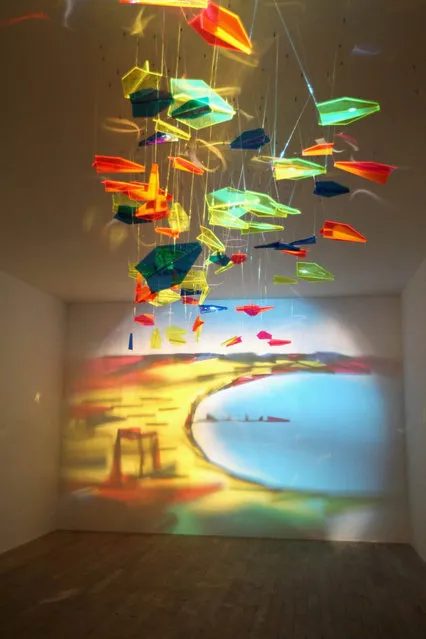
The Azerbaijan-based artist’s mixed-media installations include pieces entitled “Looking at two cities from one point of view”, “Plastik portret” and “Crisis haha”. Alakbarov carefully positions multicolored acrylic planes, packaging materials, and other objects of assorted shapes and then projects light upon then to create shadow images of beautiful beaches, cities, people, and even words.
Details
08 Jun 2014 08:46:00
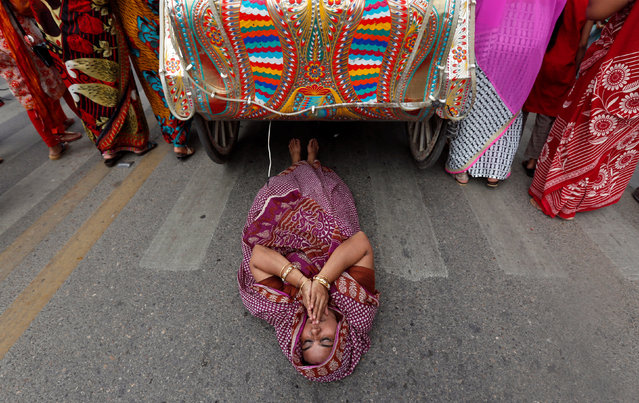
A Hindu devotee lies on a road as the holy “Rath”, or the chariot of lord Jagannath, passed over her during the Rath Yatra, or chariot procession in Karachi, Pakistan, July 17, 2016. Ratha-jatra is derived from two Odia words ratha/rotho meaning “chariot” and jatra meaning “journey”. The festival involves an annual procession (journey) of a deity's idols. Other names for the festival include ratha jatra or chariot festival. (Photo by Akhtar Soomro/Reuters)

A Hindu devotee lies on a road as the holy “Rath”, or the chariot of lord Jagannath, passed over her during the Rath Yatra, or chariot procession in Karachi, Pakistan, July 17, 2016. Ratha-jatra is derived from two Odia words ratha/rotho meaning “chariot” and jatra meaning “journey”. The festival involves an annual procession (journey) of a deity's idols. Other names for the festival include ratha jatra or chariot festival. (Photo by Akhtar Soomro/Reuters)
Details
18 Jul 2016 12:42:00
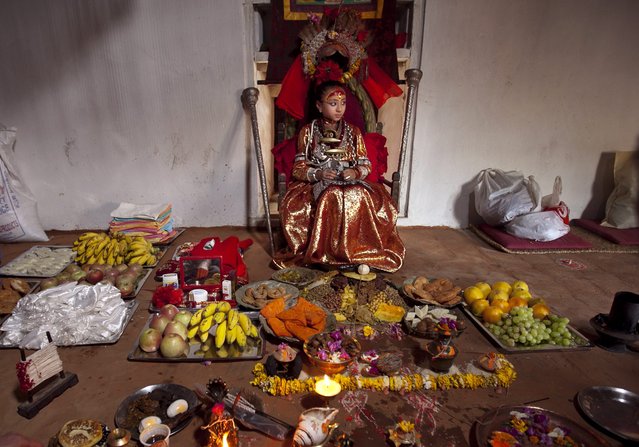
Kumari Samita Bajracharya sits in front of devotees offers during a special puja at Kumari Ghar in Patan, Nepal, 09 April 2011. It is believed that worshipping Kumari and receiving tika from her reduces illness and avoid problems. Kumari, or Kumari Devi, is a “living goddess”. The word literally means virgin in Nepali. The Living Goddesses are young pre-pubescent girls that are considered to be incarnations of the Hindu Goddess of Power, Kali. The Kumari retires when she reaches puberty. (Photo by Narendra Shrestha/EPA)

Kumari Samita Bajracharya sits in front of devotees offers during a special puja at Kumari Ghar in Patan, Nepal, 09 April 2011. It is believed that worshipping Kumari and receiving tika from her reduces illness and avoid problems. Kumari, or Kumari Devi, is a “living goddess”. The word literally means virgin in Nepali. The Living Goddesses are young pre-pubescent girls that are considered to be incarnations of the Hindu Goddess of Power, Kali. The Kumari retires when she reaches puberty. (Photo by Narendra Shrestha/EPA)
Details
18 Jun 2014 12:31:00
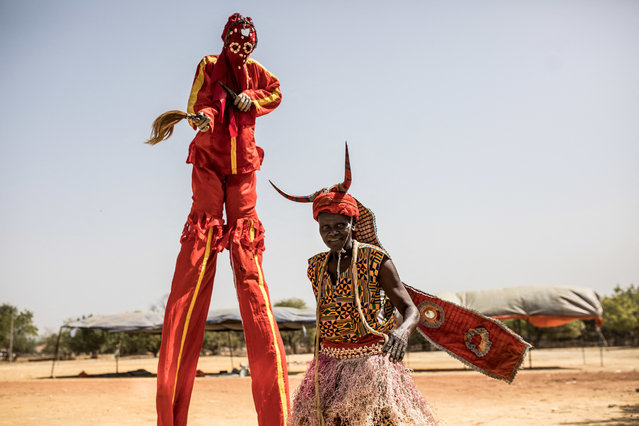
A masquerade dances to drums along the streets during the kankurang Festival in Janjanbureh on January 27, 2024. Listed as a UNESCO World Heritage Site since 2005, Kankurang, a combination of the Mandingo words “kango” and “Kurango”, literally translated as “voice” and “force”, ensures the transmission and teaching of the values and practices that form the basis of Mandingo cultural identity, a West African people whose historical home was the Mali empire. (Photo by Muhamadou Bittaye/AFP Photo)

A masquerade dances to drums along the streets during the kankurang Festival in Janjanbureh on January 27, 2024. Listed as a UNESCO World Heritage Site since 2005, Kankurang, a combination of the Mandingo words “kango” and “Kurango”, literally translated as “voice” and “force”, ensures the transmission and teaching of the values and practices that form the basis of Mandingo cultural identity, a West African people whose historical home was the Mali empire. (Photo by Muhamadou Bittaye/AFP Photo)
Details
13 Mar 2025 01:44:00
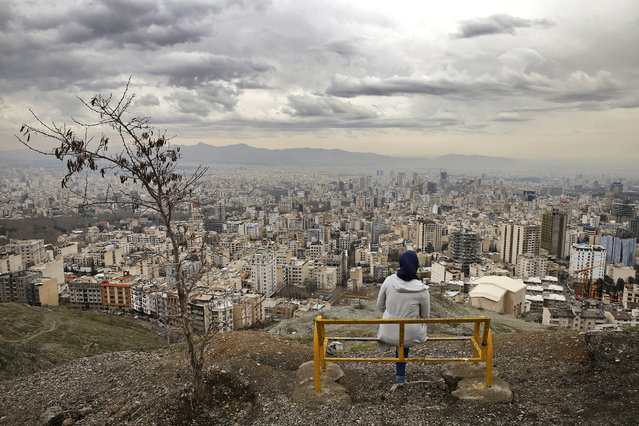
A woman spends her time outdoors to observe the ancient festival of Sizdeh Bedar, an annual public picnic day on the 13th day of the Iranian new year, at the Tochal mountainous area northern Tehran, Iran, Sunday, April, 2, 2017. Sizdeh Bedar, which comes from the Farsi words for “thirteen” and “day out”, is a legacy from Iran's pre-Islamic past that hard-liners in the Islamic Republic never managed to erase from calendars. (Photo by Ebrahim Noroozi/AP Photo)

A woman spends her time outdoors to observe the ancient festival of Sizdeh Bedar, an annual public picnic day on the 13th day of the Iranian new year, at the Tochal mountainous area northern Tehran, Iran, Sunday, April, 2, 2017. Sizdeh Bedar, which comes from the Farsi words for “thirteen” and “day out”, is a legacy from Iran's pre-Islamic past that hard-liners in the Islamic Republic never managed to erase from calendars. (Photo by Ebrahim Noroozi/AP Photo)
Details
21 Apr 2017 07:38:00
Nigerian fashion models are made up for their fashion show to promote ethnic fashion June 13, 2006 in Tel Aviv, Israel

Nigerian fashion models are made up for their fashion show to promote ethnic fashion June 13, 2006 in Tel Aviv, Israel. The models said they hope to use the travelling show as a springboard to international fame, in the words of one, “to be the next Naomi Campbell”. (Photo by Uriel Sinai/Getty Images)
Details
31 Jul 2011 14:23:00
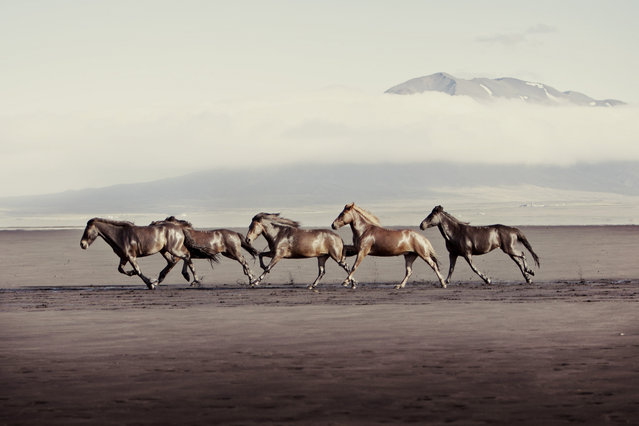
“Runners”. (Photo by Gigja Einarsdottir)

“As you can see I love the Icelandic Horse. Born and raised with them, I love to work with them and watch them ... they have unbelievable network of communication and energy I can´t explain with words”. – Gigja Einarsdottir. Photo: “Runners”. (Photo by Gigja Einarsdottir)
Details
06 Oct 2013 10:04:00
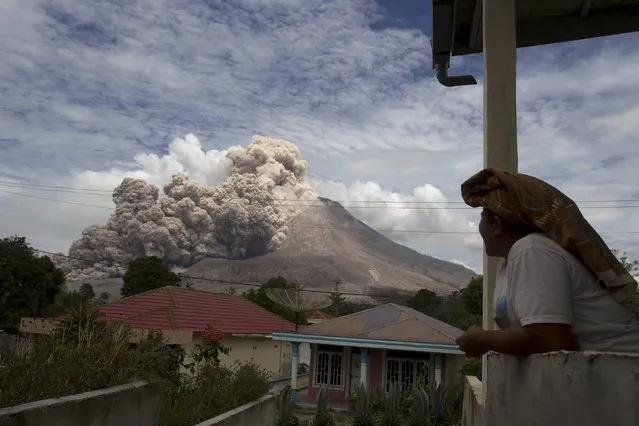
A villager watches as Mount Sinabung volcano erupts, in Kuta Tengah village, Karo Regency in Indonesia's North Sumatra April 1, 2015. The Indonesian volcano was dormant for 400 years before erupting in 2010. (Photo by Y. T. Haryono/Reuters)

A villager watches as Mount Sinabung volcano erupts, in Kuta Tengah village, Karo Regency in Indonesia's North Sumatra April 1, 2015. The Indonesian volcano was dormant for 400 years before erupting in 2010. (Photo by Y. T. Haryono/Reuters)
Details
02 Apr 2015 13:00:00