Loading...
Done
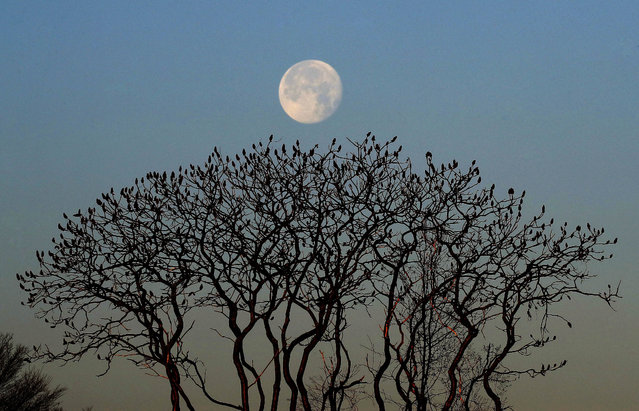
The waning moon sets behind leafless sumac trees on a crisp, clear morning, Thursday, December 15, 2016, in Portland, Maine. Much of the northern Mid-Atlantic and Northeast will stay cold for the next couple of days as the arctic air remains stuck over the northern Appalachians, the National Weather Service said. (Photo by Robert F. Bukaty/AP Photo)

The waning moon sets behind leafless sumac trees on a crisp, clear morning, Thursday, December 15, 2016, in Portland, Maine. Much of the northern Mid-Atlantic and Northeast will stay cold for the next couple of days as the arctic air remains stuck over the northern Appalachians, the National Weather Service said. (Photo by Robert F. Bukaty/AP Photo)
Details
28 Jan 2017 07:01:00
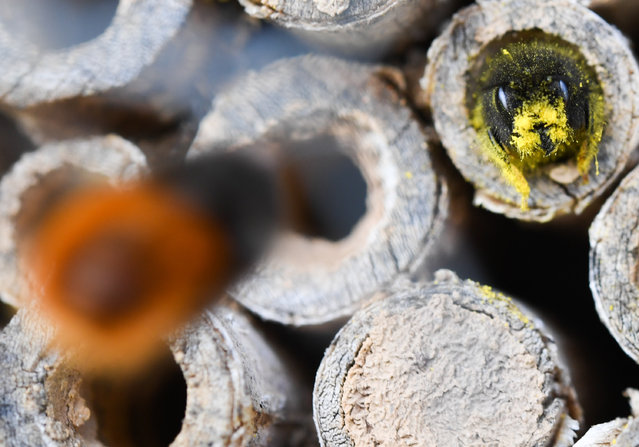
A mason bee deposits its collected pollen in an elderberry stick near Hessen, Germany on March 27, 2020. The food supply is sufficient for the eleven-month development of the brood from the egg to the finished bee. Wild bees are active in March and April and die before their offspring hatch. (Photo by Arne Dedert/dpa)

A mason bee deposits its collected pollen in an elderberry stick near Hessen, Germany on March 27, 2020. The food supply is sufficient for the eleven-month development of the brood from the egg to the finished bee. Wild bees are active in March and April and die before their offspring hatch. (Photo by Arne Dedert/dpa)
Details
22 Jul 2020 00:03:00
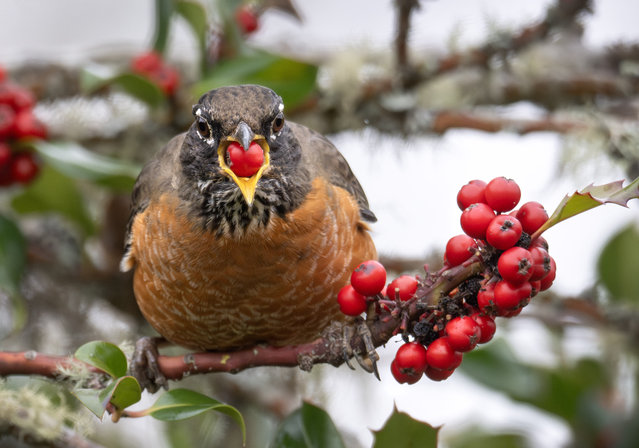
An American robin feeds on holly berries in a thicket near Elkton in southwestern Oregon on November 16, 2024. Many birds can safely consume holly berries, including blackbirds, redwings, and thrushes. There is an old wives tale that if you see a bird eating a berry, it is safe for humans to eat, but this is not true. Birds consume many plants that are poisonous to humans, holly berries included. (Photo by Robin Loznak/ZUMA Press Wire/Rex Features/Shutterstock)

An American robin feeds on holly berries in a thicket near Elkton in southwestern Oregon on November 16, 2024. Many birds can safely consume holly berries, including blackbirds, redwings, and thrushes. There is an old wives tale that if you see a bird eating a berry, it is safe for humans to eat, but this is not true. Birds consume many plants that are poisonous to humans, holly berries included. (Photo by Robin Loznak/ZUMA Press Wire/Rex Features/Shutterstock)
Details
01 Dec 2024 01:43:00
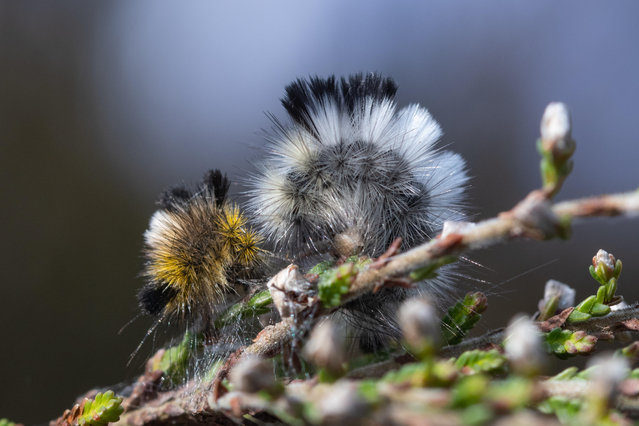
A pale tussock moth (Calliteara pudibunda) larva or caterpillar just after moulting on heather on Hankley Common, Surrey, England on April 30, 2019. (Photo by Gillian Pullinger/Alamy Stock Photo)

A pale tussock moth (Calliteara pudibunda) larva or caterpillar just after moulting on heather on Hankley Common, Surrey, England on April 30, 2019. (Photo by Gillian Pullinger/Alamy Stock Photo)
Details
08 Dec 2019 00:03:00
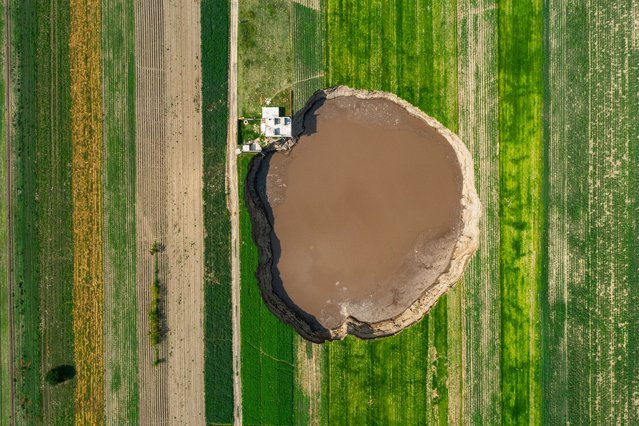
Aerial view of a giant sinkhole on June 09, 2021 in Santa María Zacatepec, Mexico. The giant sinkhole is located 20 kilometers northwest from the capital city Puebla, the hole now measures 110 meters across its widest point, covering around 11,000 square meters and damaging a house built near the place where it appeared. Farmers of the surroundings have been affected since they are not allowed to enter their fields due to the warning perimeter set up by the authorities. (Photo by Hector Vivas/Getty Images)

Aerial view of a giant sinkhole on June 09, 2021 in Santa María Zacatepec, Mexico. The giant sinkhole is located 20 kilometers northwest from the capital city Puebla, the hole now measures 110 meters across its widest point, covering around 11,000 square meters and damaging a house built near the place where it appeared. Farmers of the surroundings have been affected since they are not allowed to enter their fields due to the warning perimeter set up by the authorities. (Photo by Hector Vivas/Getty Images)
Details
10 Aug 2021 09:48:00
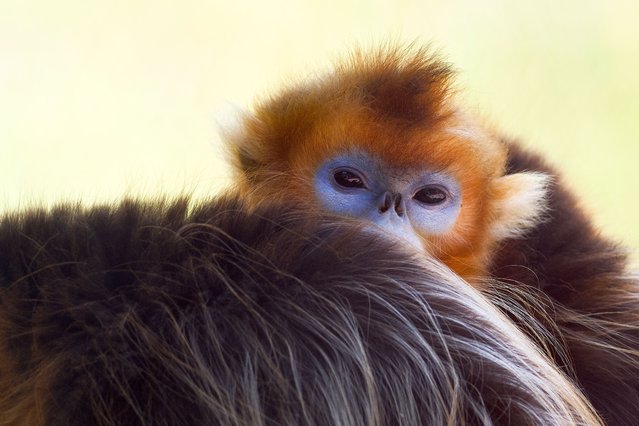
A golden snub-nosed monkeys (Rhinopitheque de Roxelane) looks through its enclosure after quarantine during its presentation at the Beauval Zoopark in Saint-Aignan Central France, on May 7, 2025. ZooParc de Beauval (Loir-et-Cher) welcomed three golden snub-nosed monkeys on April 3, 2025, an endangered species from China, as part of a conservation program, becoming the first zoo outside Asia to house these long-haired, red-furred primates with bluish faces. (Photo by Guillaume Souvant/AFP Photo)

A golden snub-nosed monkeys (Rhinopitheque de Roxelane) looks through its enclosure after quarantine during its presentation at the Beauval Zoopark in Saint-Aignan Central France, on May 7, 2025. ZooParc de Beauval (Loir-et-Cher) welcomed three golden snub-nosed monkeys on April 3, 2025, an endangered species from China, as part of a conservation program, becoming the first zoo outside Asia to house these long-haired, red-furred primates with bluish faces. (Photo by Guillaume Souvant/AFP Photo)
Details
18 May 2025 02:44:00
A Somali family wades through flood waters, as they flee after overnight rains destroyed their home, in Wadajir district of Mogadishu, Somalia on May 10, 2025. (Photo by Feisal Omar/Reuters)

A Somali family wades through flood waters, as they flee after overnight rains destroyed their home, in Wadajir district of Mogadishu, Somalia on May 10, 2025. (Photo by Feisal Omar/Reuters)
Details
11 Jun 2025 03:41:00
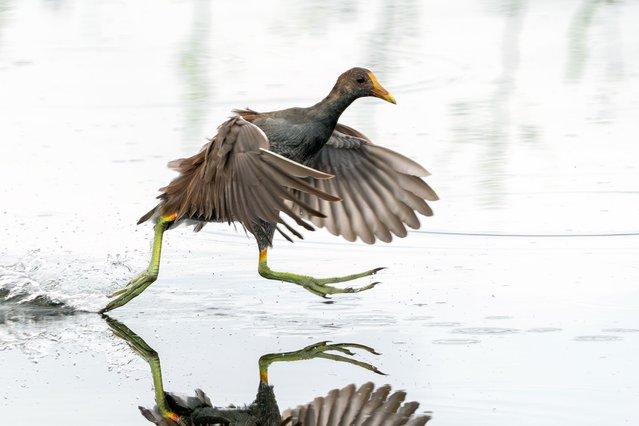
A common gallinule runs across the water to escape a nearby alligator at Green Cay Nature Center in Boynton Beach, Florida on September 4, 2025. Unlike most waterbirds, gallinules have long toes that allow them to walk on floating vegetation. The species is known for its loud, cackling calls that often echo through wetlands. (Photo by Ronen Tivony/NurPhoto/Rex Features/Shutterstock)

A common gallinule runs across the water to escape a nearby alligator at Green Cay Nature Center in Boynton Beach, Florida on September 4, 2025. Unlike most waterbirds, gallinules have long toes that allow them to walk on floating vegetation. The species is known for its loud, cackling calls that often echo through wetlands. (Photo by Ronen Tivony/NurPhoto/Rex Features/Shutterstock)
Details
21 Sep 2025 03:35:00