Loading...
Done
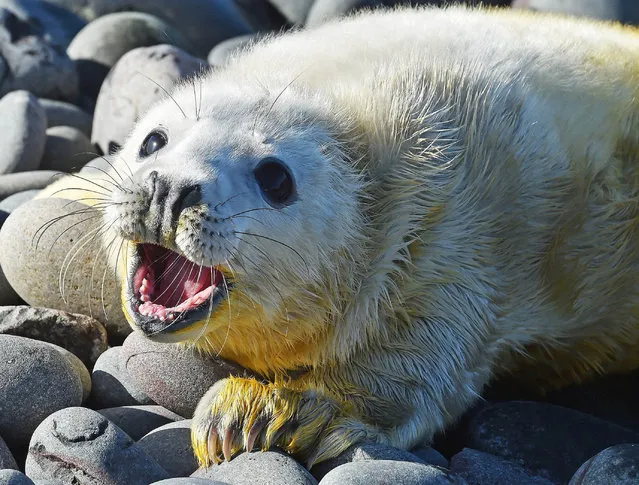
The first seal pup to be born this season at a major colony of grey seals on the Farne Islands sits beside its mother on Brownsman Island, England on September 30, 2015. (Photo by Owen Humphreys/PA Images)

The first seal pup to be born this season at a major colony of grey seals on the Farne Islands sits beside its mother on Brownsman Island, England on September 30, 2015. (Photo by Owen Humphreys/PA Images)
Details
05 Oct 2015 08:03:00
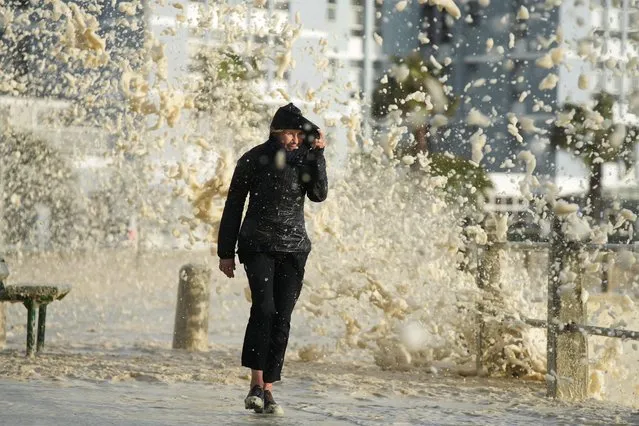
A woman runs through a sea foam, as a seasonal cold front moved over the Cape Peninsula, following a week of severe weather and flooding in Cape Town, South Africa on June 19, 2023. (Photo by Nic Bothma/Reuters)

A woman runs through a sea foam, as a seasonal cold front moved over the Cape Peninsula, following a week of severe weather and flooding in Cape Town, South Africa on June 19, 2023. (Photo by Nic Bothma/Reuters)
Details
08 Jul 2023 02:34:00
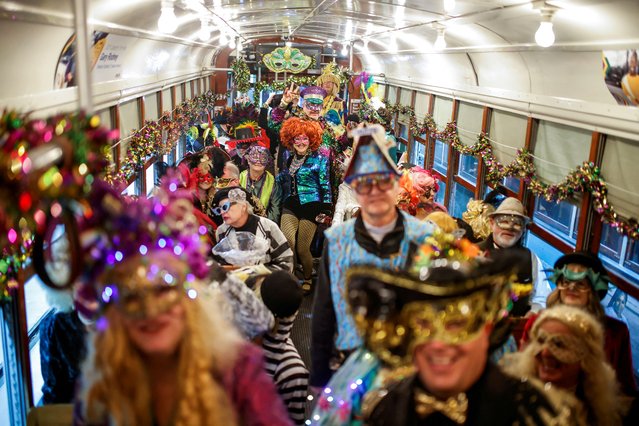
Members of the Funky Uptown Krewe parade as Twelfth Night kicks off Carnival season, in New Orleans, Louisiana, U.S. January 6, 2025. (Photo by Eduardo Munoz/Reuters)

Members of the Funky Uptown Krewe parade as Twelfth Night kicks off Carnival season, in New Orleans, Louisiana, U.S. January 6, 2025. (Photo by Eduardo Munoz/Reuters)
Details
17 Jan 2025 02:03:00


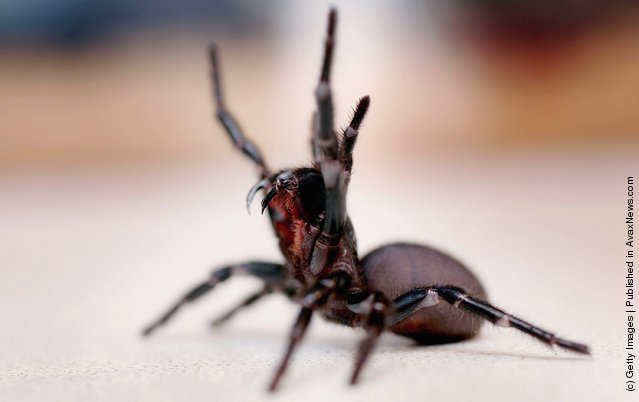
A Funnel Web spider is pictured at the Australian Reptile Park January 23, 2006 in Sydney, Australia. The Funnel Web is one of Australia's deadliest animals, with a venom that is packed with at least 40 different toxic proteins. A bite from a Funnel Web causes massive electrical over-load in the body's nervous system. Finally, fatalities occur from either heart attack or a pulmonary oedema, where the capillaries around the lungs begin to leak fluid and the patient effectively drowns. Death can come as quickly as two hours after a bite if no medical treatment is sought. Due to advances in anti-venom, there has been no death from a Funnel Web bite in Australia since 1980. Australia is home to some of the most deadly and poisonous animals on earth. (Photo by Ian Waldie/Getty Images)

Details
25 Apr 2011 07:49:00
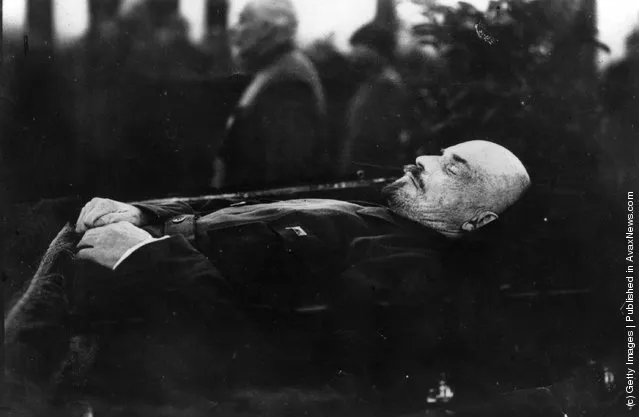
1924:  Vladimir Ilyich Lenin lying in state in the Kremlin

Photo: Vladimir Ilyich Lenin (1870 – 1924) lying in state in the Kremlin. (Photo by Hulton Archive/Getty Images). 1924

Important! For the same article in Russian language click here.

Something quite intriguing is happening within Russian-speaking internet during the last few – should you type a fully academic inquiry (at least, according to Russian academic requirements) in national search engines for "Lenin's mausoleum" – the first thing you get (even in top 10 searches) is website pages talking about black magic and occult. Website authors view this construction differently, but unconditionally agree on one thing: the mausoleum of the "leader of the world proletariat” – the essence of a magical artifact, a sort of “energy vampire”. It was built with a certain purpose: to drain the energy out of miserable Soviet citizens on one hand; and to poison the anthroposphere of one-sixth part of the earth with its vibes (the exact territory that was occupied by the former Soviet Union), depriving the Russian people of will to resist on the other hand. Complete nonsense? No doubt. Nevertheless, an intriguing one. Well, probably because some oddities do exist in mausoleum's history. These oddities are the thing we are going to discuss this time. First, let me refresh you memory on the subject.
Details
16 Oct 2011 11:27:00
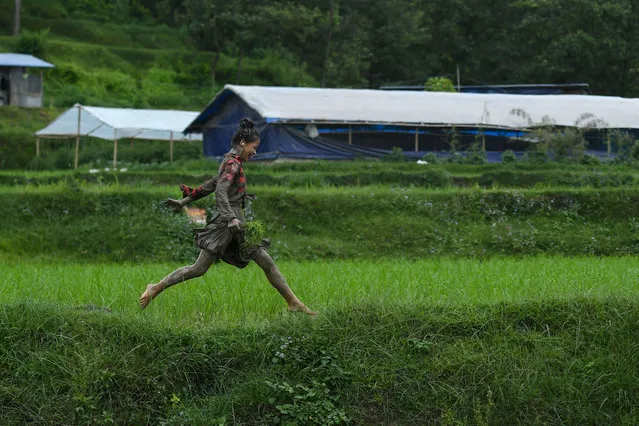
A girl walks along rice paddy fields during “National Paddy Day”, which marks the start of the annual rice planting season, in Tokha village on the outskirts of Kathmandu on June 29, 2020. Splashing mud and drinking local rice beer, Nepali farmers this week celebrated National Paddy Day to mark the beginning of the rice-planting season, despite some coronavirus lockdown measures still in place. Traditional farming songs and laughter echoed in the air as farmers waded into waterlogged fields to sow green paddy. (Photo by Prakash Mathema/AFP Photo)

A girl walks along rice paddy fields during “National Paddy Day”, which marks the start of the annual rice planting season, in Tokha village on the outskirts of Kathmandu on June 29, 2020. Splashing mud and drinking local rice beer, Nepali farmers this week celebrated National Paddy Day to mark the beginning of the rice-planting season, despite some coronavirus lockdown measures still in place. Traditional farming songs and laughter echoed in the air as farmers waded into waterlogged fields to sow green paddy. (Photo by Prakash Mathema/AFP Photo)
Details
02 Aug 2020 00:01:00
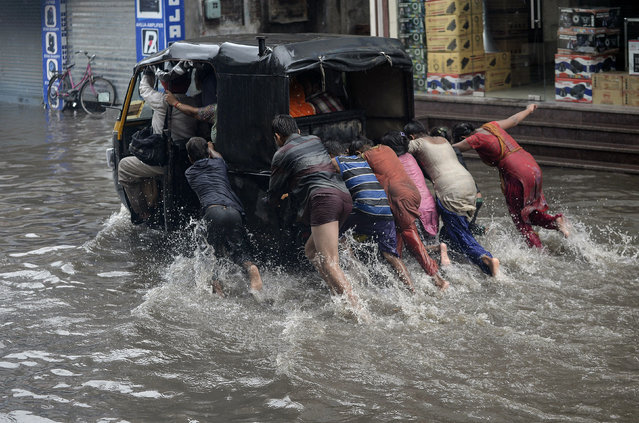
Indian children help to push an auto rickshaw along a flooded street after heavy rain in Jalandhar on June 29, 2017, as the monsoon season begins. (Photo by Shammi Mehra/AFP Photo)

Indian children help to push an auto rickshaw along a flooded street after heavy rain in Jalandhar on June 29, 2017, as the monsoon season begins. (Photo by Shammi Mehra/AFP Photo)
Details
03 Jul 2017 08:42:00
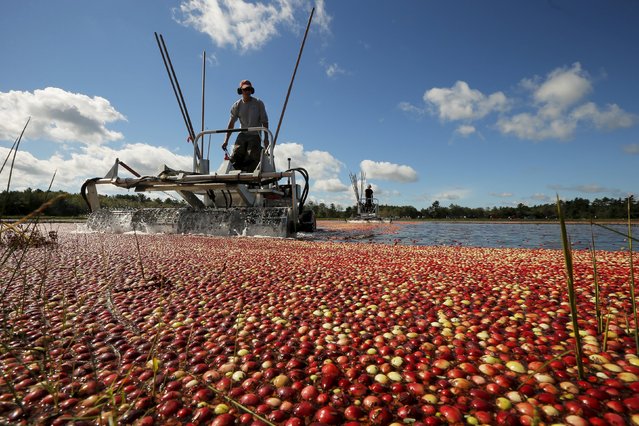
Cass Gilmore harvests cranberries in a bog at Gilmore Cranberry Company in Carver, Massachusetts September 14, 2015, the beginning of the cranberry harvesting season. (Photo by Brian Snyder/Reuters)

Cass Gilmore harvests cranberries in a bog at Gilmore Cranberry Company in Carver, Massachusetts September 14, 2015, the beginning of the cranberry harvesting season. According to the Cape Cod Cranberry Growers' Association, 200,000,000 pounds of cranberries are grown annually in Massachusetts. (Photo by Brian Snyder/Reuters)
Details
15 Sep 2015 14:00:00