Loading...
Done
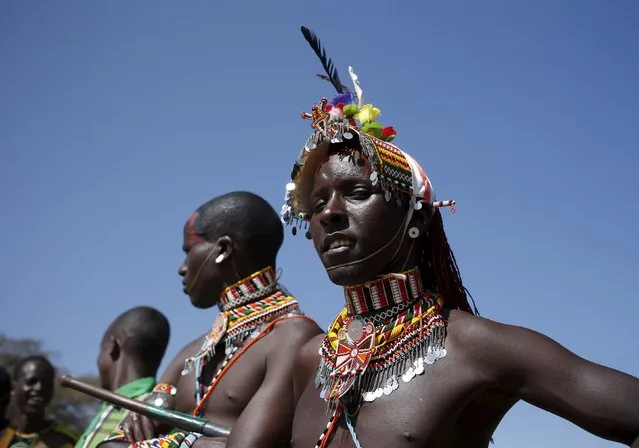
Samburu tribesmen stand during the Maralal Camel Derby, Kenya, August 15, 2015. (Photo by Goran Tomasevic/Reuters)

Samburu tribesmen stand during the Maralal Camel Derby, Kenya, August 15, 2015. Maralal, a small, arid town about an eight-hour drive north of the Kenyan capital Nairobi, holds an annual camel festival, bringing together members of the Samburu, Turkana and Pokot semi-nomadic cattle-herding tribes. (Photo by Goran Tomasevic/Reuters)
Details
20 Aug 2015 13:37:00
Maori  People New Zealand

The long and intriguing story of the origine of the indigenous Maori people can be traced back to the 13th century, the mythical homeland Hawaiki, Eastern Polynesia. Due to centuries of isolation, the Maori established a distinct society with characteristic art, a separate language and unique mythology. Defining aspects of Maori traditional culture include art, dance, legends, tattoos and community. While the arrival of European colonists in the 18th centure had a profound impact on the Maori way of life, many aspects of traditional society have survived into the 21th century.
Details
11 Mar 2014 14:40:00
Arctic Hare

The arctic hare, or polar rabbit, is a species of hare which is adapted largely to polar and mountainous habitats. The arctic hare survives with a thick coat of fur and usually digs holes in the ground or under snow to keep warm and sleep. Arctic hares look like rabbits but have shorter ears, are taller when standing, and, unlike rabbits, can thrive in cold climates. They can travel together with many other hares, sometimes huddling with dozens or more, but are usually found alone, taking, in some cases, more than one partner. The arctic hare can run up to 60 kilometres per hour (40 mph). Its predators include the arctic wolf, arctic fox, and ermine.
Details
17 Mar 2014 13:56:00
How swimming, and lots of love, saved Harper the puppy’s life

On August 31, 2011, a puppy was rescued from a garbage bag in Central Florida. She was afflicted by a condition dubbed “swimmer puppy syndrome”, formally, pectus excavatum. It's rare in puppies, but when it happens it causes them to lie flat on their chests with their legs perpetually splayed out. It's usually a symptom of serious neurological problems that most puppies cannot survive. Veterinarians recommended putting her to sleep... (Photo by Flyin Fur Pet Photography)
Details
23 Jun 2012 09:10:00
Of all the species affected by river regulation in Australia, the ibis is one of the few that has changed its behaviour and moved to coastal cities. (Photo by Rick Stevens/The Guardian)

Tip turkey, dumpster chook, rubbish raptor – the Australian white ibis goes by many unflattering names. But it is a true urban success story, scavenging to survive in cities across Australia as wetlands have been lost. Wildlife photographer Rick Stevens captured them in Sydney. Here: Of all the species affected by river regulation in Australia, the ibis is one of the few that has changed its behaviour and moved to coastal cities. (Photo by Rick Stevens/The Guardian)
Details
11 Apr 2018 00:03:00
A Tibetan mastiff dog is displayed for sale at a mastiff show in Baoding, Hebei province, south of Beijing on March 9, 2013. Fetching prices up to around 750,000 USD, mastiffs have become a prized status-symbol amongst China's wealthy, with rich buyers across the country sending prices skyrocketing. Owners say the mastiffs, descendents of dogs used for hunting by nomadic tribes in central Asia and Tibet are fiercely loyal and protective. (Photo by Ed Jones/AFP Photo)

A Tibetan mastiff dog is displayed for sale at a mastiff show in Baoding, Hebei province, south of Beijing on March 9, 2013. Fetching prices up to around 750,000 USD, mastiffs have become a prized status-symbol amongst China's wealthy, with rich buyers across the country sending prices skyrocketing. Owners say the mastiffs, descendents of dogs used for hunting by nomadic tribes in central Asia and Tibet are fiercely loyal and protective. Breeders still travel to the Himalayan plateau to collect young puppies, although many are unable to adjust to the low altitudes and die during the journey. (Photo by Ed Jones/AFP Photo)
Details
02 May 2014 09:40:00
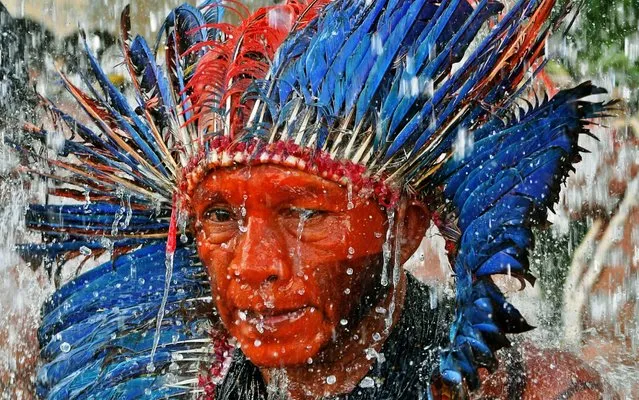
An Indigenous man stands under a water fountain outside a government building in Brasilia, on April 26, 2019, during the last day of a protest camp. Approximately 4,000 indigenous people from different tribes are taking part in protests during the Indigenous National Mobilization (MNI) week, a mobilization which seeks to tackle territorial rights' negotiations with the government. (Photo by Carl De Souza/AFP Photo)

An Indigenous man stands under a water fountain outside a government building in Brasilia, on April 26, 2019, during the last day of a protest camp. Approximately 4,000 indigenous people from different tribes are taking part in protests during the Indigenous National Mobilization (MNI) week, a mobilization which seeks to tackle territorial rights' negotiations with the government. (Photo by Carl De Souza/AFP Photo)
Details
29 Apr 2019 00:07:00
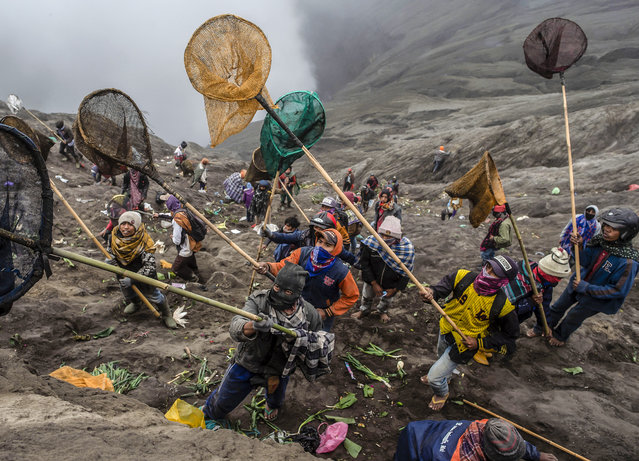
People try to catch offerings thrown off the summit of Mount Bromo volcano by Tengger tribe members and local tourists in Probolinggo, East Java province on July 18, 2019, as part of the Yadnya Kasada Festival. During the annual Yadnya Kasada festival, the Tenggerese climb Mount Bromo, an active volcano, and seek the blessing from the main deity by presenting offerings of rice, fruit, livestock and other items. (Photo by Juni Kriswanto/AFP Photo)

People try to catch offerings thrown off the summit of Mount Bromo volcano by Tengger tribe members and local tourists in Probolinggo, East Java province on July 18, 2019, as part of the Yadnya Kasada Festival. During the annual Yadnya Kasada festival, the Tenggerese climb Mount Bromo, an active volcano, and seek the blessing from the main deity by presenting offerings of rice, fruit, livestock and other items. (Photo by Juni Kriswanto/AFP Photo)
Details
22 Jul 2019 00:03:00