Loading...
Done
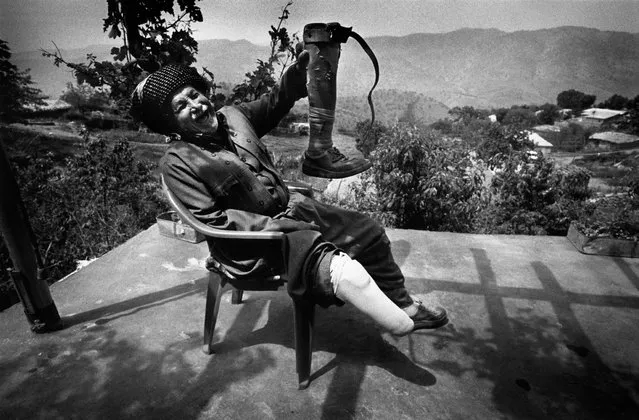
Ismail Mustafa, seen in 2007. “I was collecting mushrooms on the hill near here. I didn’t see the mine. There was a huge explosion. When I woke up I saw that both my legs were gone; I thought my life was over. My brother and another guy were with me. They made a stretcher from sticks and tied it together with clothing. It took two hours to get off the mountain. ‘My daughter has also been injured. She found a shell and brought it into the house and put it on the fire. She didn’t know what she was doing at the time – she was only three. She is blind and has lost an arm”. (Photo by Sean Sutton for the Mines Advisory Group/The Guardian)

Ismail Mustafa, seen in 2007. “I was collecting mushrooms on the hill near here. I didn’t see the mine. There was a huge explosion. When I woke up I saw that both my legs were gone; I thought my life was over. My brother and another guy were with me. They made a stretcher from sticks and tied it together with clothing. It took two hours to get off the mountain. ‘My daughter has also been injured. She found a shell and brought it into the house and put it on the fire. She didn’t know what she was doing at the time – she was only three. She is blind and has lost an arm”. (Photo by Sean Sutton for the Mines Advisory Group/The Guardian)
Details
08 Sep 2017 09:33:00
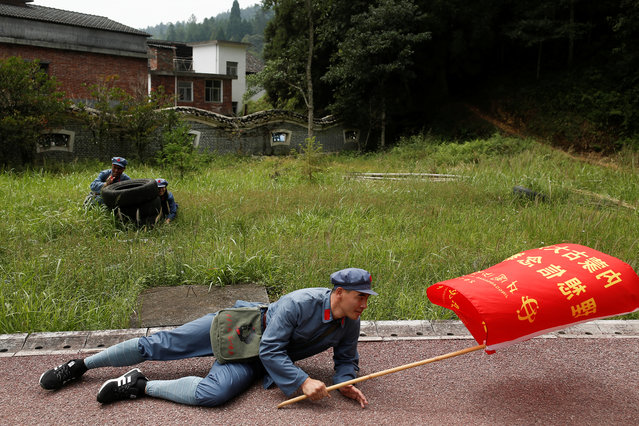
A man in “Red Army” garb hits the pavement during a simulated attack during a re-staging of part of the Long March in Jinggangshan September 14, 2017. The scene brings alive an extraordinary chapter in China's history that established the supremacy of Chairman Mao Zedong and the Communist Party. Deep in the mountains of Jinggangshan in the southeastern province of Jiangxi, a classroom of bank tellers participates in an ideological boot camp that plays into Chinese President Xi Jinping's drive to further consolidate his grip on power. (Photo by Thomas Peter/Reuters)

A man in “Red Army” garb hits the pavement during a simulated attack during a re-staging of part of the Long March in Jinggangshan September 14, 2017. The scene brings alive an extraordinary chapter in China's history that established the supremacy of Chairman Mao Zedong and the Communist Party. Deep in the mountains of Jinggangshan in the southeastern province of Jiangxi, a classroom of bank tellers participates in an ideological boot camp that plays into Chinese President Xi Jinping's drive to further consolidate his grip on power. (Photo by Thomas Peter/Reuters)
Details
25 Sep 2017 06:46:00
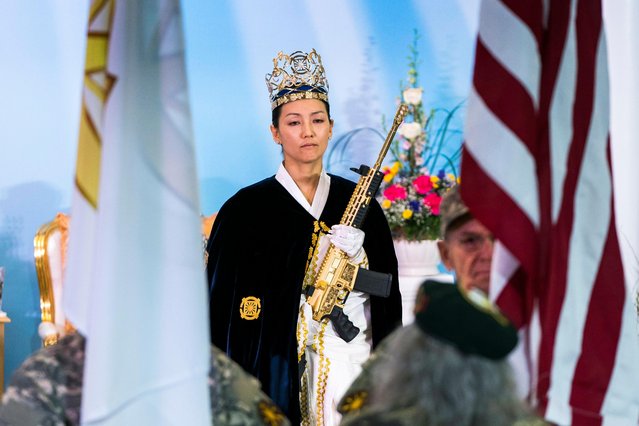
Rev. Yeon Ah Lee Moon of the Sanctuary Church holds a gold AR-15 during a ceremony to rededicate marriages at the World Peace and Unification Sanctuary in Newfoundland, Pennsylvania, USA, 28 February 2018. (Photo by Jim Lo Scalzo/EPA/EFE)

Rev. Yeon Ah Lee Moon of the Sanctuary Church holds a gold AR-15 during a ceremony to rededicate marriages at the World Peace and Unification Sanctuary in Newfoundland, Pennsylvania, USA, 28 February 2018. The church, a breakaway from the Unification Church, believes guns are a symbol of the “rod of iron” referenced in the Book of Revelations. (Photo by Jim Lo Scalzo/EPA/EFE)
Details
01 Mar 2018 07:35:00
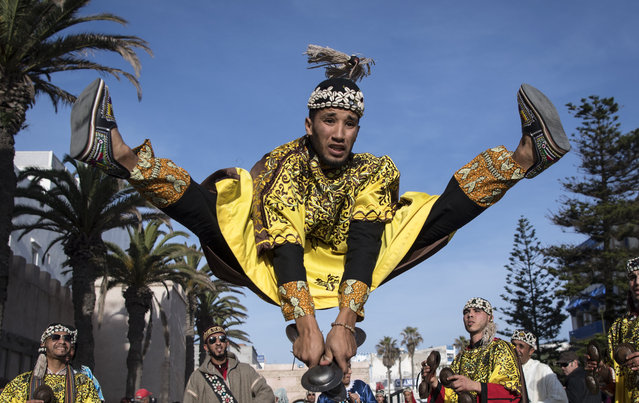
A Gnawa traditional group performs in the city of Essaouira on December 14, 2019, to celebrate the decision of adding the Gnawa culture to UNESCO's list of Intangible Cultural Heritage of Humanity. Gnawa culture, a centuries-old Moroccan practice rooted in music, African rituals and Sufi traditions, was added to UNESCO's list of Intangible Cultural Heritage of Humanity earlier in the week. Gnawa refers to a “set of musical productions, fraternal practices and therapeutic rituals where the secular mixes with the sacred”, according to the nomination submitted by Morocco. Often dressed in colourful outfits, Gnawa musicians play the guenbri, a type of lute with three strings, accompanied by steel castanets called krakebs. (Photo by Fadel Senna/AFP Photo)

A Gnawa traditional group performs in the city of Essaouira on December 14, 2019, to celebrate the decision of adding the Gnawa culture to UNESCO's list of Intangible Cultural Heritage of Humanity. Gnawa culture, a centuries-old Moroccan practice rooted in music, African rituals and Sufi traditions, was added to UNESCO's list of Intangible Cultural Heritage of Humanity earlier in the week. Gnawa refers to a “set of musical productions, fraternal practices and therapeutic rituals where the secular mixes with the sacred”, according to the nomination submitted by Morocco. Often dressed in colourful outfits, Gnawa musicians play the guenbri, a type of lute with three strings, accompanied by steel castanets called krakebs. (Photo by Fadel Senna/AFP Photo)
Details
18 Dec 2019 00:05:00
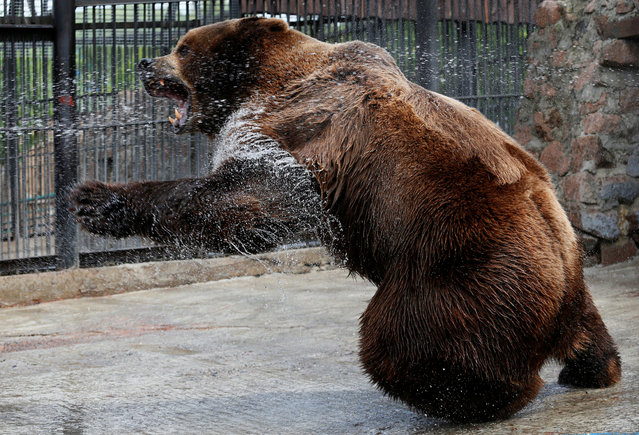
Buyan, a male Siberian brown bear, cools down under a stream of water sprayed by an employee in an enclosure on a hot summer day, at the Royev Ruchey zoo in Krasnoyarsk, Russia on June 14, 2019. (Photo by Ilya Naymushin/Reuters)

Buyan, a male Siberian brown bear, cools down under a stream of water sprayed by an employee in an enclosure on a hot summer day, at the Royev Ruchey zoo in Krasnoyarsk, Russia on June 14, 2019. (Photo by Ilya Naymushin/Reuters)
Details
09 Jan 2020 00:05:00
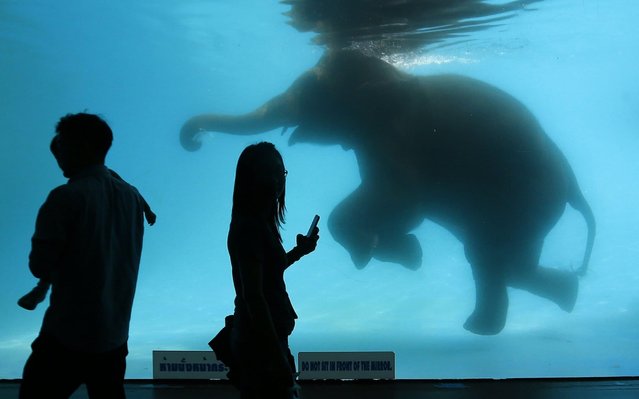
Visitors look at an elephant swimming in a pool at Khao Kheow Zoo in Chonburi, east of Bangkok, Thailand on February 4, 2020. (Photo by Chaiwat Subprasom/SOPA Images/LightRocket via Getty Images)

Visitors look at an elephant swimming in a pool at Khao Kheow Zoo in Chonburi, east of Bangkok, Thailand on February 4, 2020. (Photo by Chaiwat Subprasom/SOPA Images/LightRocket via Getty Images)
Details
06 Feb 2020 00:05:00
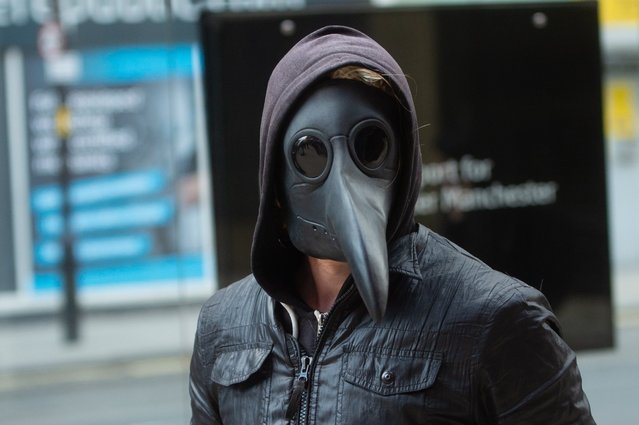
Shoppers and commuters in Manchester wearing face masks on February 28, 2020, including plague doctor masks due to the Coronavirus crisis in the UK. (Photo by Mario Forshow/Cavendish Press)

Shoppers and commuters in Manchester wearing face masks on February 28, 2020, including plague doctor masks due to the Coronavirus crisis in the UK. (Photo by Mario Forshow/Cavendish Press)
Details
02 Mar 2020 00:07:00
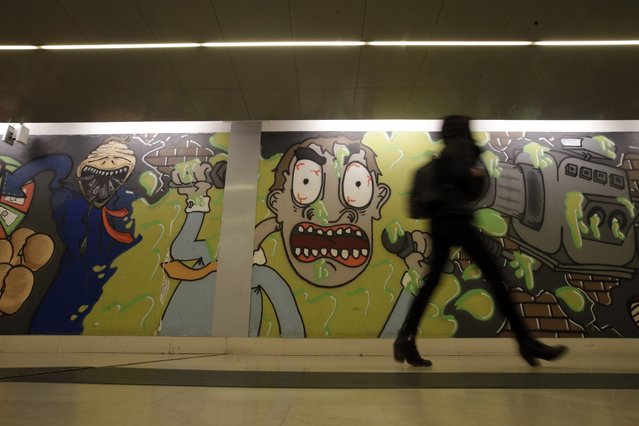
A woman walks past murals adorning the walls of Garibaldi subway station, in Milan, Friday, February 28, 2020. Due to the COVID-19 virus outbreak in northern Italy, the bustling metropolis of Milan has resembled more of a ghost town lately, as workers stayed home and tourism has dwindled there, and other parts of Italy. (Photo by Luca Bruno/AP Photo)

A woman walks past murals adorning the walls of Garibaldi subway station, in Milan, Friday, February 28, 2020. Due to the COVID-19 virus outbreak in northern Italy, the bustling metropolis of Milan has resembled more of a ghost town lately, as workers stayed home and tourism has dwindled there, and other parts of Italy. (Photo by Luca Bruno/AP Photo)
Details
09 Mar 2020 00:03:00