Loading...
Done
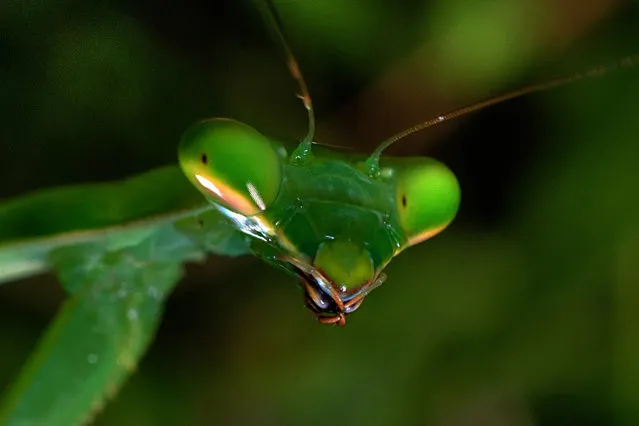
Close Encounter of the Insect Kind: Check out the awesome face on this praying mantis. I can't get over the mouth, it's like something from a science fiction movie. Of all photographic styles macro is definitely my favorite. I am constantly amazed, in every photo that I take, by the intricate level of detail that exists on even the smallest of creatures. It's a stark reminder that a very complex and infinitely beautiful world exists just beyond our human-sized level of perception. Photo taken in Donnybrook, Queensland, Australia. (Photo by Andrew Young/National Geographic Photo Contest

Close Encounter of the Insect Kind: “Check out the awesome face on this praying mantis. I can't get over the mouth, it's like something from a science fiction movie. Of all photographic styles macro is definitely my favorite. I am constantly amazed, in every photo that I take, by the intricate level of detail that exists on even the smallest of creatures. It's a stark reminder that a very complex and infinitely beautiful world exists just beyond our human-sized level of perception. Photo taken in Donnybrook, Queensland, Australia” – Andrew Young. (Photo by Andrew Young/National Geographic Photo Contest via The Atlantic)
Details
24 Sep 2012 09:18:00
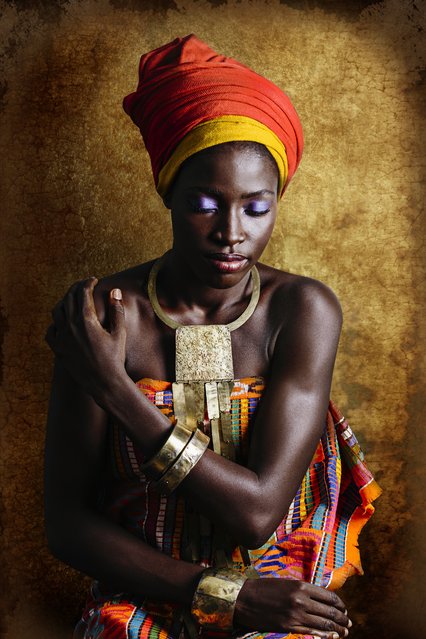
Ebrié Akan. Another series meanwhile goes behind the scenes of an Ivorian mannequin manufacturer, to highlight the construction of African beauty ideals. (Photo by Joana Choumali/The Guardian)

African women in their grandmothers' clothes: Joana Choumali’s portraits show modern African women swapping jeans for kente cloth – and diving into the dazzling cultural heritage of their families. (Photo by Joana Choumali/The Guardian)
Details
04 May 2016 11:43:00
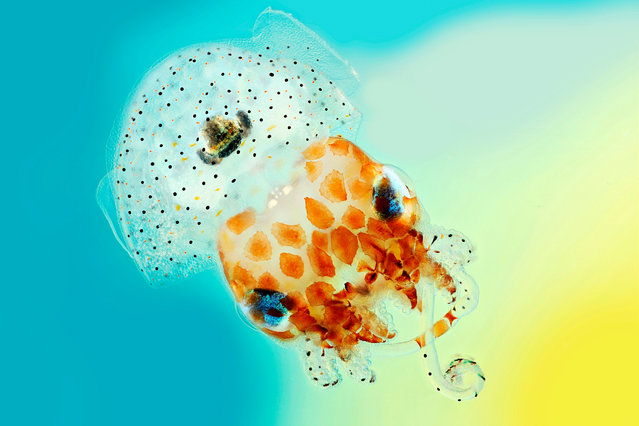
With its huge eyes, comical name and diminutive size, Mark R. Smith’s image of a baby Hawaiian bobtail squid can’t help but raise a smile. A curiously endearing creature, the cephalopod is just 1.5cm across, its mantle cavity bearing more than a passing resemblance to a rather natty shower cap. But it is also a beautiful example of symbiosis – nature’s version of “I’ll scratch your back if you scratch mine” – for on the underside of the squid is a light organ which houses bioluminescent bacteria. The squid offers the bacteria protection and food, while the bacteria emit a glow – a handy trait that the squid uses to offset its silhouette, helping it to evade predators in the depths below. Mark R. Smith’s entry combines several images of a Hawaiian bobtail squid with different focus lengths to create a final picture with greater depth of field than normal. (Photo by Mark R. Smith/Wellcome Images/Macroscopic Solutions)

With its huge eyes, comical name and diminutive size, Mark R. Smith’s image of a baby Hawaiian bobtail squid can’t help but raise a smile. A curiously endearing creature, the cephalopod is just 1.5cm across, its mantle cavity bearing more than a passing resemblance to a rather natty shower cap. But it is also a beautiful example of symbiosis – nature’s version of “I’ll scratch your back if you scratch mine” – for on the underside of the squid is a light organ which houses bioluminescent bacteria. The squid offers the bacteria protection and food, while the bacteria emit a glow – a handy trait that the squid uses to offset its silhouette, helping it to evade predators in the depths below. Mark R. Smith’s entry combines several images of a Hawaiian bobtail squid with different focus lengths to create a final picture with greater depth of field than normal. (Photo by Mark R. Smith/Wellcome Images/Macroscopic Solutions)
Details
08 Mar 2017 00:05:00
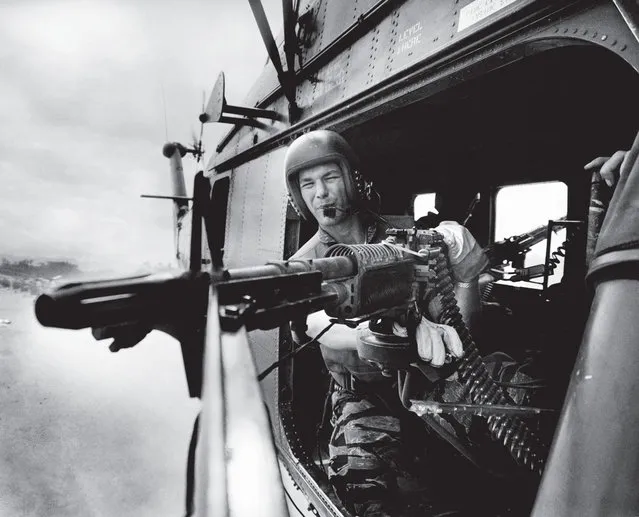
Man your battle stations: The crew chief of helicopter Yankee Papa 13, lance corporal James C. Farley, mans an M-60 machine gun during a mission near Da Nang, Vietnam on March 31, 1965. (Photo by Larry Burrows/Time & Life Pictures)

In the spring of 1965, within weeks of 3,500 American Marines arriving in Vietnam, a 39-year-old Briton named Larry Burrows began work on a feature for LIFE magazine, chronicling the day-to-day experience of U.S. troops on the ground – and in the air – in the midst of the rapidly widening war. The photographs in this gallery focus on a calamitous March 31, 1965, helicopter mission; Burrows’ “report from Da Nang”, featuring his pictures and his personal account of the harrowing operation, was published two weeks later as a now-famous cover story in the April 16, 1965, issue of LIFE.

Photo: Man your battle stations: The crew chief of helicopter Yankee Papa 13, lance corporal James C. Farley, mans an M-60 machine gun during a mission near Da Nang, Vietnam on March 31, 1965. (Photo by Larry Burrows/Time & Life Pictures)
Details
07 Apr 2013 07:08:00
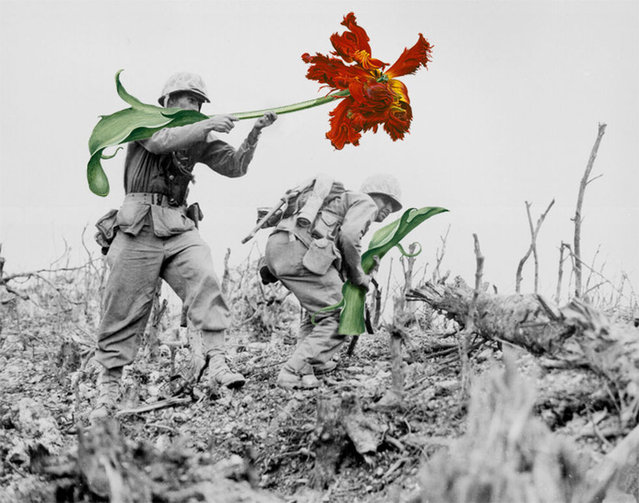
Flowers Of War By Mister Blick

It would have been so much better if the pictures created by Mister Blick were real. How wonderful it would be if these men were actually holding flowers, and none of these wars happened. Regretfully, all these wars have left their mark on the history of mankind. Wars are always bad. They bring nothing but destruction and terror to the regular people, while the big players make huge profits off of the suffering of the common folk. However, establishing dominance is an integral part of the human nature, and the desire to wage wars is simply an extension of this trait. Strong countries always suppress the weaker ones to gain even more power. Unfortunately, this is as inevitable as the sunrise or sunset. (Photo by Mister Blick)
Details
23 Nov 2014 11:58:00
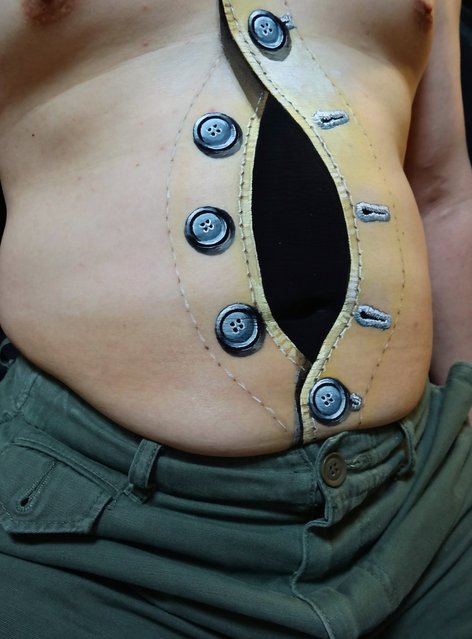
Body Art Illusions by Chooo-San

Using acrylic paint, 19-year old Japanese student and artist Chooo-San has transformed the bodies of herself and a handful of lucky volunteers into ones that appear to be from another planet. Bored with technology, she wanted to see how far she could go with creating eye-catching illusions in the real world, rather than relying on programs like Photoshop.

SEE ALSO: «A frightening-realistic Body Art by Chooo-San»

Details
22 Oct 2012 09:12:00
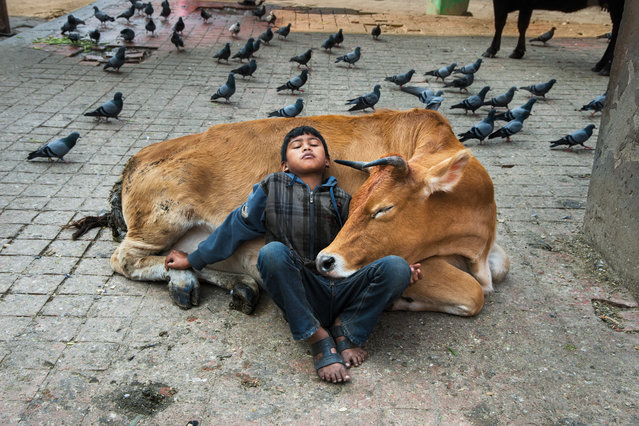
A boy rests against a cow, Kathmandu, Nepal, 2013. “Cows have been designated the national animal in Nepal. They roam freely, and are considered sacred by the 80% of Nepalis who are Hindu”. (Photo by Steve McCurry/The Guardian)

The legendary US photographer’s favourite shots of creatures and how they interact with humans feature in “Animals”, his latest book. Here: A boy rests against a cow, Kathmandu, Nepal, 2013. “Cows have been designated the national animal in Nepal. They roam freely, and are considered sacred by the 80% of Nepalis who are Hindu”. (Photo by Steve McCurry/The Guardian)
Details
07 Nov 2019 00:01:00
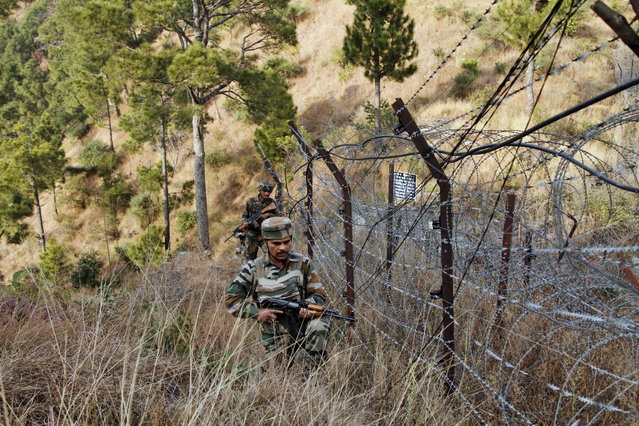
In this December 23, 2013 photo, Indian army soldiers patrol near one of their forward post at the Line of Control (LOC), that divides Kashmir between India and Pakistan, at Krishna Ghati (KG Sector) in Poonch, 290 kilometers (180 miles) from Jammu, India. (Photo by Channi Anand/AP Photo)

In this December 23, 2013 photo, Indian army soldiers patrol near one of their forward post at the Line of Control (LOC), that divides Kashmir between India and Pakistan, at Krishna Ghati (KG Sector) in Poonch, 290 kilometers (180 miles) from Jammu, India. The military commanders of longtime rivals India and Pakistan met on Tuesday in a bid to stop frequent cross-border attacks in disputed Kashmir which escalated tensions in the region in recent months. (Photo by Channi Anand/AP Photo)
Details
29 Dec 2013 08:18:00