Loading...
Done


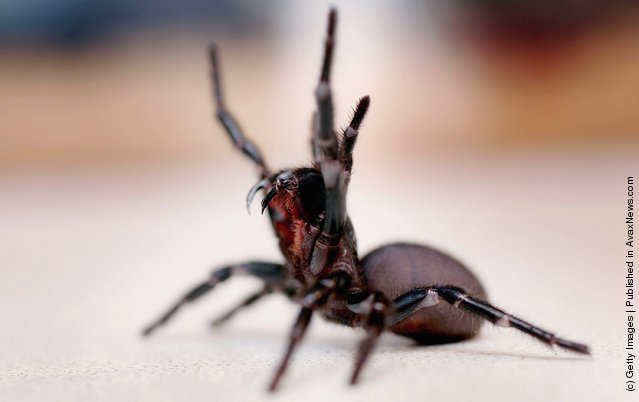
A Funnel Web spider is pictured at the Australian Reptile Park January 23, 2006 in Sydney, Australia. The Funnel Web is one of Australia's deadliest animals, with a venom that is packed with at least 40 different toxic proteins. A bite from a Funnel Web causes massive electrical over-load in the body's nervous system. Finally, fatalities occur from either heart attack or a pulmonary oedema, where the capillaries around the lungs begin to leak fluid and the patient effectively drowns. Death can come as quickly as two hours after a bite if no medical treatment is sought. Due to advances in anti-venom, there has been no death from a Funnel Web bite in Australia since 1980. Australia is home to some of the most deadly and poisonous animals on earth. (Photo by Ian Waldie/Getty Images)
Details
25 Apr 2011 07:49:00


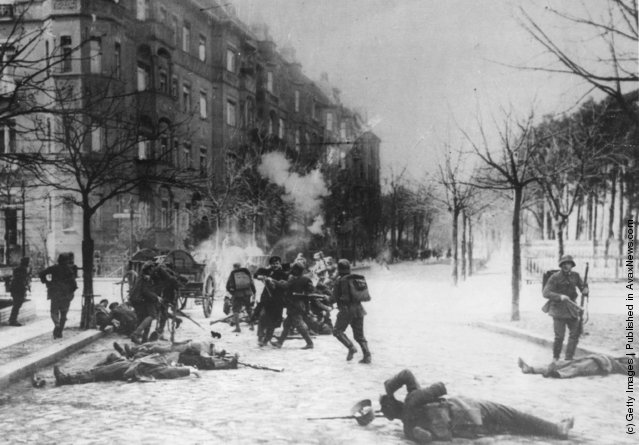
Street fighting in Berlin between Government troops and Spartacists, during the Spartacist uprising which followed Germany's defeat in World War I. (Photo by Keystone/Getty Images). 1919
Details
03 May 2011 09:09:00
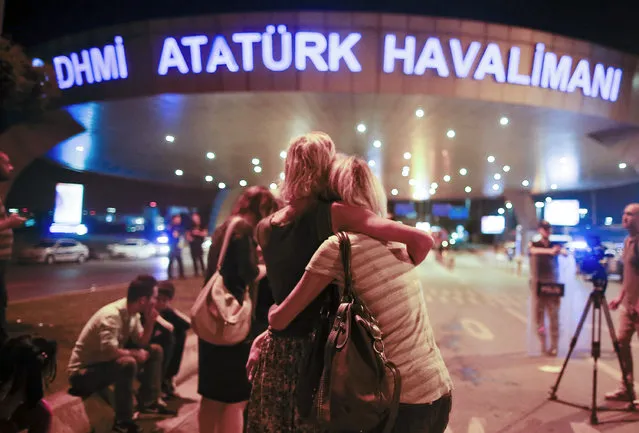
Passengers embrace each other at the entrance to Istanbul's Ataturk airport, early Wednesday, June 29, 2016 following their evacuation after a blast. Suspected Islamic State group extremists have hit the international terminal of Istanbul's Ataturk airport, killing dozens of people and wounding many others, Turkish officials said Tuesday. (Photo by Emrah Gurel/AP Photo)

Passengers embrace each other at the entrance to Istanbul's Ataturk airport, early Wednesday, June 29, 2016 following their evacuation after a blast. Suspected Islamic State group extremists have hit the international terminal of Istanbul's Ataturk airport, killing dozens of people and wounding many others, Turkish officials said Tuesday. (Photo by Emrah Gurel/AP Photo)
Details
29 Jun 2016 11:15:00
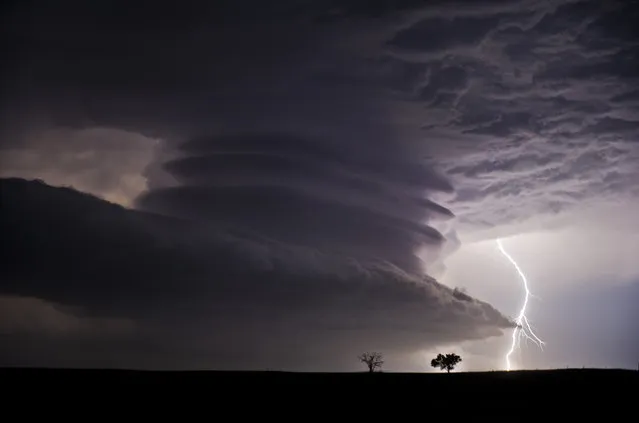
“Stacked Supercell with Lightning”. This huge mesocyclone supercell was near the Nebraska / Kansas border on the night of June 22nd, 2012. What a stunning structure! (Photo and caption by Jennifer Brindley/National Geographic Traveler Photo Contest)

“Stacked Supercell with Lightning”. This huge mesocyclone supercell was near the Nebraska / Kansas border on the night of June 22nd, 2012. What a stunning structure! (Photo and caption by Jennifer Brindley/National Geographic Traveler Photo Contest)

ATTENTION! All pictures are presented in high resolution. To see Hi-Res images – just TWICE click on any picture. In other words, click small picture – opens the BIG picture. Click BIG picture – opens VERY BIG picture.
Details
25 Jun 2013 13:12:00
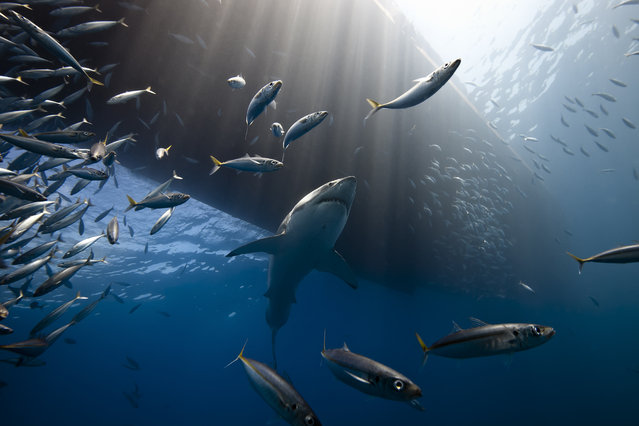
“Great White Shark of Guadalupe Island”. A great white shark very quiet under the boat and a lot of fish. The sun ray lighting the head of the shark. Location: Guadalupe Island, Mexico. (Photo and caption by Marc Henauer/National Geographic Traveler Photo Contest)

“Great White Shark of Guadalupe Island”. A great white shark very quiet under the boat and a lot of fish. The sun ray lighting the head of the shark. Location: Guadalupe Island, Mexico. (Photo and caption by Marc Henauer/National Geographic Traveler Photo Contest)

ATTENTION! All pictures are presented in high resolution. To see Hi-Res images – just TWICE click on any picture. In other words, click small picture – opens the BIG picture. Click BIG picture – opens VERY BIG picture.
Details
04 Jul 2013 09:49:00
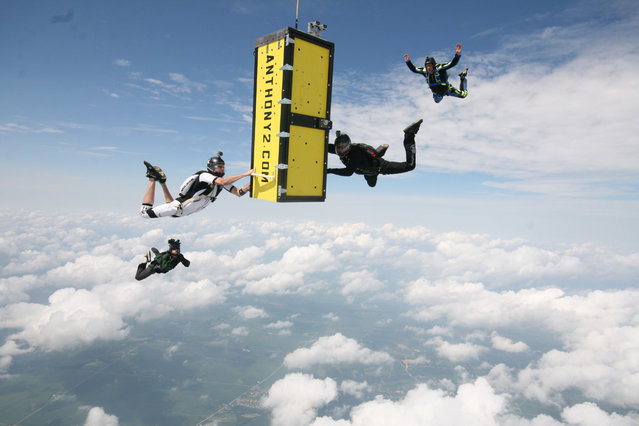
In this photo provided by Skydive Chicago, escape artist Anthony Martin falls while handcuffed and locked inside a box after being dropped from an airplane over Ottawa, Ill., Tuesday, Aug. 6, 2013. (Photo by Joe Silva/AP Photo/Courtesy of Skydive Chicago)

In this photo provided by Skydive Chicago, escape artist Anthony Martin falls while handcuffed and locked inside a box after being dropped from an airplane over Ottawa, Ill., Tuesday, August 6, 2013. (Photo by Joe Silva/AP Photo/Courtesy of Skydive Chicago)
Details
08 Aug 2013 12:44:00
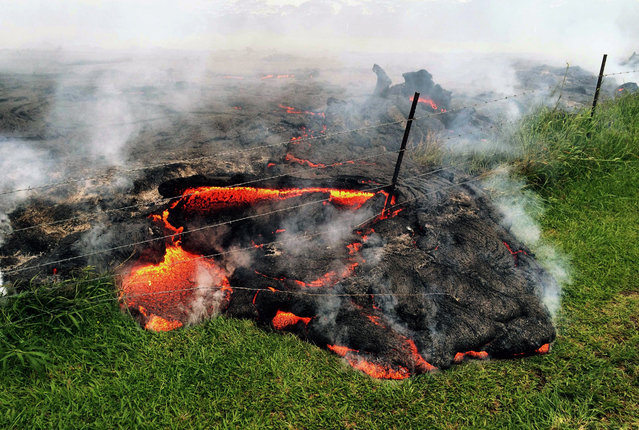
This October 25, 2014 photo provided by the U.S. Geological Survey shows lava flow advancing across the pasture between the Pahoa cemetery and Apa'a Street, engulfing a barbed wire fence, near the town of Pahoa on the Big Island of Hawaii. (Photo by AP Photo/U.S. Geological Survey)

This October 25, 2014 photo provided by the U.S. Geological Survey shows lava flow advancing across the pasture between the Pahoa cemetery and Apa'a Street, engulfing a barbed wire fence, near the town of Pahoa on the Big Island of Hawaii. Dozens of residents in this rural area of Hawaii were placed on alert as flowing lava continued to advance. Authorities on Sunday, October 26, 2014 said lava had advanced about 250 yards since Saturday morning and was moving at the rate of about 10 to 15 yards an hour, consistent with its advancement in recent days. The flow front passed through a predominantly Buddhist cemetery, covering grave sites in the mostly rural region of Puna, and was roughly a half-mile from Pahoa Village Road, the main street of Pahoa. (Photo by AP Photo/U.S. Geological Survey)
Details
27 Oct 2014 11:47:00
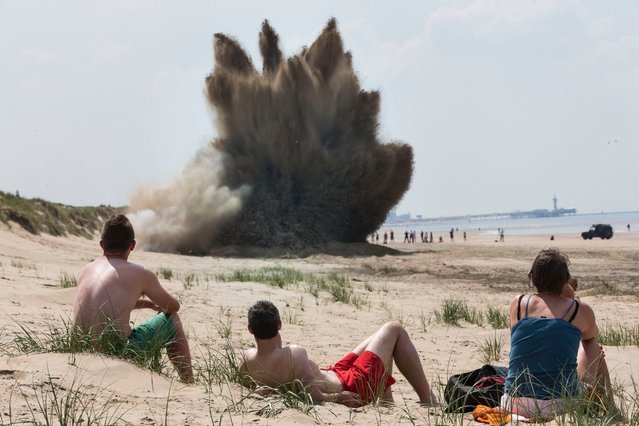
Beachgoers watch the detonation of a 500 pound British bomb on the beach on May 19, 2014 in Wassenaar, Netherlands. The bomb was dropped by the British allied forces during the second world war over nearby Leiden where it was found on a building site. (Photo by Michel Porro/Getty Images)

Beachgoers watch the detonation of a 500 pound British bomb on the beach on May 19, 2014 in Wassenaar, Netherlands. The bomb was dropped by the British allied forces during the second world war over nearby Leiden where it was found on a building site. (Photo by Michel Porro/Getty Images)
Details
24 May 2014 12:51:00