Loading...
Done
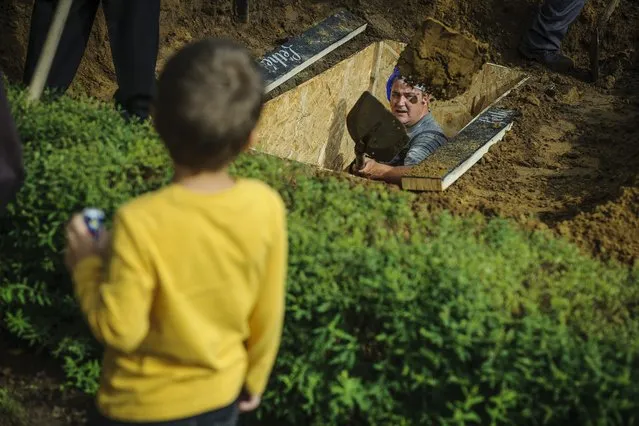
A gravedigger competes as a boy looks on during the first National Grave Digging competition at the public cemetery of Debrecen, 226 km east of Budapest, Hungary, Friday, June 3, 2016. (Photo by Zsolt Czegledi/MTI via AP Photo)

A gravedigger competes as a boy looks on during the first National Grave Digging competition at the public cemetery of Debrecen, 226 km east of Budapest, Hungary, Friday, June 3, 2016. Eighteen two-man teams of Hungarian gravediggers are demonstrating their skills for a place in a regional championship to be held in Slovakia. (Photo by Zsolt Czegledi/MTI via AP Photo)
Details
04 Jun 2016 11:58:00
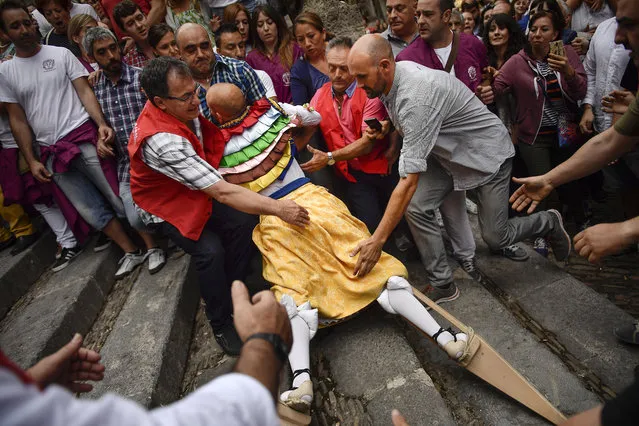
People help a dancer as he falls on stilts in honor of Saint Mary Magdalene in a street for the traditional “Danza de Los Zancos” (Los Zancos Dance), in the small town of Anguiano, northern Spain, Saturday, July 23, 2016. (Photo by Alvaro Barrientos/AP Photo)

People help a dancer as he falls on stilts in honor of Saint Mary Magdalene in a street for the traditional “Danza de Los Zancos” (Los Zancos Dance), in the small town of Anguiano, northern Spain, Saturday, July 23, 2016. As an ancient tradition for more than 4th centuries, eight young people from the town balance on stilts down the old street, turning to the sound of folk music played on a pipe and drum. (Photo by Alvaro Barrientos/AP Photo)
Details
25 Jul 2016 11:36:00
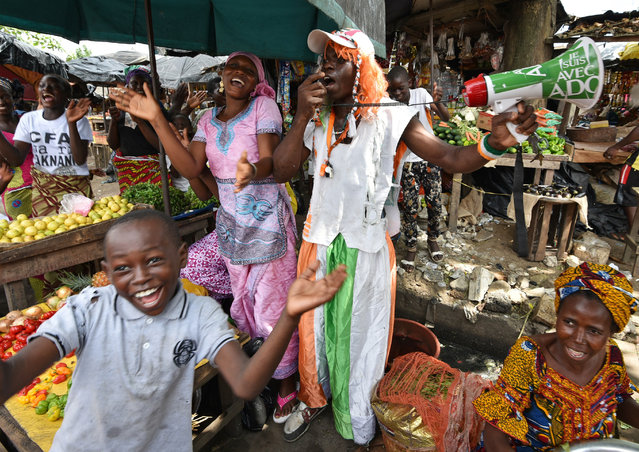
4: Abidjan, Ivory Coast. Latest ranking: 128; Ranking five years ago: 131; Five-year index movement: 3.8%. Here: A supporter of Ivory Coast president Alassane Ouattara campaigns in a market in the city’s Koumassi quarter. (Photo by Sia Kambou/AFP Photo)

A period of relative stability has put the Iranian capital No1 on the list of world cities that have achieved biggest improvements in liveability over the past five years, as calculated by the Economist Intelligence Unit. The “most improved” top 10 contains some unexpected names. So, eg, the fourth place: Abidjan, Ivory Coast. Latest ranking: 128; Ranking five years ago: 131; Five-year index movement: 3.8%. Here: A supporter of Ivory Coast president Alassane Ouattara campaigns in a market in the city’s Koumassi quarter. (Photo by Sia Kambou/AFP Photo)
Details
19 Aug 2016 11:55:00
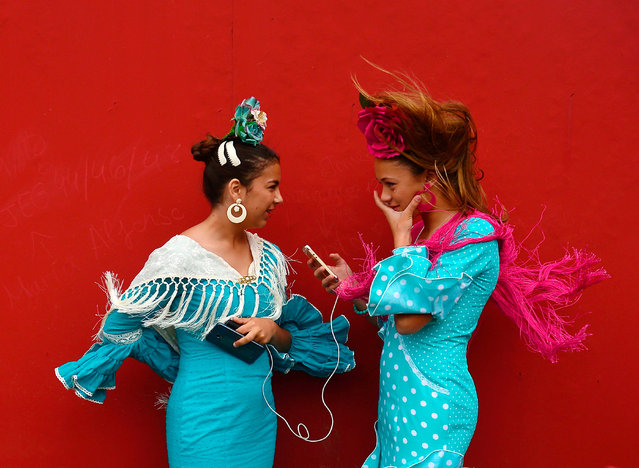
Two girls wearing traditional Sevillian dresses talk during the “Feria de Abril” (April Fair) in Sevilla on April 30, 2017. The fair dates back to 1847 when it was originally organized as a livestock fair but has turned into a week of flamenco dancing, music and bullfighting. (Photo by Cristina Quicler/AFP Photo)

Two girls wearing traditional Sevillian dresses talk during the “Feria de Abril” (April Fair) in Sevilla on April 30, 2017. The fair dates back to 1847 when it was originally organized as a livestock fair but has turned into a week of flamenco dancing, music and bullfighting. (Photo by Cristina Quicler/AFP Photo)
Details
06 May 2017 07:31:00
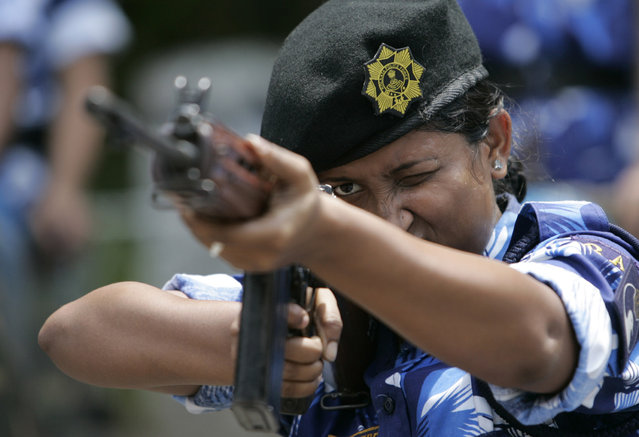
Mamoni Mandal, member of the Rapid Action Force (RAF), attends a training session at a police training school in Kolkata April 15, 2007. (Photo by Parth Sanyal/Reuters)

Mamoni Mandal, member of the Rapid Action Force (RAF), attends a training session at a police training school in Kolkata April 15, 2007. (Photo by Parth Sanyal/Reuters)
Details
08 Mar 2016 13:06:00
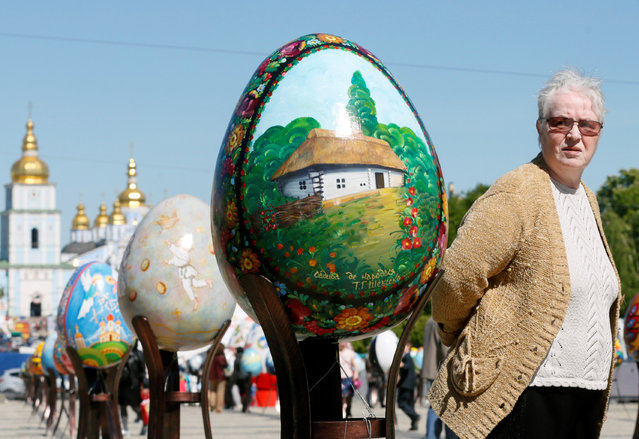
A woman looks at traditional Ukrainian Easter eggs “Pysanka”, installed as part of the upcoming celebrations of Easter, in central Kiev, Ukraine, April 29, 2016. A pysanka is a Ukrainian Easter egg, decorated with traditional Ukrainian folk designs using a wax-resist (batik) method. The word pysanka comes from the verb pysaty, “to write”, as the designs are not painted on, but written with beeswax. Many other eastern European ethnic groups decorate eggs using wax resist for Easter. These include the Belarusians, Bulgarians, Croats, Czechs, Hungarians, Lithuanians, Poles, Romanians, Serbs, Slovaks, Slovenes and Sorbs. (Photo by Valentyn Ogirenko/Reuters)

A woman looks at traditional Ukrainian Easter eggs “Pysanka”, installed as part of the upcoming celebrations of Easter, in central Kiev, Ukraine, April 29, 2016. A pysanka is a Ukrainian Easter egg, decorated with traditional Ukrainian folk designs using a wax-resist (batik) method. The word pysanka comes from the verb pysaty, “to write”, as the designs are not painted on, but written with beeswax. Many other eastern European ethnic groups decorate eggs using wax resist for Easter. These include the Belarusians, Bulgarians, Croats, Czechs, Hungarians, Lithuanians, Poles, Romanians, Serbs, Slovaks, Slovenes and Sorbs. (Photo by Valentyn Ogirenko/Reuters)
Details
30 Apr 2016 09:00:00
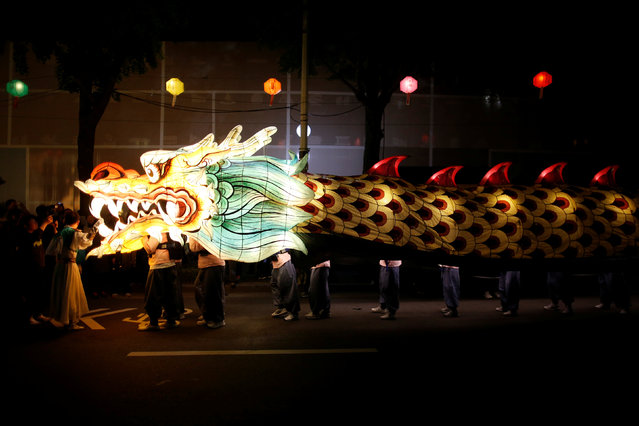
Buddhists carry a dragon-shaped lantern during a lotus lantern parade in celebration of the upcoming birthday of Buddha in Seoul, South Korea, May 7, 2016. (Photo by Kim Hong-Ji/Reuters)

Buddhists carry a dragon-shaped lantern during a lotus lantern parade in celebration of the upcoming birthday of Buddha in Seoul, South Korea, May 7, 2016. (Photo by Kim Hong-Ji/Reuters)
Details
09 May 2016 09:20:00
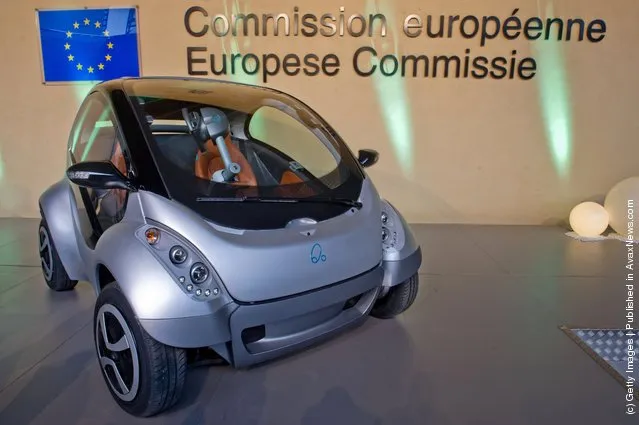
Hiriko Electric Car Is Launched At European Commission HQ

The first prototype of the HIRIKO electric car, during the global launch of Hiriko Driving Mobility, at the EU Commssion headquarters on January 24, 2012 in Brussels, Belgium. (Photo by Geert Vanden Wijngaert/Getty Images)
Details
25 Jan 2012 11:34:00