Loading...
Done
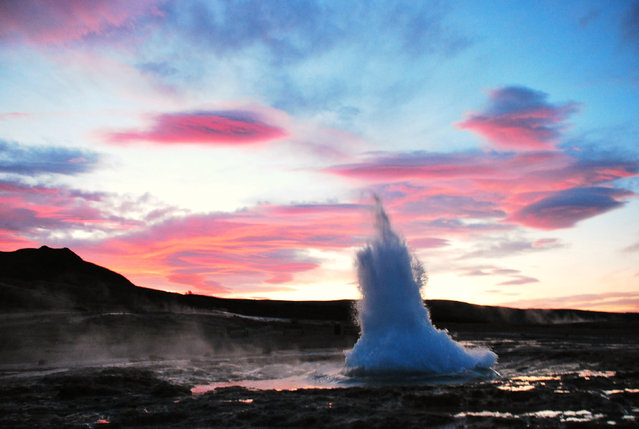
Strokkur geyser against cloudy sky at sunset. Strokkur is a fountain geyser located in a geothermal area beside the Hvítá River in Iceland in the southwest part of the country, east of Reykjavík. It is one of Iceland's most famous geysers, erupting once every 6–10 minutes. Its usual height is 15–20 m, although it can sometimes erupt up to 40 m high. (Photo by Teatsche Dijkhuis/Getty Images/EyeEm)

Strokkur geyser against cloudy sky at sunset. Strokkur is a fountain geyser located in a geothermal area beside the Hvítá River in Iceland in the southwest part of the country, east of Reykjavík. It is one of Iceland's most famous geysers, erupting once every 6–10 minutes. Its usual height is 15–20 m, although it can sometimes erupt up to 40 m high. (Photo by Teatsche Dijkhuis/Getty Images/EyeEm)
Details
18 Oct 2016 12:43:00
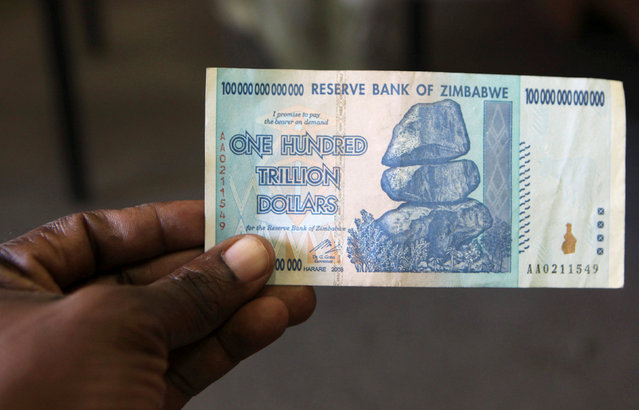
A man holds up for a picture a one hundred trillion Zimbabwean dollars note inside a shop in Harare, Zimbawe, June 12, 2015. (Photo by Philimon Bulawayo/Reuters)

A man holds up for a picture a one hundred trillion Zimbabwean dollars note inside a shop in Harare, Zimbawe, June 12, 2015. Hyperinflation in Zimbabwe was a period of currency instability that began in the late 1990s shortly after the confiscation of private farms from landowners, towards the end of Zimbabwean involvement in the Second Congo War. During the height of inflation from 2008 to 2009, it was difficult to measure Zimbabwe's hyperinflation because the government of Zimbabwe stopped filing official inflation statistics. However, Zimbabwe's peak month of inflation is estimated at 79.6 billion percent in mid-November 2008. (Photo by Philimon Bulawayo/Reuters)
Details
25 Oct 2016 10:08:00
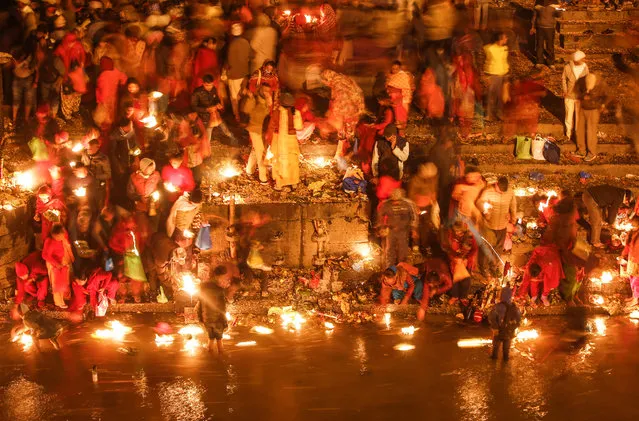
Nepalese Hindu devotees offer oil lamps in the Bagmati River as they observe the festival of Bala Chaturdashi in the early morning hours at the Pashupati Temple in Kathmandu, Nepal, 28 November 2016. Seven kinds of seeds – paddy, barley, sesame, wheat, gram, maize and finger millet – are sown around the temple premises in the name of loved ones departed during the last three years, in the belief that the departed souls will receive salvation. (Photo by Narendra Shrestha)

Nepalese Hindu devotees offer oil lamps in the Bagmati River as they observe the festival of Bala Chaturdashi in the early morning hours at the Pashupati Temple in Kathmandu, Nepal, 28 November 2016. Seven kinds of seeds – paddy, barley, sesame, wheat, gram, maize and finger millet – are sown around the temple premises in the name of loved ones departed during the last three years, in the belief that the departed souls will receive salvation. (Photo by Narendra Shrestha)
Details
05 Dec 2016 11:28:00
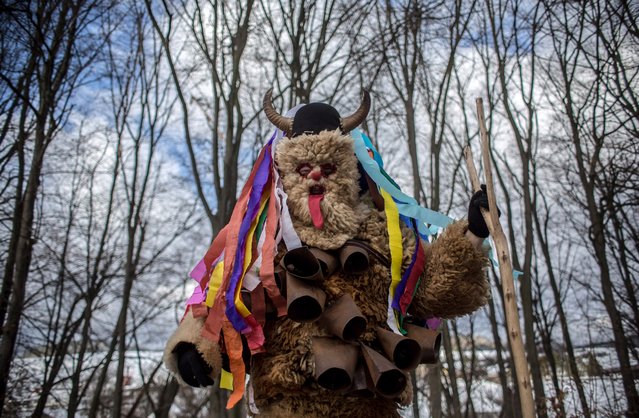
A participant dressed in a traditional devil costume walks from house to house during the traditional St. Nicholas parade on December 3, 2016 in village of Francova Lhota, Czech Republic. This type of parade is one of the most popular age-old traditions in a few villages in the Wallachia region of Eastern Czech Republic. St. Nicholas and company roam the streets going from house to house, for two or three days as St. Nicholas gives sweets and tiny gifts as a present to children and the devils get up to mischief. (Photo by Matej Divizna/Getty Images)

A participant dressed in a traditional devil costume walks from house to house during the traditional St. Nicholas parade on December 3, 2016 in village of Francova Lhota, Czech Republic. This type of parade is one of the most popular age-old traditions in a few villages in the Wallachia region of Eastern Czech Republic. St. Nicholas and company roam the streets going from house to house, for two or three days as St. Nicholas gives sweets and tiny gifts as a present to children and the devils get up to mischief. (Photo by Matej Divizna/Getty Images)
Details
05 Dec 2016 11:56:00
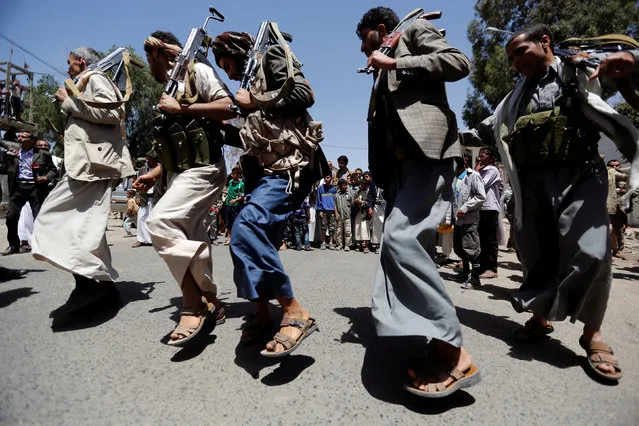
Tribesmen loyal to the Houthi movement perform the Baraa dance during a gathering to show support to the movement in Sanaa, Yemen, May 19, 2016. Bara or Baraa dance is one of the several traditional outdoor dances performed by men in the country of Yemen. Bara dance literally means a dagger dance, where each dancer holds a dagger. The style of the Bara dance differs from tribe to tribe. It is performed on special occasions. (Photo by Khaled Abdullah/Reuters)

Tribesmen loyal to the Houthi movement perform the Baraa dance during a gathering to show support to the movement in Sanaa, Yemen, May 19, 2016. Bara or Baraa dance is one of the several traditional outdoor dances performed by men in the country of Yemen. Bara dance literally means a dagger dance, where each dancer holds a dagger. The style of the Bara dance differs from tribe to tribe. It is performed on special occasions. (Photo by Khaled Abdullah/Reuters)
Details
20 May 2016 12:44:00
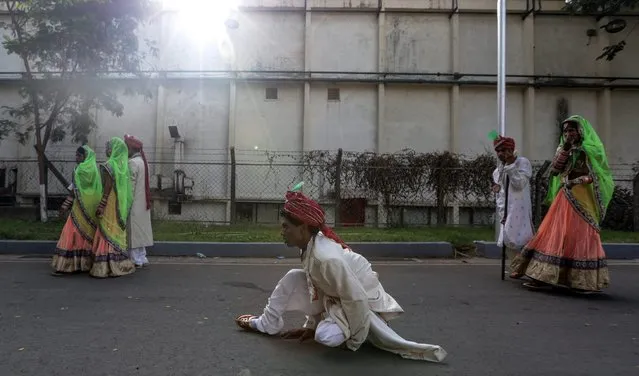
Indian underprivileged and specially abled grooms and brides in traditional marriage attire arrives to take part in a mass marriage ceremony in Mumbai, India, 29 May 2016. Around 51 couples got married during the ceremony which was organized by Narayan Seva Sansthan, for the underprivileged and specially abled people. From this 51 couples, both the partners are physically disabled in 22 couples, one partner is physically disabled in seven couples and 22 couples are from underprivileged circumstances. (Photo by Divyakant Solanki/EPA)

Indian underprivileged and specially abled grooms and brides in traditional marriage attire arrives to take part in a mass marriage ceremony in Mumbai, India, 29 May 2016. Around 51 couples got married during the ceremony which was organized by Narayan Seva Sansthan, for the underprivileged and specially abled people. From this 51 couples, both the partners are physically disabled in 22 couples, one partner is physically disabled in seven couples and 22 couples are from underprivileged circumstances. (Photo by Divyakant Solanki/EPA)
Details
31 May 2016 11:48:00
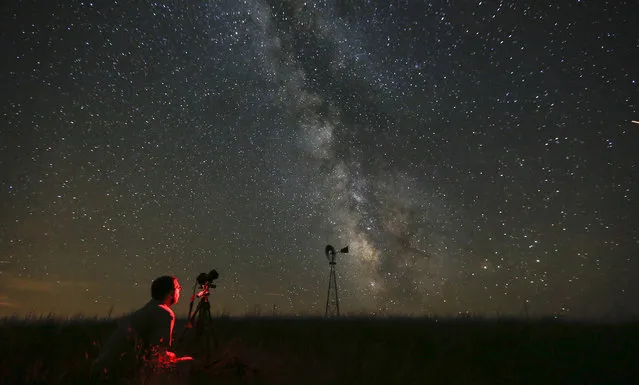
In this Wednesday, July 23, 2014 file photo, Omaha photographer Lane Hickenbottom photographs the night sky in a pasture near Callaway, Neb. With no moon in the sky, the Milky Way was visible to the naked eye. More than one-third of the world’s population can no longer see the Milky Way because of man-made lights, according to a scientific paper by Light Pollution Science and Technology Institute's Fabio Falchi and his team members, published on Friday, June 10, 2016. (Photo by Travis Heying/The Wichita Eagle via AP Photo)

In this Wednesday, July 23, 2014 file photo, Omaha photographer Lane Hickenbottom photographs the night sky in a pasture near Callaway, Neb. With no moon in the sky, the Milky Way was visible to the naked eye. More than one-third of the world’s population can no longer see the Milky Way because of man-made lights, according to a scientific paper by Light Pollution Science and Technology Institute's Fabio Falchi and his team members, published on Friday, June 10, 2016. (Photo by Travis Heying/The Wichita Eagle via AP Photo)
Details
11 Jun 2016 12:37:00
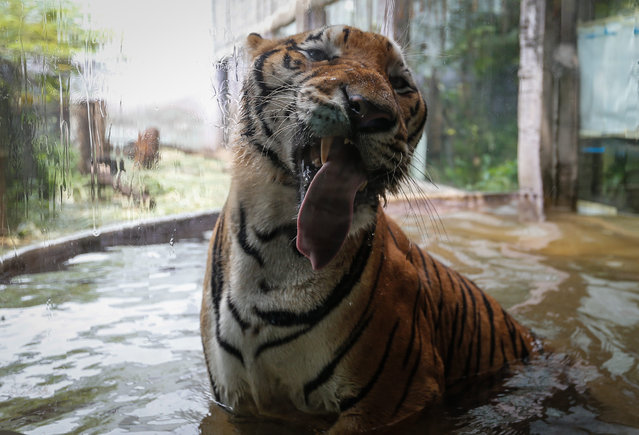
A Bengal tiger licks a glass enclosure during a presentation of Bengial tiger cubs at the Malabon Zoo in Malabon City, north of Manila, Philippines, 14 July 2016. The Bengal tiger cubs, which were born at the zoo, are two months old and named “Tiger Duterte” and “Tiger Leni”. The Malabon Zoo has one of the largest private collections of exotic and endemic animals in the Philippines. (Photo by Mark R. Cristino/EPA)

A Bengal tiger licks a glass enclosure during a presentation of Bengial tiger cubs at the Malabon Zoo in Malabon City, north of Manila, Philippines, 14 July 2016. The Bengal tiger cubs, which were born at the zoo, are two months old and named “Tiger Duterte” and “Tiger Leni”. The Malabon Zoo has one of the largest private collections of exotic and endemic animals in the Philippines. (Photo by Mark R. Cristino/EPA)
Details
17 Jul 2016 11:06:00