A huge atlas moth, with a wingspan of more than 9in, photographed on an areca nut plantation in Sirsi, India. (Photo by Uday Hegde/Close Up Photographer of the Year)
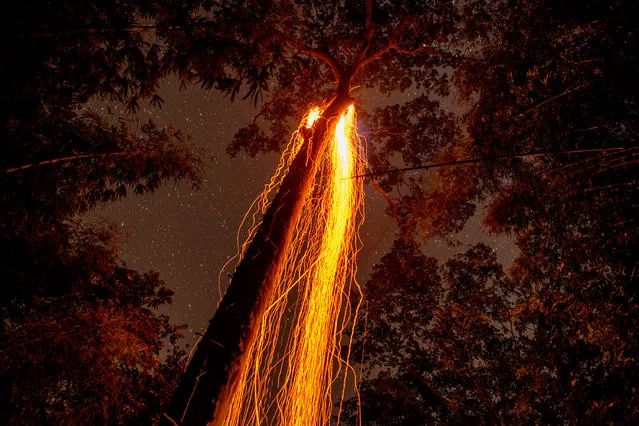
During the spring harvest season, a group of traditional Malaysian honey hunters travel to the rainforest near the Thai border to collect honeycombs from giant bees – and risk their lives climbing 200ft trees. Here: Bees are sensitive to light, which makes them follow the glowing embers down to the ground. (Photo by Hasnoor Hussain/The Guardian)
Feast your eyes on Europe’s most spectacular car graveyards as discovered by one auto-obsessed explorer who has dedicated over ten years to finding the best cars left to rot in the European wilderness. The beautiful set of images were taken in Germany, Sweden and Belgium by German Civil Servant Robert Kahl (30) using a Nikon D7100. He describes his photographs as showcasing “the beauty of transience and decayed charm”. Here: 1941 Chevrolet 1.5 tonnes are left to rot in a field. (Photo by Robert Kahl/Mediadrumworld)
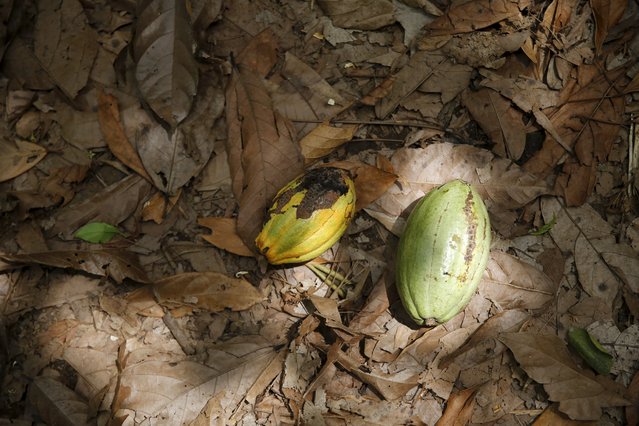
Cocoa pods are seen on the ground at a farm in Ile-Oluji village in Ondo state, southwest Nigeria March 29, 2016. (Photo by Akintunde Akinleye/Reuters)
This strange coral-looking specimen is actually a mushroom. The photo, “Beautiful Destroyer”, was taken in the Panamanian tropical rainforest where the mushroom produces nitrogen, an element vital to soil health. (Photo by Sarah A. Batterman)
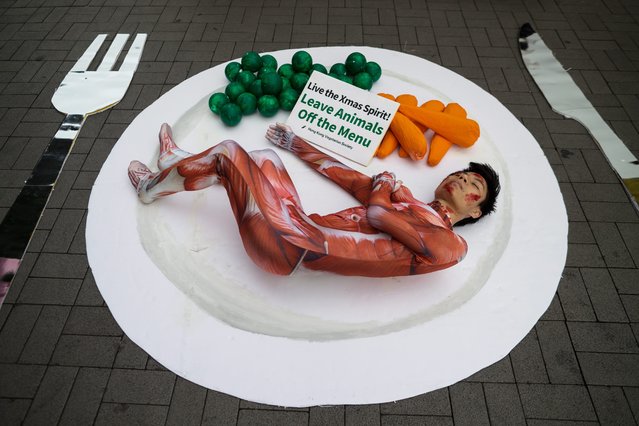
A Hong Kong Vegetarian Society activists lies on a giant plate alongside oversized peas, carrots and cutlery during a protest rally in the tourist district of Tsim Sha Tsui, Hong Kong, China, 23 December 2015. The activists urged passers-by to extend the holiday spirit to animals and to give thoughts to the cruelty inflicted on animals in meat productions. (Photo by Jerome Favre/EPA)
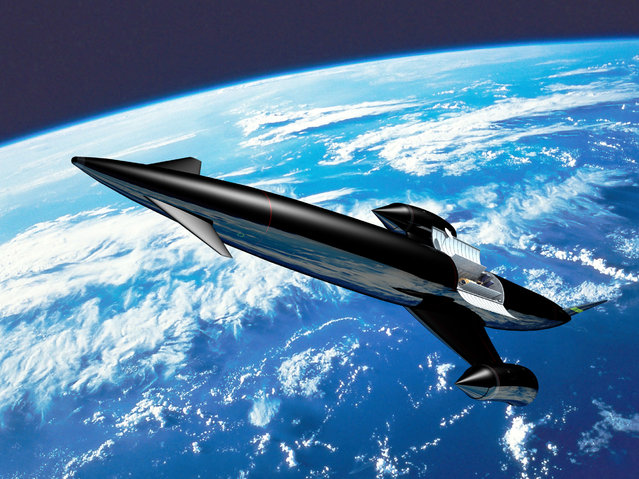
“A small British company with a dream of building a re-usable space plane has won an important endorsement from the European Space Agency (ESA) after completing key tests on its novel engine technology. Reaction Engines Ltd believes its Sabre engine, which would operate like a jet engine in the atmosphere and a rocket in space, could displace rockets for space access and transform air travel by bringing any destination on Earth to no more than four hours away”. – Chris Wickham via Reuters. Photo: Artist's impression of Skylon. (Photo by Reaction Engines Ltd)