Loading...
Done
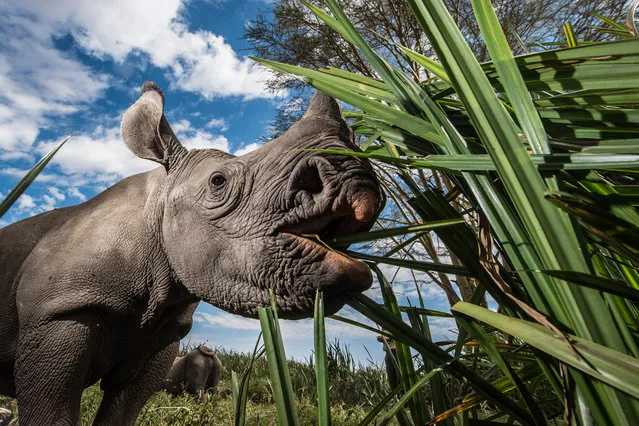
Orphaned baby rhinos seen on August 28, 2014 in Lewa Wildlife Conservancy, Ngare Ndare Forest, Kenya. (Photo by Luca Ghidoni/Barcroft Media)

Orphaned baby rhinos seen on August 28, 2014 in Lewa Wildlife Conservancy, Ngare Ndare Forest, Kenya. Lewa Wildlife Conservancy in Kenya is hand-raising three orphaned baby rhinos; Nicky, Hope and Kilifi. Baby rhino Hope was rescued by rangers when the poachers killed his mother – now he is been taken care off 24 hours-a-day at Lewa Wildlife Conservancy. The wildlife reserve hit the headlines when Prince William proposed to Kate Middleton there in 2010. Rhinos around the world are becoming extinct as a result of the brutal poaching fuelled by an illegal international market for their horns. (Photo by Luca Ghidoni/Barcroft Media)
Details
14 Sep 2014 10:27:00
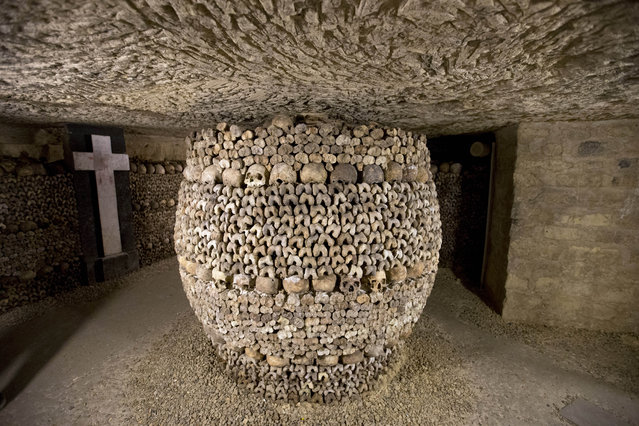
In this photo taken Tuesday, October 14, 2014, skulls and bones are stacked at the Catacombs in Paris, France. (Photo by Francois Mori/AP Photo)

In this photo taken Tuesday, October 14, 2014, skulls and bones are stacked at the Catacombs in Paris, France. The subterranean tunnels, stretching 2 kilometers (1.24 miles), cradle the bones of some 6 million Parisians from centuries past and once gave refuge to smugglers. The site used to close at 5 p.m., but is now staying open until 8 p.m. The change is mainly aimed at allowing more people to visit and reducing long lines, since it can only hold a limited number of people at a time and visits can't be reserved in advance. (Photo by Francois Mori/AP Photo)
Details
17 Oct 2014 13:27:00
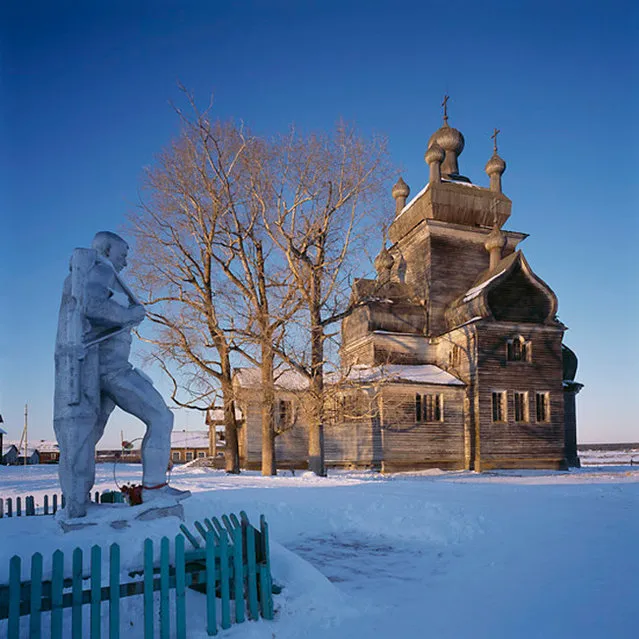
Wooden Churches - Travelling In The Russian North By Richard Davies Part 2

While communism, collectivism, worms, dry rot and casual looting failed to destroy the majestic wooden churches of Russia, it may be ordinary neglect that finally does them in. Dwindled now to several hundred remaining examples, these glories of vernacular architecture lie scattered amid the vastness of the world’s largest country. Just over a decade ago, Richard Davies, a British architectural photographer, struck out on a mission to record the fragile and poetic structures. Austerely beautiful and haunting, “Wooden Churches: Traveling in the Russian North” (White Sea Publishing; $132) is the result. Covering thousands of miles, Mr. Davies described how he and the writer Matilda Moreton tracked down the survivors from among the thousands of onion-domed structures built after Prince Vladimir converted to Christianity in 988.

See also: Wooden Churches Part1
Details
28 Nov 2013 12:13:00
Der Jen (Dezhen; 德珍繪館) – The beauty of Brocade

“Der Jen (Dezhen; 德珍繪館) has achieved fame in her homeland and that fame is now spreading to other parts of the world as more and more people become familiar with her beautiful paintings. This Taiwanese artist depicts these beautiful ladies in classic, traditional dress that would have been worn by members of the royal court or an empress herself. Traditional hair styles and jewelry depicted in her pieces are also considered authentic. Der Jens art can be found in Chinese advertising, childrens magazines, romance novels, tarot cards, and even on public transit tickets. Its also making its way to our pcs as desktop wallpaper”.

Photo: Der Jen (Dezhen; 德珍繪館) – “The beauty of Brocade” (please click to enlarge).
Details
17 Oct 2012 12:03:00
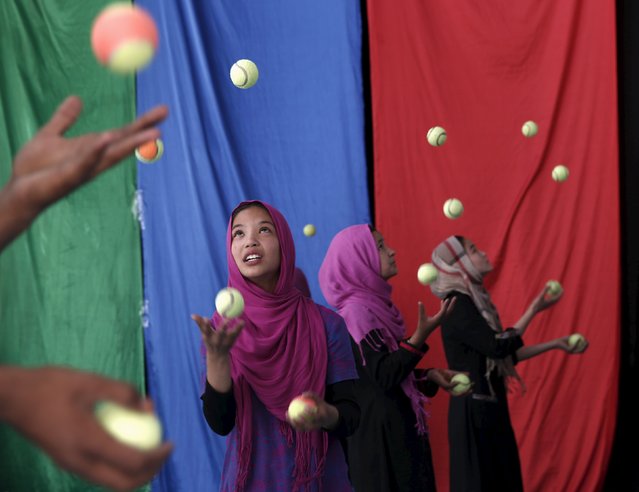
Girls, who are part of Afghan Mobile Mini Circus for Children (MMCC), participate in a juggling competition in Kabul, Afghanistan August 12, 2015. (Photo by Ahmad Masood/Reuters)

Girls, who are part of Afghan Mobile Mini Circus for Children (MMCC), participate in a juggling competition in Kabul, Afghanistan August 12, 2015. The MMCC, founded by David Mason from Denmark, teaches cooperation and creativity to children scarred by years of war in Afghanistan. Despite the dangers, the project has grown so popular that it now runs centres in ten provinces and has hundreds of regular students. The circus makes visits to internally displaced persons' camps, schools, orphanages, and holds annual festivals. The children are taught the skills of juggling clubs, walking on stilts and acrobatics. (Photo by Ahmad Masood/Reuters)
Details
01 Sep 2015 12:47:00
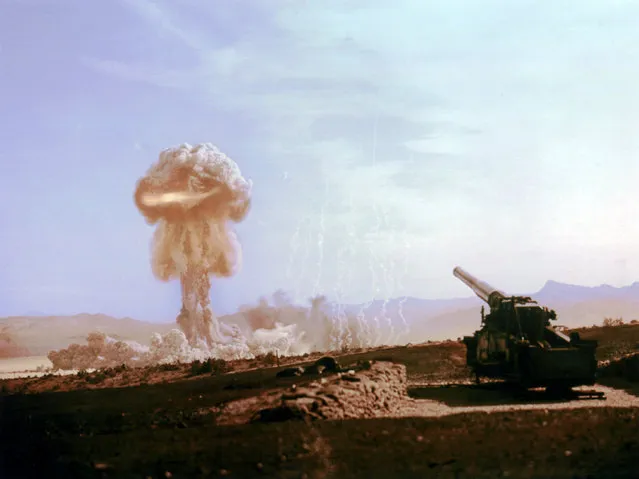
Atomic Annie at work during the Upshot-Knothole test series, 1953. (Photo by Los Alamos National Laboratory/US Army)

“A fter the former Soviet Union conducted its first nuclear test in August 1949, the US reevaluated its postwar defense policies. With the US monopoly on atomic weapons broken, military and political leaders chose to diversify the American stockpile by developing thermonuclear and tactical nuclear weapons. One of the more interesting concepts to come out of this period was atomic artillery, which was successfully tested at the Nevada Proving Grounds (now the Nevada Test Site) in May 1953”. – Alan Carr. Photo: Atomic Annie at work during the Upshot-Knothole test series, 1953. (Photo by Los Alamos National Laboratory/US Army)
Details
11 Mar 2013 11:43:00
A Cat As Model By Joann Biondi

For 20 years, Joann Biondi worked as a freelance writer. Then one day she adopted a kitten that had been tossed in a garbage can and left for dead. That kitten had an unusual quirk; he liked to wear clothes and pose for the camera. So Joann started shooting, and then she got serious about photography. Fast forward four years and that kitten is now Lorenzo the Cat, a feline art photography project that has gotten both the cat and the photographer a lot of attention; gallery shows, museum exhibits, and stories in major media outlets throughout the world. Amid it all Lorenzo has remained a mellow dude who still likes to roll around in the dirt, chase lizards, and knock things off the kitchen counter when his food bowl is empty.
Details
21 Jun 2014 10:13:00
Centre of the Heart Nebula by Ivan Eder (Hungary). Situated 7500 light years away in the ‘W’-shaped constellation of Cassiopeia, the Heart Nebula is a vast region of glowing gas, energized by a cluster of young stars at its centre. The image depicts the central region, where dust clouds are being eroded and moulded into rugged shapes by the searing cosmic radiation. (Photo by Ivan Eder)

The competition, which is run by the Royal Observatory Greenwich in association with BBC Sky at Night Magazine, is now in its sixth year and has received over 2,500 entries. Photo: Centre of the Heart Nebula by Ivan Eder (Hungary). Situated 7500 light years away in the “W”-shaped constellation of Cassiopeia, the Heart Nebula is a vast region of glowing gas, energized by a cluster of young stars at its centre. The image depicts the central region, where dust clouds are being eroded and moulded into rugged shapes by the searing cosmic radiation. (Photo by Ivan Eder)
Details
03 Jul 2014 11:59:00