Loading...
Done
A young YPJ recruit (in pink) arrives to the training base for her first day in training near Derek City, Syria. The YPJ schedule is demanding and requires discipline – new soldiers in training get about 6 hours of sleep a night and wake up at 4 AM to begin exercising; afterwards, their day consists of a full schedule of drills and classroom lessons. Before joining the YPJ many of the girls had never participated in physical activity or sports before. (Photo by Erin Trieb/NBC News)

A young YPJ recruit (in pink) arrives to the training base for her first day in training near Derek City, Syria. The YPJ schedule is demanding and requires discipline – new soldiers in training get about 6 hours of sleep a night and wake up at 4 AM to begin exercising; afterwards, their day consists of a full schedule of drills and classroom lessons. Before joining the YPJ many of the girls had never participated in physical activity or sports before. (Photo by Erin Trieb/NBC News)
Details
10 Sep 2014 12:01:00
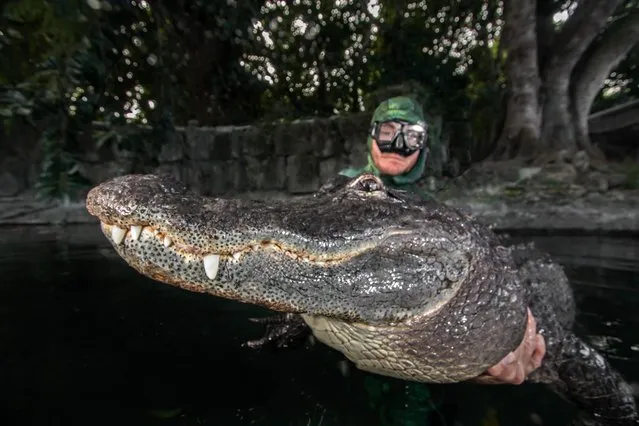
He brings the beast up close and personal to the camera. (Photo by Chris Gillette and Michael Dornellas/Mediadrumworld.com)

The incredible photographs show the three alligators crowding around the man’s head as they look directly at the camera and one even appears to sit on his lap whilst another reptile places a claw on his arm as it swims towards the surface. Photographs taken from above the surface show animal handler, Chris Gillette (29) from Fort Lauderdale, Florida, USA holding an alligator out of the water. The images of Chris were taken by Michael Dornellas at the Everglades Outpost Wildlife Rescue, Florida USA. Here: Mich­ael Dornellas brings the beast up close and personal to the camera. (Photo by Chris Gillette and Michael Dornellas/Mediadrumworld.com)
Details
20 Jan 2017 08:03:00
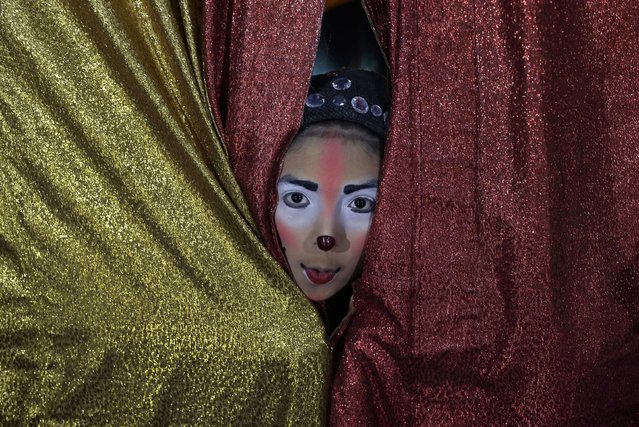
In this July 20, 2018 photo, Joshep Balta, a clown named “Cachupito”, peers through the tent curtain to see how many people are waiting for the show, put on by the International Circus, set up in the shanty town of Puente Piedra on the outskirts of Lima, Peru. Balta, a 12-year old clown whose parents work at the circus setting up and breaking down the encampment, was discovered by the circus two years ago when he was performing as a clown at street corners. (Photo by Martin Mejia/AP Photo)

In this July 20, 2018 photo, Joshep Balta, a clown named “Cachupito”, peers through the tent curtain to see how many people are waiting for the show, put on by the International Circus, set up in the shanty town of Puente Piedra on the outskirts of Lima, Peru. Balta, a 12-year old clown whose parents work at the circus setting up and breaking down the encampment, was discovered by the circus two years ago when he was performing as a clown at street corners. (Photo by Martin Mejia/AP Photo)
Details
26 Jul 2018 00:03:00
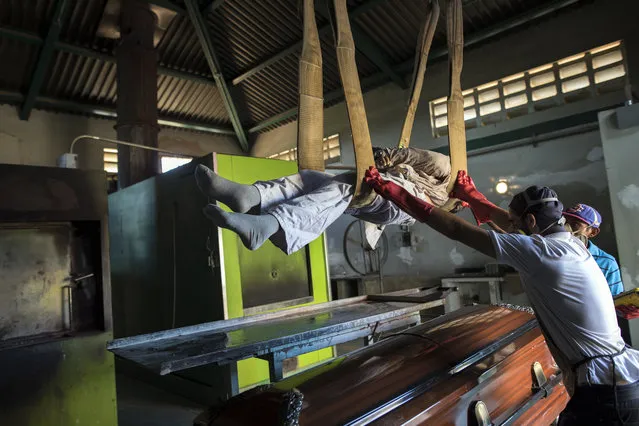
Cemetery workers lift a corpse from a coffin to a metal plate as they prepare the body for cremation at a cemetery in Maracaibo, Venezuela, November 27, 2019. Some overcome the financial burden of a relative's death by renting caskets, a cheaper option than buying one. (Photo by Rodrigo Abd/AP Photo)

Cemetery workers lift a corpse from a coffin to a metal plate as they prepare the body for cremation at a cemetery in Maracaibo, Venezuela, November 27, 2019. Some overcome the financial burden of a relative's death by renting caskets, a cheaper option than buying one. (Photo by Rodrigo Abd/AP Photo)
Details
28 Dec 2019 00:01:00
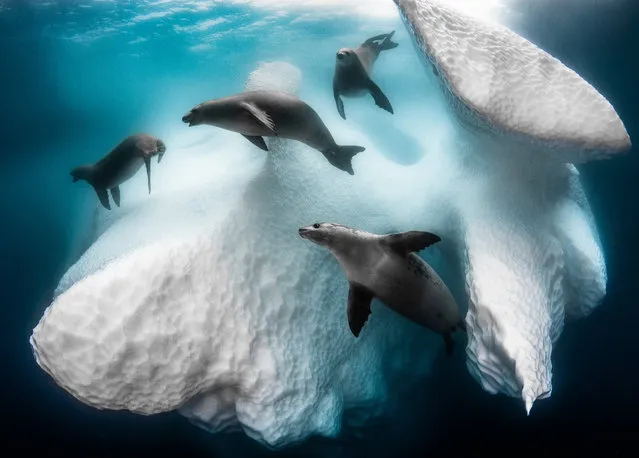
Underwater photographer of the year 2020 and wide angle category winner: Frozen Mobile Home by Greg Lecoeur (France) in the Antarctic peninsula, Antarctica. Crabeater seals swim around an iceberg. These massive and mysterious habitats are dynamic kingdoms that support marine life. As they swing and rotate slowly through polar currents, icebergs fertilise the oceans by carrying nutrients from land that spark blooms of phytoplankton, fundamental to the carbon cycle. (Photo by Greg Lecoeur/Underwater Photographer of the Year 2020)

Underwater photographer of the year 2020 and wide angle category winner: Frozen Mobile Home by Greg Lecoeur (France) in the Antarctic peninsula, Antarctica. Crabeater seals swim around an iceberg. These massive and mysterious habitats are dynamic kingdoms that support marine life. As they swing and rotate slowly through polar currents, icebergs fertilise the oceans by carrying nutrients from land that spark blooms of phytoplankton, fundamental to the carbon cycle. (Photo by Greg Lecoeur/Underwater Photographer of the Year 2020)
Details
28 Feb 2020 00:05:00
A person rides a swing hanging from a crane with hot air balloons fly in the background in Nevsehir, Turkey on October 14, 2021. Tourists and those who want to take photos set up swings on the cranes they rent and then have their photos taken in the setting created by hot air balloons in the backgrounds. (Photo by Behcet Alkan/Anadolu Agency via Getty Images)

A person rides a swing hanging from a crane with hot air balloons fly in the background in Nevsehir, Turkey on October 14, 2021. Tourists and those who want to take photos set up swings on the cranes they rent and then have their photos taken in the setting created by hot air balloons in the backgrounds. (Photo by Behcet Alkan/Anadolu Agency via Getty Images)
Details
28 Oct 2021 06:05:00
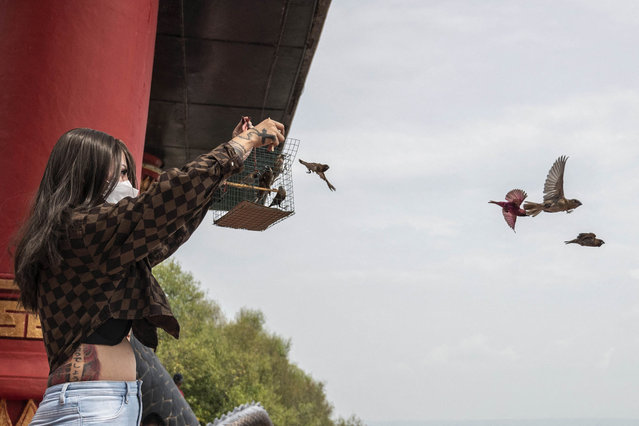
A woman releases birds as people celebrate the start of the Lunar New Year in Surabaya on February 1, 2022, which ushers in the Year of the Tiger. (Photo by Juni Kriswanto/AFP Photo)

A woman releases birds as people celebrate the start of the Lunar New Year in Surabaya on February 1, 2022, which ushers in the Year of the Tiger. (Photo by Juni Kriswanto/AFP Photo)
Details
15 Feb 2022 05:39:00
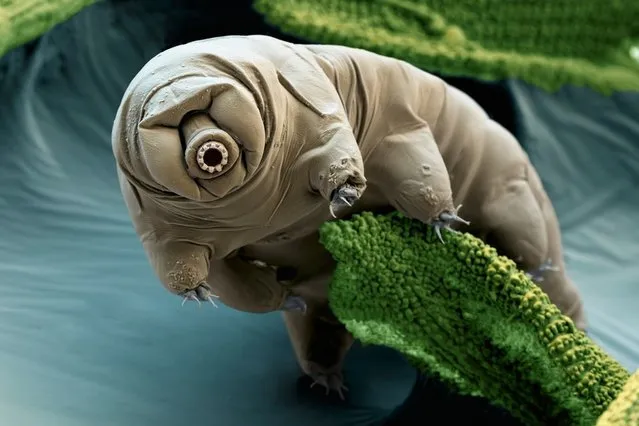
Tardigrades (commonly known as waterbears or moss piglets). (Photo by SPL/East News)

“Tardigrades (commonly known as waterbears or moss piglets) are small, water-dwelling, segmented animals with eight legs. Tardigrades were first discovered in 1773 by Johann August Ephraim Goeze, who called them kleiner Wasserbär, meaning “little water bear” in German. The name Tardigrada means “slow walker” and was given by Lazzaro Spallanzani in 1777. The name water bear comes from the way they walk, reminiscent of a bear's gait. The biggest adults may reach a body length of 1.5 millimetres (0.059 in), the smallest below 0.1 mm. Freshly hatched tardigrades may be smaller than 0.05 mm”. – Wikipedia. Photo: Tardigrades. (Photo by SPL/East News)
Details
26 Sep 2012 09:55:00