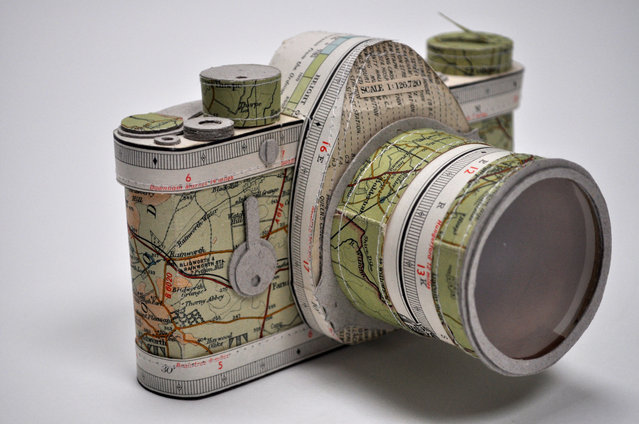
Jennifer Collier is an innovative textiles and crafts artist who uses a combination of natural and found materials. Through methods of weaving, waxing, bonding, fusing, trapping, embedding and stitching she creates unusual materials, which are then developed into garments and accessories.
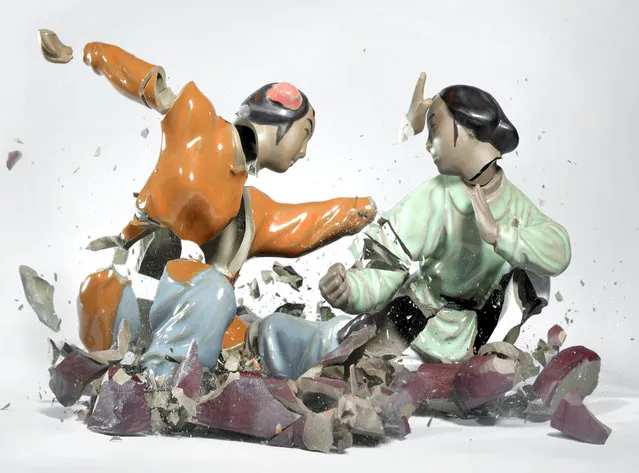
From a height of three meters, porcelain figurines are dropped on the ground, and the sound they make when they hit trips the shutter release. The result: razor-sharp images of disturbing beauty—temporary sculptures made visible to the human eye by high-speed photography technology. The porcelain statuette bursting into pieces isn't what really captures the attention; the fascination lies in the genesis of a dynamic figure that replaces the static pose. In contrast to the inertness of the intact kitsch figurines Klimas started out with, the photographs of their destruction possess a powerfully narrative character.
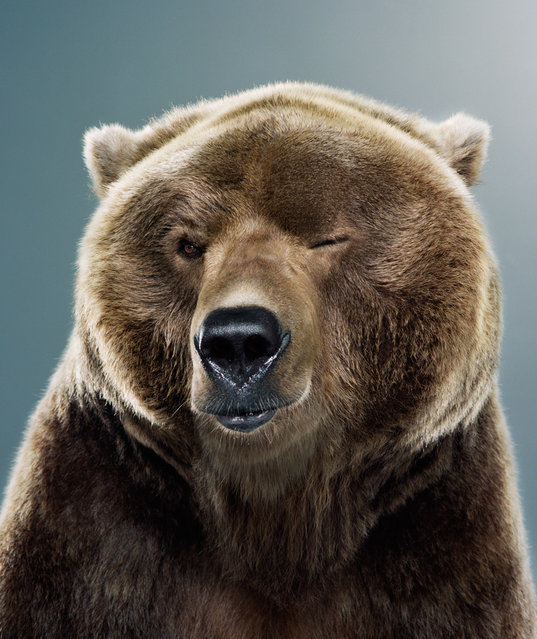
Photograph Jill Greensberg is known for her ability to bring human qualities into animal photography. Her “Bear Portraits” project carries all the spectrum of emotions and personalities along with the depths of characters captured in different members of the Ursidae family
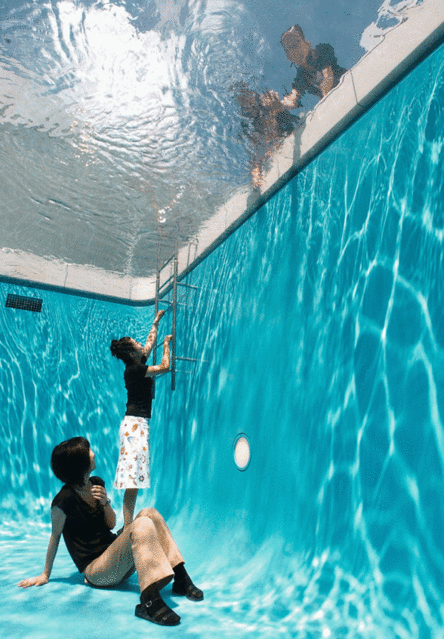
In one of the Museum’s courtyards is a swimming pool framed by a limestone deck. When seen from the deck, the pool appears to be filled with deep, shimmering water. In fact, however, a layer of water only some 10 centimeters deep is suspended over transparent glass. Below the glass is an empty space with aquamarine walls that viewers can enter. The work sets up an unfolding sequence of experiences—we view the pool through the glass wall enclosing the courtyard; from the deck, looking down into the pool; and from the interior of the pool, looking up. The Swimming Pool might hence be considered a place where, slowly, with time, different perspectives and perceptions of self and others all come to intersect.
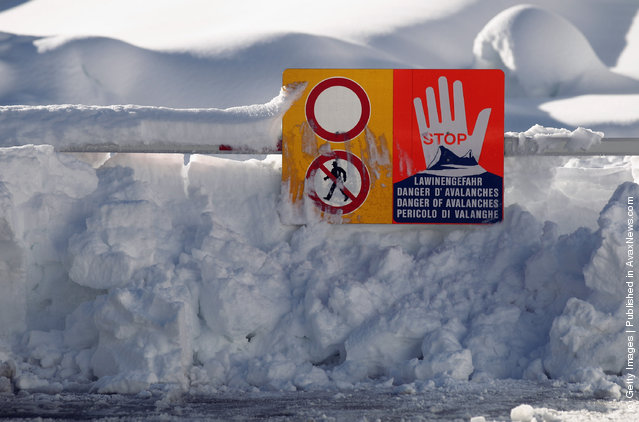
A sign reading “STOP Danger of Avalanches” blocks a local road on January 11, 2012 near Ischgl, Austria. Over the last few days heavy snowfalls have caused chaos in parts of Austria and Switzerland by blocking rail and road connections, stranding vacationers at mountain ski resorts and creating the risk of avalanches throughout the region. (Photo by Johannes Simon/Getty Images)
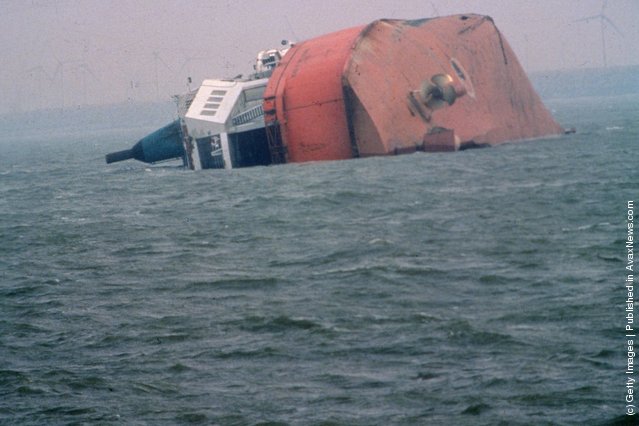
“MS Herald of Free Enterprise was a roll-on roll-off (RORO) car and passenger ferry owned by Townsend Thoresen. She was one of three ships commissioned by the company to operate on the Dover–Calais route across the English Channel. The ferry capsized on the night of 6 March 1987, moments after leaving the Belgian port of Zeebrugge, killing 193 passengers and crew. This was the deadliest maritime disaster involving a British ship in peacetime since the sinking of the Iolaire in 1919”. – Wikipedia
Photo: The wreck of the Herald of Free Enterprise, which capsized near Zeebrugge on the 6th of March 1987. (Photo by Hulton Archive/Getty Images). 1987
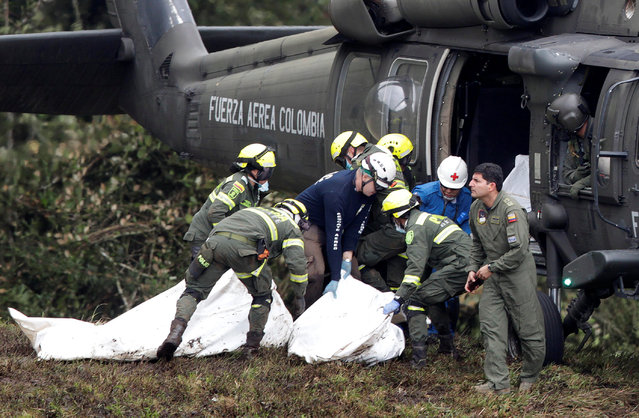
A Colombian air force helicopter retrieves the bodies of victims from the wreckage of a plane that crashed into the Colombian jungle with Brazilian soccer team Chapecoense onboard near Medellin, Colombia, November 29, 2016. The chartered plane was carrying a Brazilian soccer team to the biggest match of its history when it crashed into a Colombian hillside and broke into pieces, killing 75 people and leaving six survivors, Colombian officials said Tuesday. (Photo by Jaime Saldarriaga/Reuters)