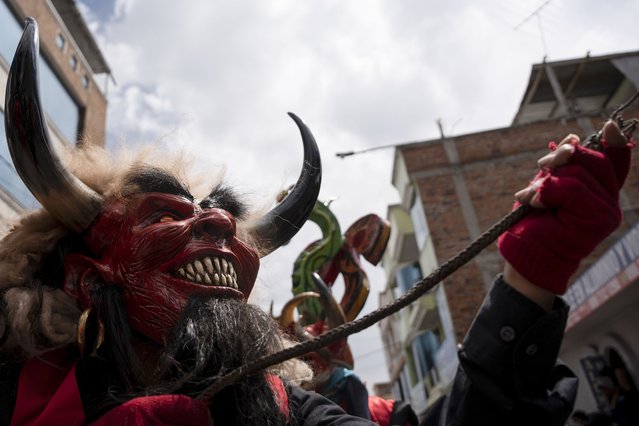
Wearing a devil mask, a reveler dances through the streets during the “Diablada de Pillaro”, or the Devils of Pillaro festival, to send out the old year and bring in the new, in the Andean town of Pillaro, Ecuador, January 1, 2024. (Photo by Carlos Noriega/AP Photo)
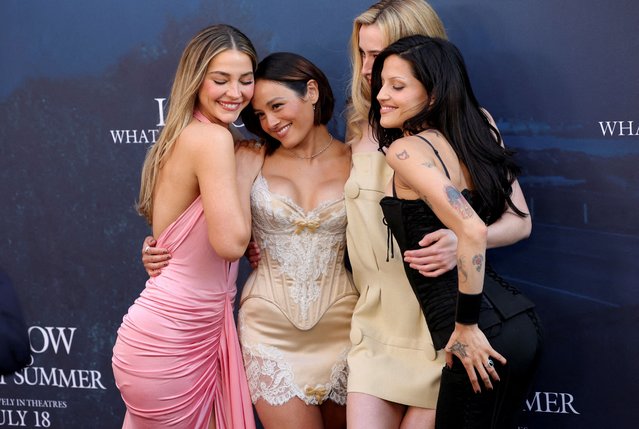
Cast members Chase Sui Wonders, Sarah Pidgeon, Gabriella Bechtel, also known as Gabbriette, and Madelyn Cline attend the premiere of the film “I Know What You Did Last Summer”, in Los Angeles on July 15, 2025. (Photo by Mario Anzuoni/Reuters)
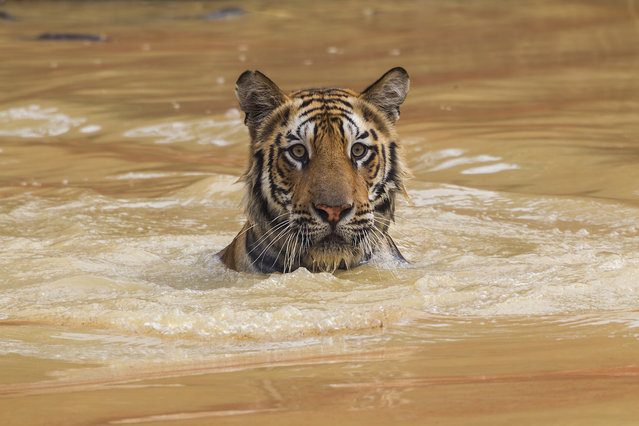
National Geographic photographer Steve Winter has spent most of his adult life shooting wild cats. Photo: A 14-month-old cub, cooling off in a pond, is riveted by a deer that appeared near the shore. Tigers are powerful swimmers; they can easily cross rivers four to five miles wide and have been known to swim distances of up to 18 miles. (Photo by Steve Winter/National Geographic)
“Anish Kapoor CBE RA (born 12 March 1954) is a British sculptor of Indian birth. Born in Mumbai (Bombay), Kapoor has lived and worked in London since the early 1970s when he moved to study art, first at the Hornsey College of Art and later at the Chelsea School of Art and Design”. – Wikipedia
Photo: Workmen install a large-scale sculputure by Anish Kapoor at the Lisson Gallery on October 10, 2006 in London, England. (Photo by Gareth Cattermole/Getty Images)
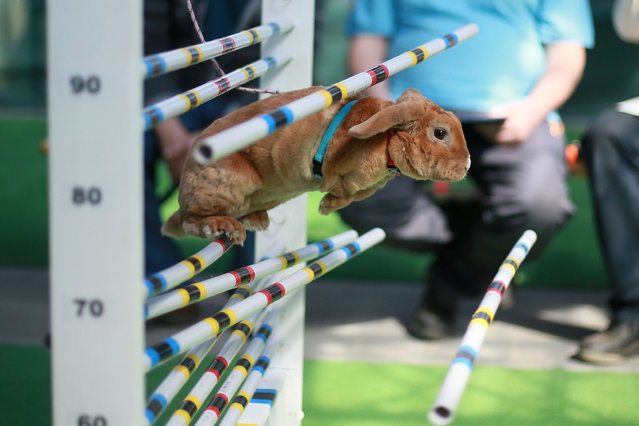
A rabbit fails to jump over an obstacle during a rabbit track and field competition on the sidelines of a hunting exhibition in Kromeriz, about 60 km east of Prague, on April 1, 2017. Circa 100 rabbits took part in the competition, including disciplines as long jump, high jump and running on a flat track. (Photo by Radek Mica/AFP Photo)
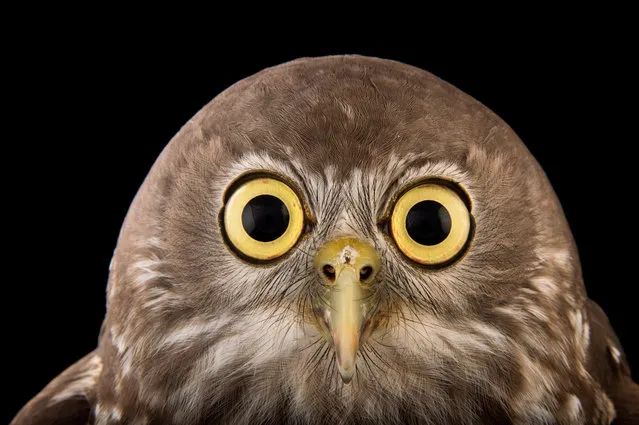
The National Geographic Photo Ark is a travelling exhibition of photographer Joel Sartore’s quest to create a photo archive of biodiversity around the world. So far, Sartore has captured studio portraits of more than 6,000 species – a number that he hopes to double. On 1 July, the ark will open at Melbourne zoo – the first time it has been exhibited in the southern hemisphere. More than 50 portraits will be on display, including many of Australian endangered animals being protected by programs at the zoo itself. These captions have been edited from text supplied by Melbourne zoo. Here: Barking owl. (Photo by Joel Sartore/National Geographic Photo Ark/The Guardian)