Loading...
Done
A Long March 2F rocket carrying Tiangong-1, China's first unmanned space module, stands at the Jiuquan Satellite Launch Center

Chinese security stands near a Long March 2F rocket carrying Tiangong-1, China's first unmanned space module, stands at the Jiuquan Satellite Launch Center on September 28, 2011 in Jiuquan, Gansu Province of China. Tiangong-1,a small unmanned space lab, will be launched at 21:19 (Beijing time) on September 29, 2011, and will attempt a docking procedure with a Shenzhou 8 spacecraft later in the mission. (Photo by Lintao Zhang/Getty Images)
Details
29 Sep 2011 11:50:00
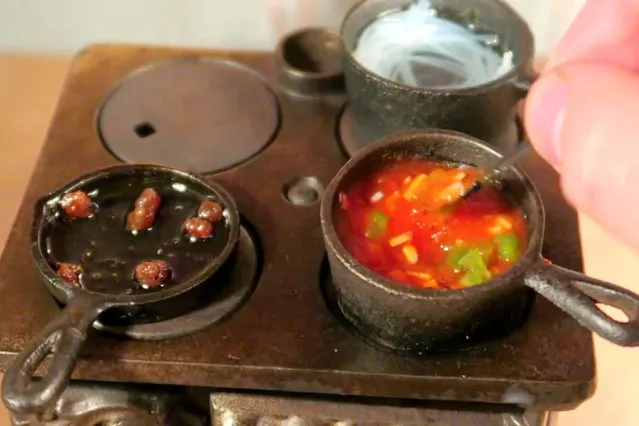
Jay cooks the ingredients of the tiny spaghetti on the tiny stove. (Photo by Jay Baron/Caters News)

Videographer Jay Baron, from Utah, spends up to nine hours cooking super small dishes and serving them up to his YouTube audience. The tiny portions feature cuisine from all over the world, from ultra-American apple pie to Japanese ramen. The 22-year-old confines himself to cooking in a 2ft by 2ft box, so the only heat he can use comes from a tea light. Here: Jay cooks the ingredients of the tiny spaghetti on the tiny stove. (Photo by Jay Baron/Caters News)
Details
26 Nov 2016 10:34:00
King Penguins marching during sunrise, Falkland Islands. (Photo by Wim van den Heever/Caters News)

Penguins majestically march on sand before heading out for a morning swim. Wildlife photographer Wim van den Heever, 45, visited the Falkland Islands this year to shoot pictures and scout the area for future tours. Wim’s breathtaking images show a small group of king penguins before they head out to sea at sunrise. Here: King Penguins marching during sunrise, Falkland Islands. (Photo by Wim van den Heever/Caters News)
Details
13 Oct 2017 06:32:00
A follower of the Afro-Brazilian religion Umbanda pays tribute for Iemanja, goddess of the sea, in Copacabana Beach in Rio de Janeiro, Brazil December 29, 2017. (Photo by Ricardo Moraes/Reuters)

A follower of the Afro-Brazilian religion Umbanda pays tribute for Iemanja, goddess of the sea, in Copacabana Beach in Rio de Janeiro, Brazil December 29, 2017. Hundreds of practitioners of Brazil's Afro-Brazilian Candomble and Umbanda faiths have gathered at Rio de Janeiro's Copacabana beach to honor Yemanja. Worshippers were mostly dressed in white as they launched their offerings to Iemanja: small boats with flowers and bowls with candles and fruits. (Photo by Ricardo Moraes/Reuters)
Details
30 Dec 2017 06:22:00
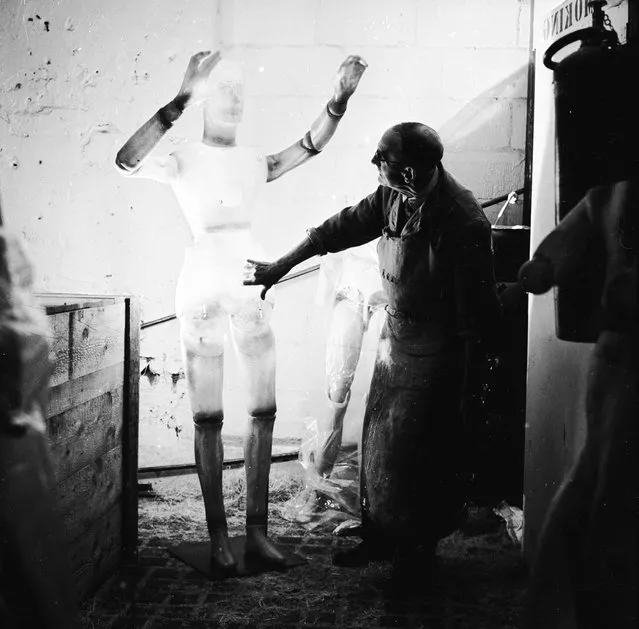
A model of a ghost made from translucent fibreglass is lit from inside at Gem's (Wax Models) Ltd, in the Portobello Road area of west London. The ghost is due to go to the Capistrano Mission Museum in California, where tourists are told the legend of how he frightened a young Indian girl novice to death. 1st May 1965. (Photo by Chris Ware/Keystone Features)

A model of a ghost made from translucent fibreglass is lit from inside at Gem's (Wax Models) Ltd, in the Portobello Road area of west London. The ghost is due to go to the Capistrano Mission Museum in California, where tourists are told the legend of how he frightened a young Indian girl novice to death. 1st May 1965. (Photo by Chris Ware/Keystone Features)
Details
24 Oct 2012 09:55:00
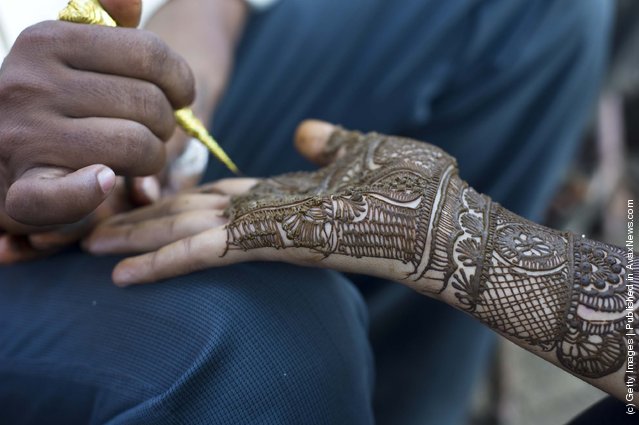
Application of henna or “Mehndi”  to a girls hand in a market in Jaipur, India

“Mehndi or menhdi is the application of henna as a temporary form of skin decoration in India, as well as by expatriate communities from the country. The word mehndi is derived from the Sanskrit word mendhikā. The use of mehndi and turmeric is described in the earliest Vedic ritual books. Haldi (Staining oneself with turmeric paste) as well as mehndi are important Vedic customs as a symbolic representation of the Outer and the Inner Sun. Vedic customs are meant to awaken the “inner light” and so the gold of the inner Sun has an important symbolic function”. – Wikipedia

Photo: Application of henna or “Mehndi” to a girls hand in a market on October 18, 2010 in Jaipur, India. (Photo by Simon de Trey-White/Getty Images)
Details
23 Nov 2011 13:33:00
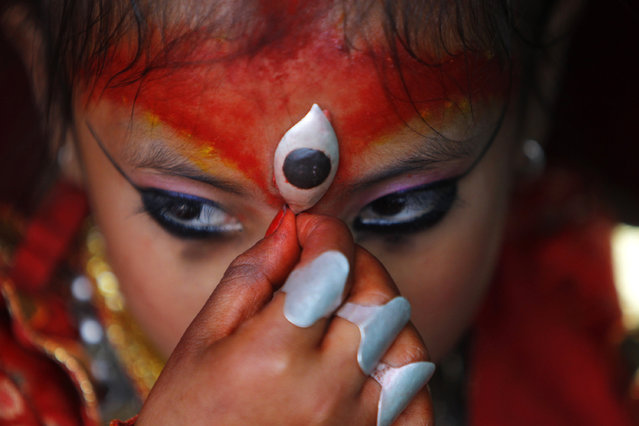
Nepal's Kumari, or living goddess, adjusts her ornament as she watches the Rato Machindranath chariot Festival in Lalitpur, Nepal, Friday, April 24, 2015. Nepal's living goddesses are young pre-pubescent girls considered by devotees to be incarnations of a Hindu goddess. Selected as toddlers, living goddesses usually keep their positions until they reach puberty. (Photo by Niranjan Shrestha/AP Photo)

Nepal's Kumari, or living goddess, adjusts her ornament as she watches the Rato Machindranath chariot Festival in Lalitpur, Nepal, Friday, April 24, 2015. Nepal's living goddesses are young pre-pubescent girls considered by devotees to be incarnations of a Hindu goddess. Selected as toddlers, living goddesses usually keep their positions until they reach puberty. (Photo by Niranjan Shrestha/AP Photo)
Details
25 Apr 2015 10:05:00
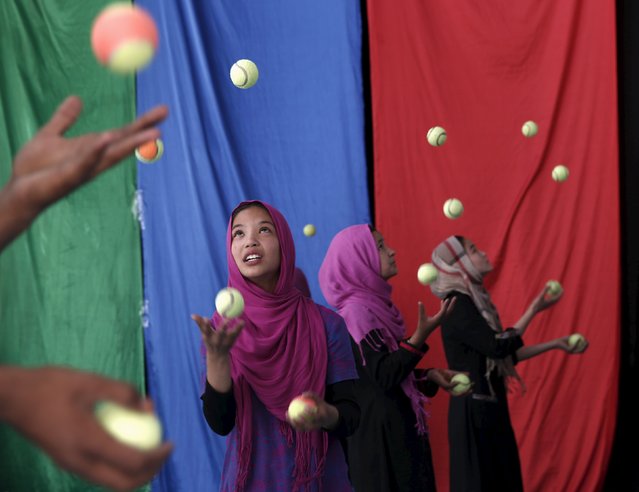
Girls, who are part of Afghan Mobile Mini Circus for Children (MMCC), participate in a juggling competition in Kabul, Afghanistan August 12, 2015. (Photo by Ahmad Masood/Reuters)

Girls, who are part of Afghan Mobile Mini Circus for Children (MMCC), participate in a juggling competition in Kabul, Afghanistan August 12, 2015. The MMCC, founded by David Mason from Denmark, teaches cooperation and creativity to children scarred by years of war in Afghanistan. Despite the dangers, the project has grown so popular that it now runs centres in ten provinces and has hundreds of regular students. The circus makes visits to internally displaced persons' camps, schools, orphanages, and holds annual festivals. The children are taught the skills of juggling clubs, walking on stilts and acrobatics. (Photo by Ahmad Masood/Reuters)
Details
01 Sep 2015 12:47:00