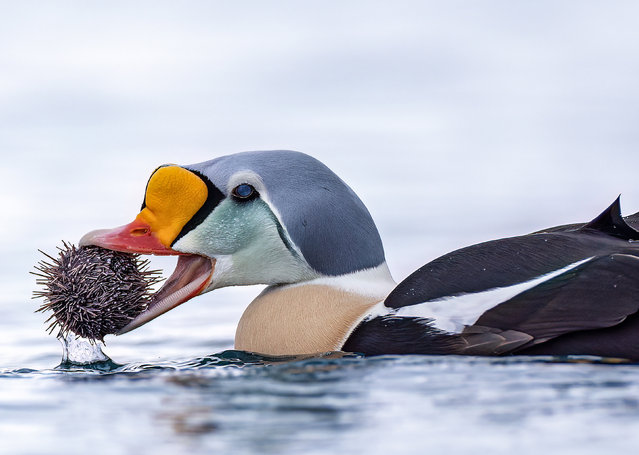
A king eider sea duck tackles a prickly dinner of sea urchin on a lake in Batsfjord, Norway in the last decade of August 2024. The drake’s breeding plumage consists of a distinctive powder-blue head and neck, orange frontal lobe and a red bill. (Photo by Mia Surakka/Solent News)
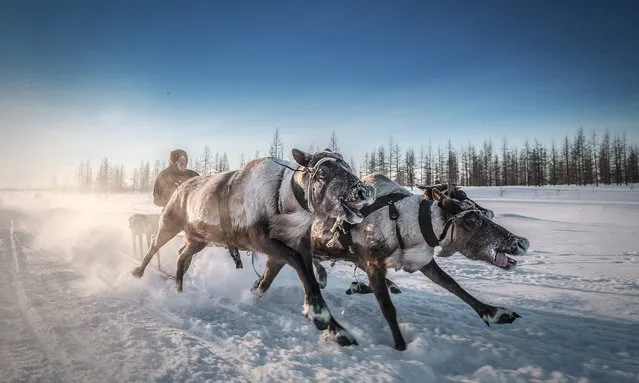
Take me away, deer, Russia. The Nenet people of Arctic Russia use reindeer and sledges as a prime mode of transport. The animals’ navigational ability means that in severe conditions they are sometimes the only hope of survival. (Photo by Kamil Nureev/Smithsonian Photo Contest)
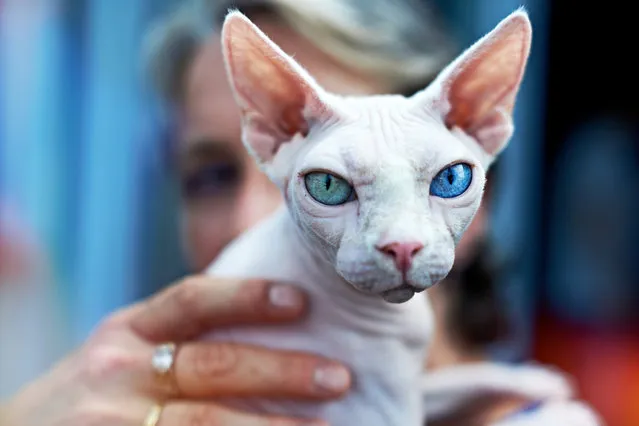
No. 10: Sphynx. A suede-like coat is the sphynx's most unmistakable feature, but he's also curious, smart and a clown who craves applause for his antics. In fact, he loves attention so much that you may want to consider getting him a fellow sphynx playmate. (Photo by Quentin Descotte)
A couple take photographs alongside the National Monument on Calton Hill, Edinburgh on Wednesday January 5, 2022, ahead of First Minister Nicola Sturgeon's update to the Scottish Parliament on the Covid-19 situation as the Omicron variant sweeps across the country. (Photo by Jane Barlow/PA Images via Getty Images)
A landscape photographer has captured a stunning picture of the Isle of Wight's iconic Needles emerging from the sea mist early February 2023. Jamie Russell captured this moment on the most western part of the island. (Photo by Jamie Russell/IslandVisionss/Bournemouth News)
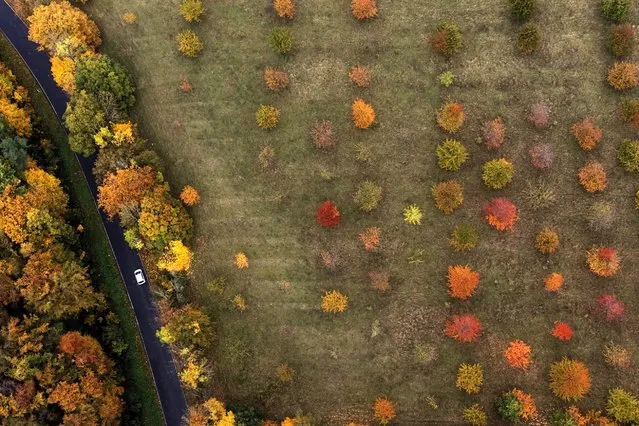
Autumn colors border a road leading through a small valley near Blankenburg am Harz, Germany, Wednesday, November 1, 2023. (Photo by Matthias Schrader/AP Photo)
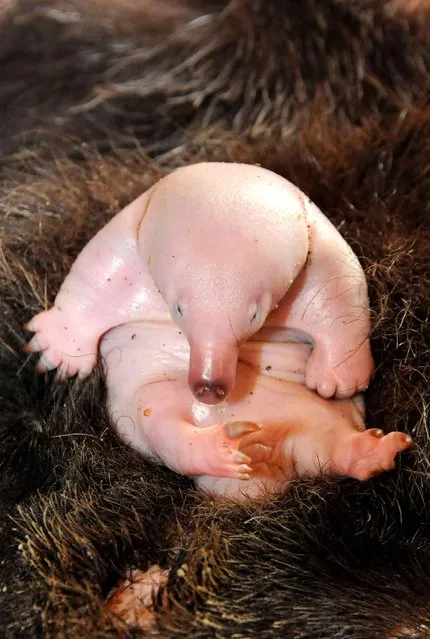
It's a 30-day-old Echidna baby, known as a “puggle” – one of only 24 ever bred in captivity. The proud parents are Tippy and Pickle of Australia Zoo. The tiny baby, whose s*x has not yet been identified, hatched from a soft egg and will continue to develop and nurse inside Tippy's warm pouch. (Photo by Australia Zoo/Rex/Sipa Press)