Loading...
Done
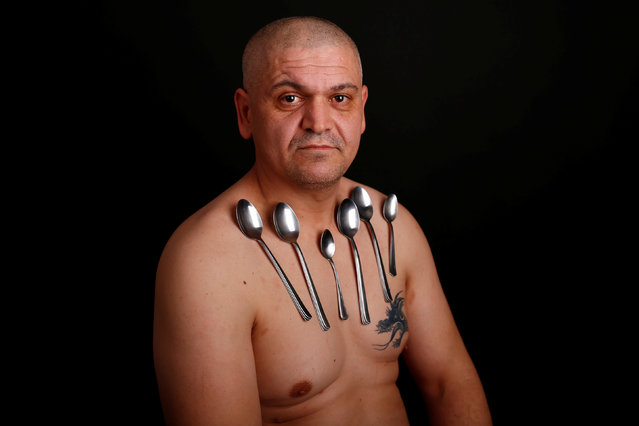
Nermin Halilagic, 38, poses with kitchen utensils in Bihac, Bosnia and Herzegovina, January 23, 2017. (Photo by Dado Ruvic/Reuters)

Nermin Halilagic, 38, poses with kitchen utensils in Bihac, Bosnia and Herzegovina, January 23, 2017. Halilagic discovered earlier this year that he had the unusual ability to attach items to his body using what he says is a special energy radiated from his body. (Photo by Dado Ruvic/Reuters)
Details
26 Jan 2017 12:52:00
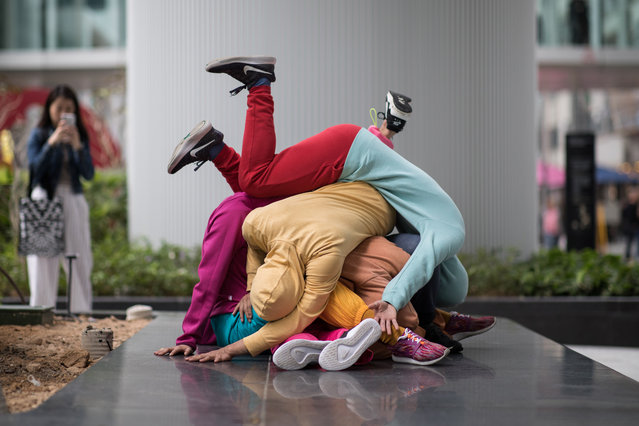
Dancers perform as human sculptures during an exhibition in Hong Kong, China, 26 March 2019. (Photo by Jerome Favre/EPA/EFE)

Dancers perform as human sculptures during an exhibition in Hong Kong, China, 26 March 2019. The exhibition entitled “Multisensory Exhibition Urban Playgrounds” shows how Austrian artist Willi Dorner uses urban spaces to interpret the relationship between bodies and objects. (Photo by Jerome Favre/EPA/EFE)
Details
30 Mar 2019 00:01:00
Sloth Bear Family Like A Dog

A Sloth Bear recently befriended a human family in Lakhapada village in India. While he was never domesticated, the sloth bear chose to bond with the family and become more than a pet, he was a member of the family.
Details
25 Jul 2014 12:52:00
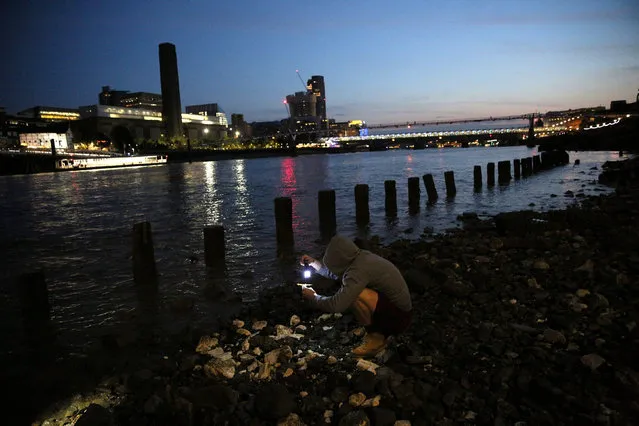
A mudlark uses a torch to look for items on the bank of the River Thames in London, Britain June 06, 2016. Mudlarking is believed to trace its origins to the 18th and 19th century, when scavengers searched the Thames' shores for items to sell. These days, history and archaeology fans are the ones hoping to find old relics such as coins, ceramics, artifacts or everyday items from across centuries. They wait for the low tide and then scour specific areas of exposed shores. "If you're in a field you could be out all day long, with the river you're restricted to about two or three hours," mudlark Nick Stevens said. While many just use the naked eye for their searches, others rely on metal detectors for which a permit from the Port of London Authority is needed. Digging also requires consent. (Photo by Neil Hall/Reuters)

A mudlark uses a torch to look for items on the bank of the River Thames in London, Britain June 06, 2016. Mudlarking is believed to trace its origins to the 18th and 19th century, when scavengers searched the Thames' shores for items to sell. These days, history and archaeology fans are the ones hoping to find old relics such as coins, ceramics, artifacts or everyday items from across centuries. their finds with the Portable Antiquities Scheme. Any item over 300 years old must be recorded. (Photo by Neil Hall/Reuters)
Details
27 Aug 2016 10:43:00
An Afghan girl carries washed clothes on her head in Bamiyan, Afghanistan on March 2, 2023. (Photo by Ali Khara/Reuters)

An Afghan girl carries washed clothes on her head in Bamiyan, Afghanistan on March 2, 2023. (Photo by Ali Khara/Reuters)
Details
11 Mar 2023 03:43:00


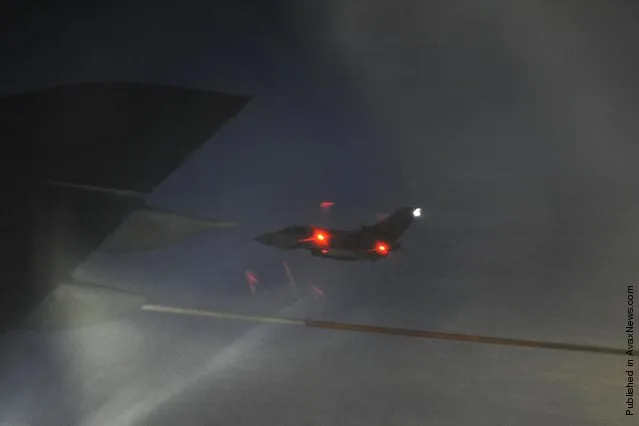
In this handout from the Ministry of Defence, Royal Air Force VC10 and Tristar air-to-air refuelling aircraft support the first UK air combat mission in support of UN Resolution 1973 in flight on March 19, 2011. Col Muammar Gaddafi has vowed a “long war” against the “crusader aggression” after over 100 missiles were fired by the US and UK, during multi-national action aimed at enforcing a UN-mandated no-fly zone. (Photo by SAC Neil Chapman/MoD via Getty Images)
Details
21 Mar 2011 08:39:00
A rescue helicopter is shown at the Mount Everest south base camp in Nepal a day after a huge earthquake-caused avalanche killed at least 17 people, in this photo courtesy of 6summitschallenge.com taken on April 26, 2015 and released on April 27, 2015. (Photo by Reuters/6summitschallenge.com)

A rescue helicopter is shown at the Mount Everest south base camp in Nepal a day after a huge earthquake-caused avalanche killed at least 17 people, in this photo courtesy of 6summitschallenge.com taken on April 26, 2015 and released on April 27, 2015. Rescue teams, helped by clear weather, used helicopters to airlift scores of people stranded at higher altitudes, two at a time. (Photo by Reuters/6summitschallenge.com)
Details
28 Apr 2015 14:10:00
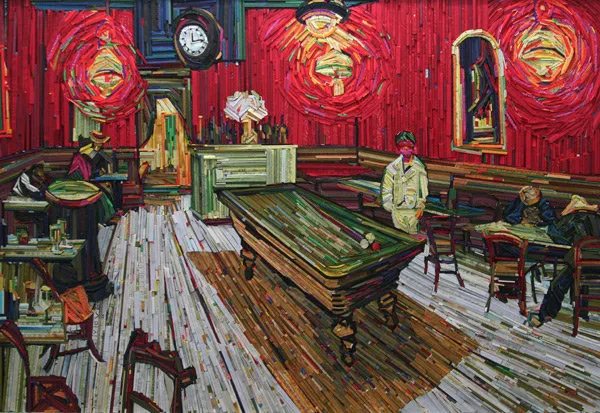
Mixed Media Mosaics By Kyu-Hak Lee

At first glance, Korean artist Kyu-Hak Lee's mixed media mosaics come off as fairly straightforward recreations of iconic works of art. But upon closer inspection, there's more depth to Lee's works than expected. Using a specific technique – rolling strips of magazine and newspaper pages around small bits of wood – Lee replicates brushstrokes, patterns, and colors to create a commentary on consumerism and worth.
Details
08 May 2015 10:32:00