Loading...
Done
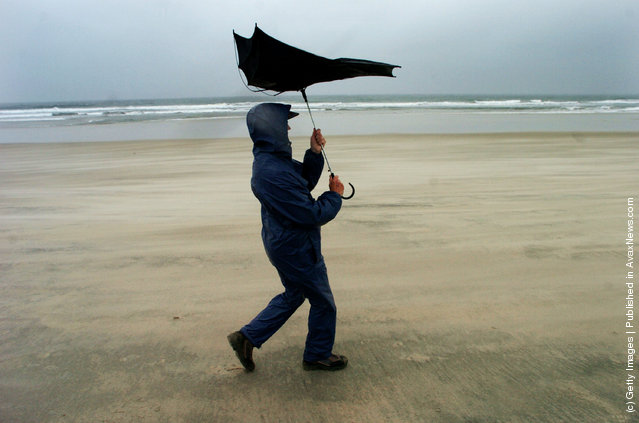
Doris Pennman adjusts her umbrella as she walks along Mission Beach

Doris Pennman adjusts her umbrella as she walks along Mission Beach on January 8, 2005 in San Diego, Califonia. (Photo by Sandy Huffaker/Getty Images)
Details
07 Oct 2011 10:26:00
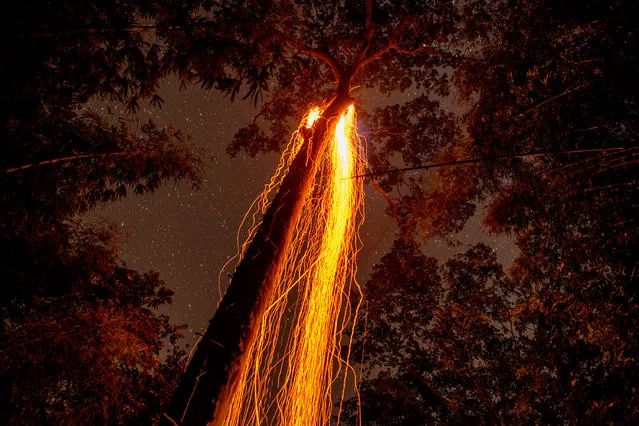
Bees are sensitive to light, which makes them follow the glowing embers down to the ground. (Photo by Hasnoor Hussain/The Guardian)

During the spring harvest season, a group of traditional Malaysian honey hunters travel to the rainforest near the Thai border to collect honeycombs from giant bees – and risk their lives climbing 200ft trees. Here: Bees are sensitive to light, which makes them follow the glowing embers down to the ground. (Photo by Hasnoor Hussain/The Guardian)
Details
22 Oct 2016 10:26:00
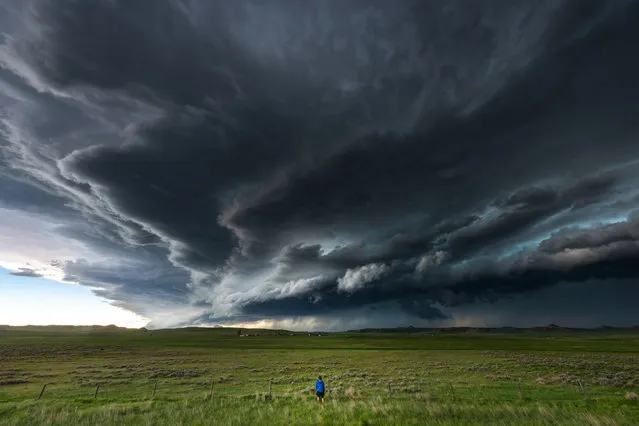
A photographer has weathered some of America's most violent storms to capture these stunning snaps. Storm chaser Mike Mezeul II, 30, has traveled all over the US to shoot the likes of mammoth thunderstorms and surreal cloud patterns. His incredible collection of storm images are the result of more than 15 years of photography and thousands of miles of travel. (Photo by Mike Mezeul II/Caters News)

A photographer has weathered some of America's most violent storms to capture these stunning snaps. Storm chaser Mike Mezeul II, 30, has traveled all over the US to shoot the likes of mammoth thunderstorms and surreal cloud patterns. His incredible collection of storm images are the result of more than 15 years of photography and thousands of miles of travel. Here: Mike waiting for the storm at Cheyenne, Wyoming, June 2014. (Photo by Mike Mezeul II/Caters News)
Details
07 Dec 2014 11:21:00
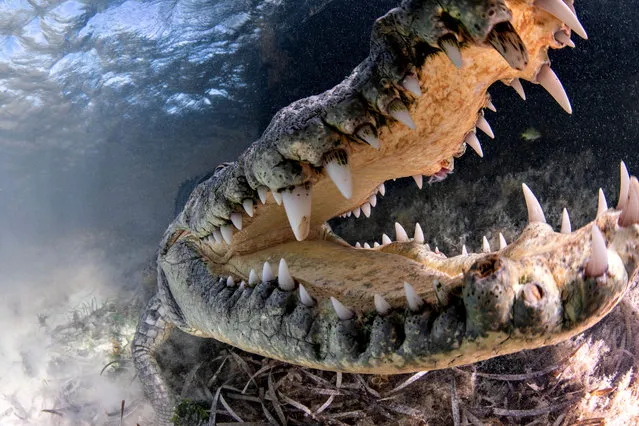
The trip to get to the reef takes eight hours by car and boat, and there is no luxury hotel at the other end. (Photo by Alex Suh/Caters News Agency)

A photographer with a passion for wild animals was able to get up close and personal with one of nature’s deadliest creatures. Alex Suh has traveled to Mexico’s Banco Chinchorro reef twice in the past three years to get into the waters and capture the crocodiles in their natural habitat after an invitation from Yucatan Dive Trek. (Photo by Alex Suh/Caters News Agency)
Details
24 Aug 2018 00:01:00
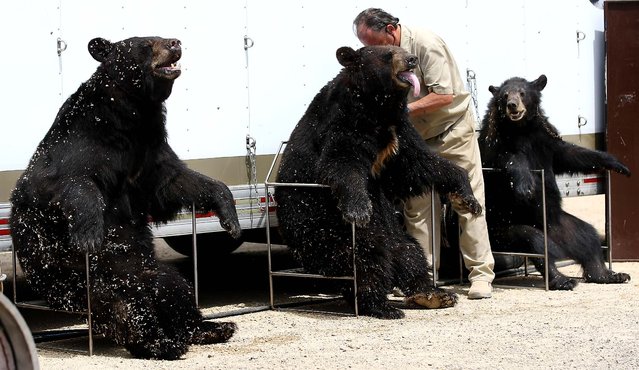
Bob Steele, of Jefferson, Texas, positions his bears during The Great Bear Show at the Dubuque (Iowa) County Fair on July 25, 2012. (Photo by Jessica Reilly/Telegraph Herald)

Bob Steele, of Jefferson, Texas, positions his bears during The Great Bear Show at the Dubuque (Iowa) County Fair on July 25, 2012. (Photo by Jessica Reilly/Telegraph Herald)
Details
28 Jul 2012 08:43:00
Upside Down Race Car By Jeff Bloch Aka SpeedyCop

An American inventor has built a unique upside-down racecar – and successfully taken it on a 24-hour spin around the LeMons track. Jeff Bloch – also known as SpeedyCop – built his upside down 1999 Chevrolet Camaro by combining it with a decrepit 1990 Ford Festiva. To enter the latest LeMons race the car had to cost less than $500, which Bloch achieved by picking a Festiva model with a worn-out 1.3-litre engine and more than 300,000 kilometres on the clock.
Details
03 Dec 2013 09:47:00
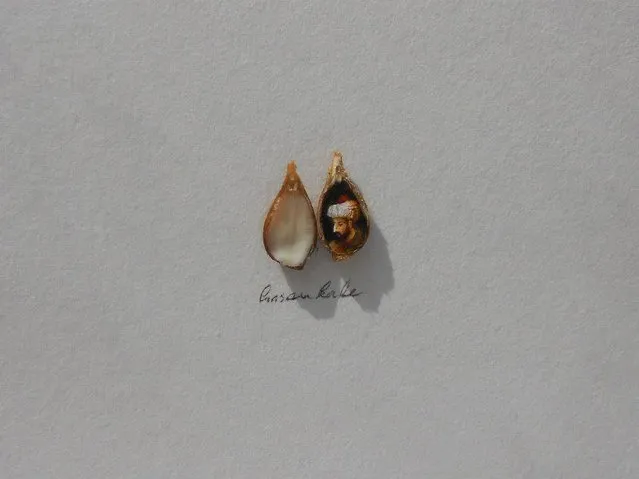
Miniature Paintings By Hasan Kale

Born in 1959 in Bursa. He's interested in painting since his childhood, his career began by drawing a miniature of Istanbul, then he became involved in many art projects in other areas, as design. He produced many jewelry (special collections) to a famous company.
Details
18 Jan 2014 13:21:00
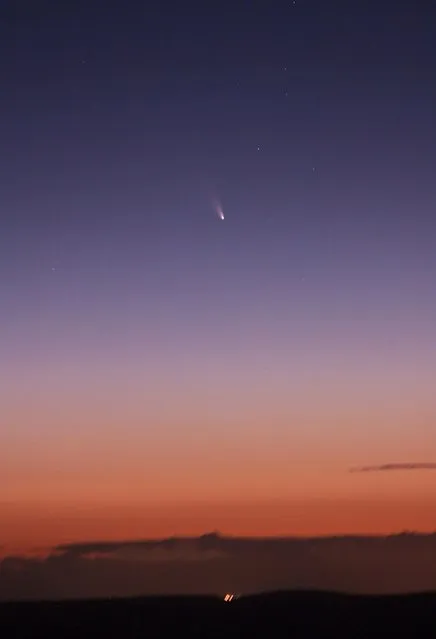
This image provided by NASA shoaws the comet PANSTARRS as seen from Mount Dale, Western Australia on March 5, 2013. According to NASA on March 10, it will make its closest approach to the sun about 28 million miles (45 million kilometers) away. As it continues its nightly trek across the sky, the comet may get lost in the sun's glare but should return and be visible to the naked eye by March 12. (Photo by AP Photo/NASA)

It’s time to start watching for Comet PANSTARRS, one of two comets to get excited about in 2013. Photo: This image provided by NASA shoaws the comet PANSTARRS as seen from Mount Dale, Western Australia on March 5, 2013. According to NASA on March 10, it will make its closest approach to the sun about 28 million miles (45 million kilometers) away. As it continues its nightly trek across the sky, the comet may get lost in the sun's glare but should return and be visible to the naked eye by March 12. (Photo by AP Photo/NASA)
Details
13 Mar 2013 08:03:00