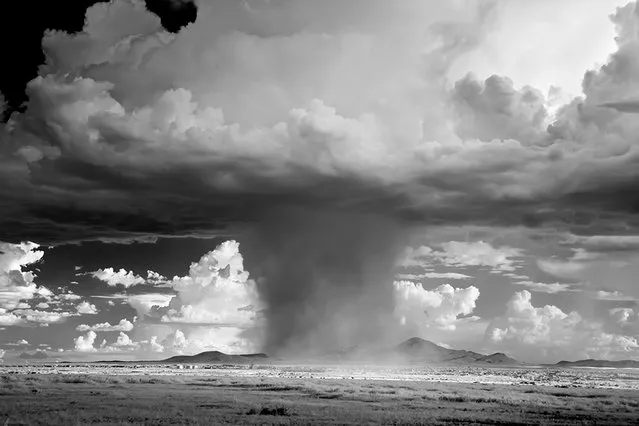
“My goal was to capture the image of a storm that emulated an atomic explosion”, Dobrowner says of this picture. Here: “Monsoon”, Lordsburg, N.M., 2010. (Photo by Roger Hill)
AP photographer Anja Niedringhaus laughs as she attends a swimming event at the 2004 Olympic Games in Athens, August 21, 2004. Niedringhaus, a veteran Associated Press photographer who had covered wars around the world was shot dead and another reporter was wounded on April 4, 2014 when an Afghan policeman opened fire on them in eastern Afghanistan, the news agency said. (Photo by Reuters/Staff)
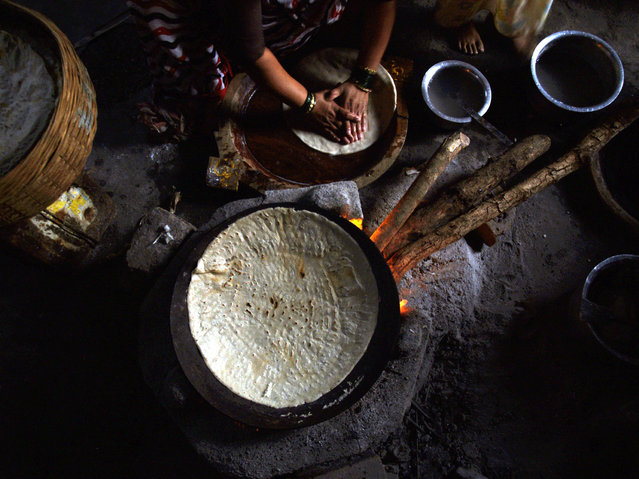
A fisherwoman prepares a meal in her home in a fishing village in Virar, about 40 km (25 miles) from Mumbai December 27, 2005. (Photo by Adeel Halim/Reuters)
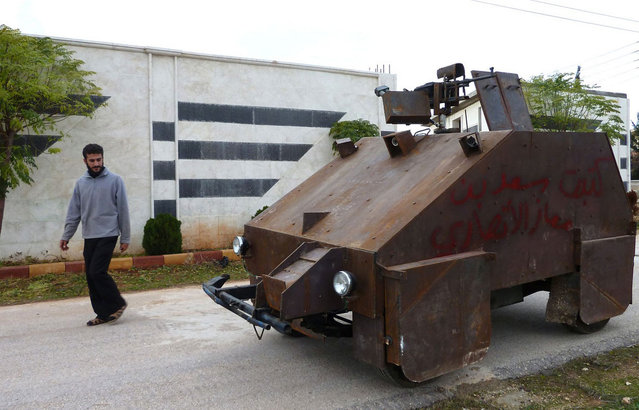
A Syrian rebel walks past Sham 2, a homemade armored vehicle, in Bishqatin, Syria, on December 8, 2012. From a distance it looks rather like a big rusty metal box but closer inspection reveals a homemade armored vehicle waiting to be deployed. Sham II, named after ancient Syria, is built from the chassis of a car and touted by rebels as “100 percent made in Syria”. (Photo by Herve Bar/AFP Photo)
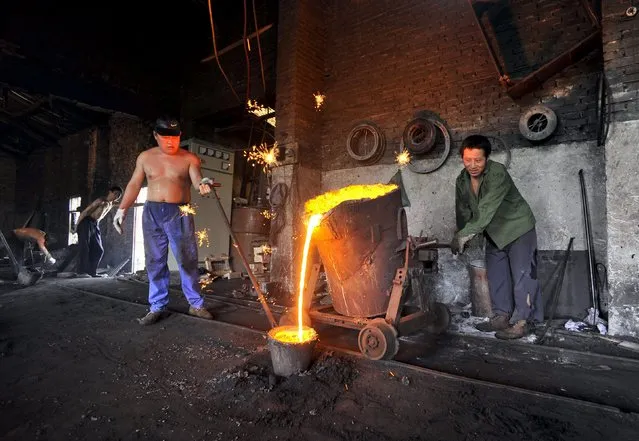
Labourers pour molten iron into a container at a foundry in Xiangfan, Hubei province in this July 2, 2010 file photo. Iron ore is enjoying its biggest rally in years, outpacing copper and oil so far in 2016, but still weak forward prices show it may be tough to stretch the bullish outlook. Improving steel prices in top market China are helping fuel iron ore's climb as producers gear up for a seasonal uptick in demand. Yet there is no shortage of doubters who see gains in the bulk commodity as fleeting given a large glut and challenges for China's economy. (Photo by Reuters/Stringer)
Bride Yulia Tagil sits on the backseat of a bike as she arrives for her alternative wedding ceremony on a square in Tel Aviv July 25, 2010. The alternative wedding ceremony was intended to demonstrate against the current situation in Israel, where the only way for Jews to get married by law is through the Chief Rabbinate. (Photo by Nir Elias/Reuters)
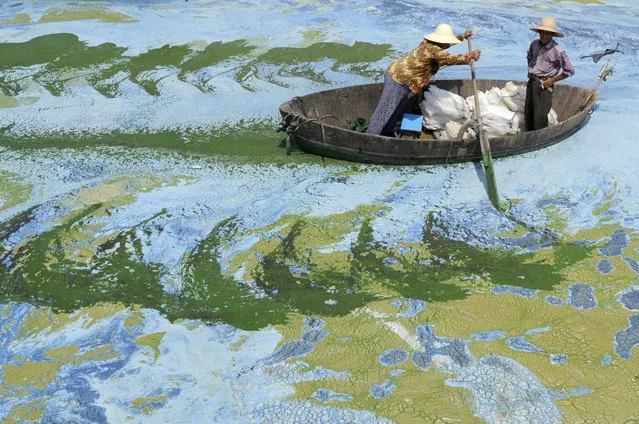
Growing cities, overuse of fertilizers and factory wastewater have degraded China's water supplies to the extent that half the nation's rivers and lakes are severely polluted. China aims to spend $850 billion to improve filthy water supplies over the next decade, but even such huge outlays may do little to reverse damage caused by decades of pollution and overuse in Beijing's push for rapid economic growth. Photo: Fishermen row a boat in the algae-filled Chaohu Lake in Hefei, Anhui province, June 19, 2009. (Photo by Jianan Yu/Reuters)