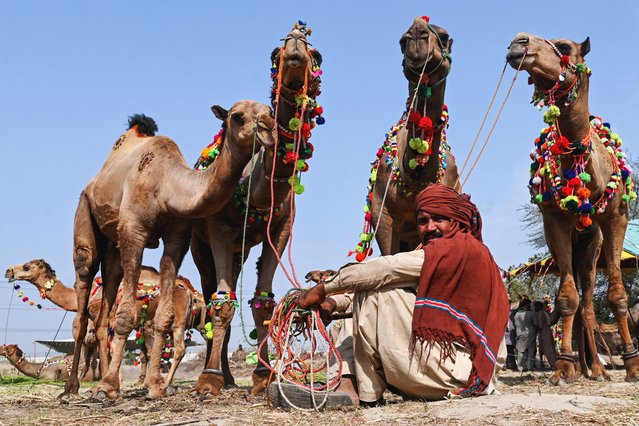
A herder sits amidst his camels at a cattle market in Lahore on June 3, 2025, ahead of the Muslim festival of Eid al-Adha. (Photo by Arif Ali/AFP Photo)
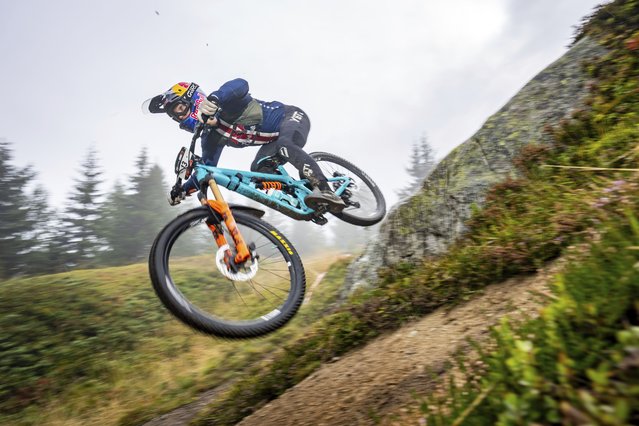
Richard Rude Junior of the United States, competes on his way to win the UCI MTB Enduro Men Elite, Mountain Bike World Championship, Monday, September 1, 2025, in Fiesch, Switzerland. (Photo by Maxime Schmid/Keystone via AP Photo)
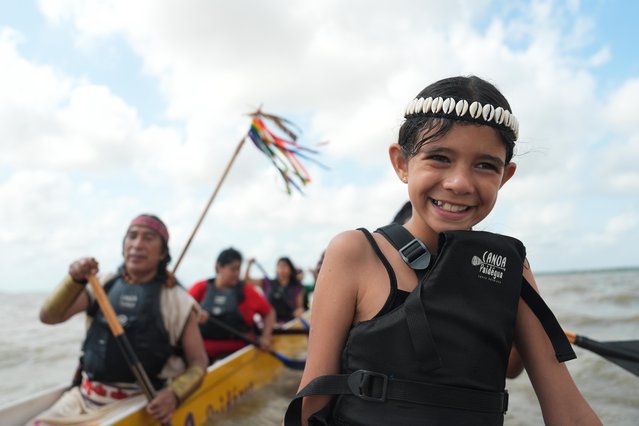
Moana Mason, 8, participates in the People's Summit event on Guajara Bay during the COP30 U.N. Climate Summit, Wednesday, November 12, 2025, in Belem, Brazil. (Photo by Joshua A. Bickel/AP Photo)
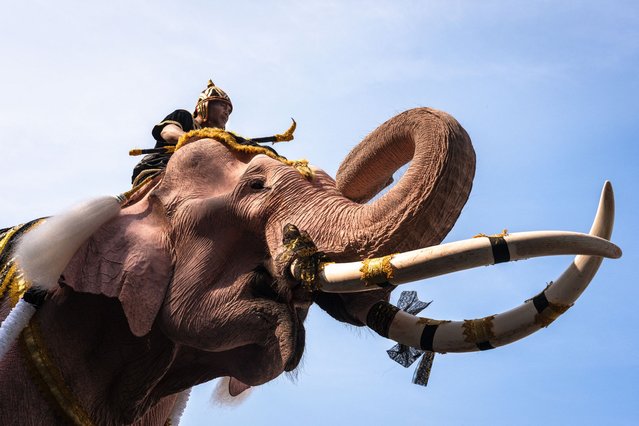
A mahout rides on painted elephant as they march during a procession near the Grand Palace to pay their respects to Thailand's former queen Sirikit in Bangkok on November 27, 2025. (Photo by Chanakarn Laosarakham/AFP Photo)
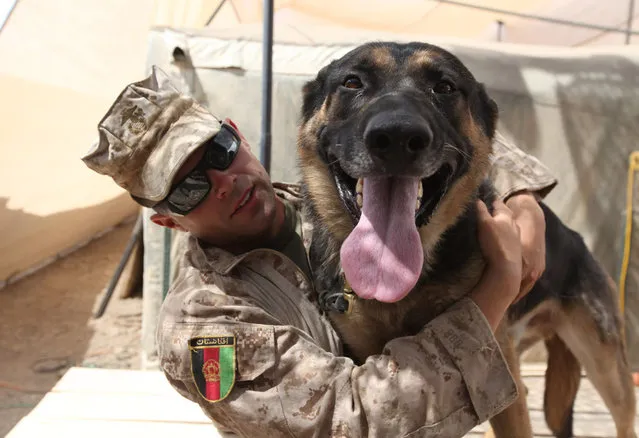
Throughout the course of the long war in Afghanistan, Coalition troops have relied on thousands of military working dogs to help keep them safe, and make their jobs easier. The dogs are trained to detect explosives, to find illegal drugs, to search for missing comrades, or target enemy combatants. Not only are they active on the front lines, but behind the lines they serve as therapy dogs, service dogs, and loyal companions. They also share the same risks as the ground troops, suffering injuries and sometimes death on the battlefields. Gathered here are images of these dogs and their handlers in Afghanistan and back home, from over the past several years, part of the ongoing series here on Afghanistan.
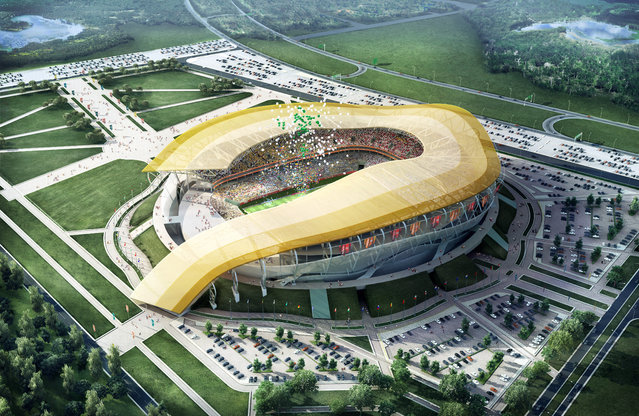
In this handout artists impression provided by the Russia 2018 Organising Commitee, the Rostov on Don Stadium is shown as proposed and presented as part of the Russia 2018 World Cup bid, on September 29, 2011 in Russia. (Illustration by Russia 2018 via Getty Images)