Loading...
Done
Urban explorer Vad Him of Rudex team jumps whilst on a rooftop in Moscow, Russia, August 14, 2017. (Photo by Maxim Shemetov/Reuters)

To an outsider, their passion is at times illegal and often on the verge of life and death. But climbing rooftops of high-rise buildings and exploring abandoned facilities is in the blood of these young Muscovites. The small group calls itself “Rudex”, which stands for “roof and decay exploration”, and is akin a Western youth craze known as urbex or “urban exploration” of man-made structures. Here: Urban explorer Vad Him of Rudex team jumps whilst on a rooftop in Moscow, Russia, August 14, 2017. (Photo by Maxim Shemetov/Reuters)
Details
25 Sep 2017 06:36:00
An opposition supporter gestures with a knife during clashes with police in Kibera slum in Nairobi, Kenya October 26, 2017. (Photo by Goran Tomasevic/Reuters)

An opposition supporter gestures with a knife during clashes with police in Kibera slum in Nairobi, Kenya on October 26, 2017. Kenyans trickled into polling stations today for a repeat election that has polarised the nation, amid sporadic clashes as supporters of opposition leader ignored his call to stay away and tried to block voting. (Photo by Goran Tomasevic/Reuters)
Details
28 Oct 2017 06:48:00
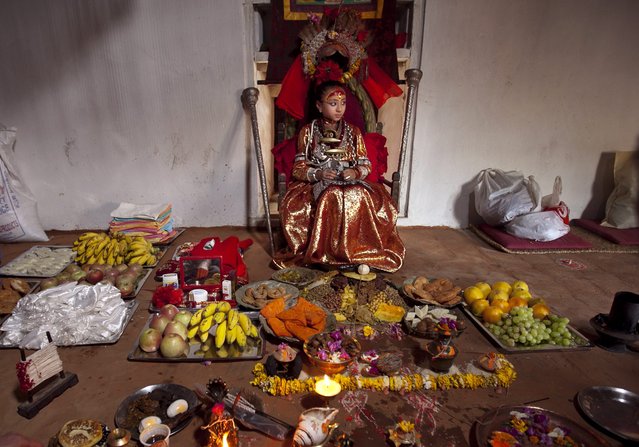
Kumari Samita Bajracharya sits in front of devotees offers during a special puja at Kumari Ghar in Patan, Nepal, 09 April 2011. It is believed that worshipping Kumari and receiving tika from her reduces illness and avoid problems. Kumari, or Kumari Devi, is a “living goddess”. The word literally means virgin in Nepali. The Living Goddesses are young pre-pubescent girls that are considered to be incarnations of the Hindu Goddess of Power, Kali. The Kumari retires when she reaches puberty. (Photo by Narendra Shrestha/EPA)

Kumari Samita Bajracharya sits in front of devotees offers during a special puja at Kumari Ghar in Patan, Nepal, 09 April 2011. It is believed that worshipping Kumari and receiving tika from her reduces illness and avoid problems. Kumari, or Kumari Devi, is a “living goddess”. The word literally means virgin in Nepali. The Living Goddesses are young pre-pubescent girls that are considered to be incarnations of the Hindu Goddess of Power, Kali. The Kumari retires when she reaches puberty. (Photo by Narendra Shrestha/EPA)
Details
18 Jun 2014 12:31:00
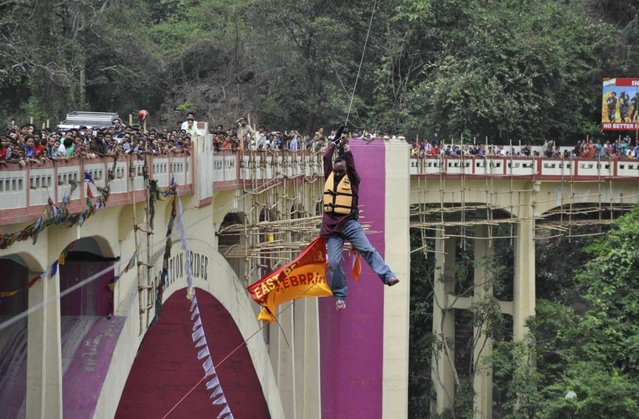
In this Sunday, April 28, 2013 photograph, people watch as Indian Sailendra Nath Roy attempts to cross Teesta river suspended from a zip wire attached to his ponytail moments before his death in Siliguri, West Bengal state, India. Roy who was named a Guinness World Record holder in 2011 for travelling the farthest distance on a zip wire using hair died during the stunt Sunday when he suffered a heart attack. (Photo by AP Photo)

In this Sunday, April 28, 2013 photograph, people watch as Indian Sailendra Nath Roy attempts to cross Teesta river suspended from a zip wire attached to his ponytail moments before his death in Siliguri, West Bengal state, India. Roy who was named a Guinness World Record holder in 2011 for travelling the farthest distance on a zip wire using hair died during the stunt Sunday when he suffered a heart attack. (Photo by AP Photo)
Details
30 Apr 2013 08:21:00
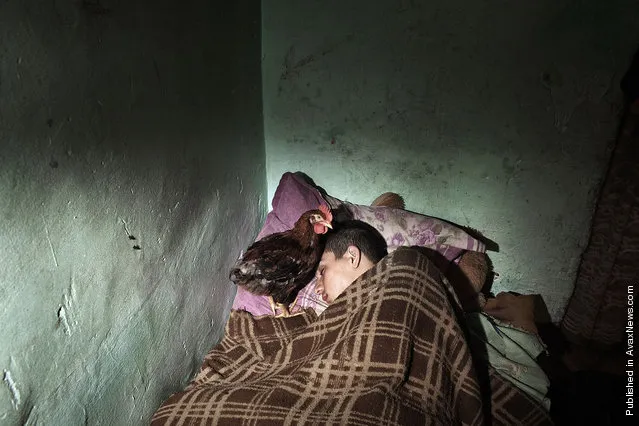
Roma Community In Romania

“Inspired by the French authorities' solution to move Romas from point A to point B, Romanian authorities planned and started forced evictions of Roma informal settlements in cities like Cluj-Napoca and Baia Mare. Some of these settlements date back to the early 1990’s. These communities were tolerated by the authorities who verbally encouraged Romas to build in the area, meanwhile, reassuring them nothing bad would ever happen to them. However, the the reality today is that during political campaigns, authorities are planning forced evictions without reasons other than ethnic cleansing of the cities. My home documents the every day life of Roma communities in Romania, 2011”. – Mugur Varzariu. (Photo by Mugur Varzariu, 2011 FotoVisura Grant Finalist)
Details
20 Apr 2012 13:22:00
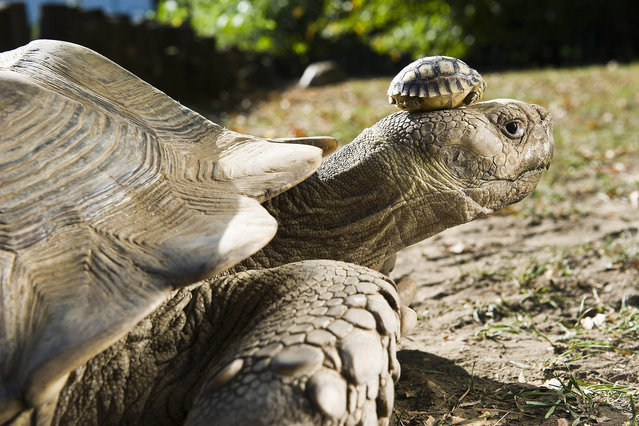
A four-day old African spurred tortoise, Geochelone sulcata, one of eight babies, was place on the head of its mother in their enclosure in Nyiregyhaza Animal Park in Nyiregyhaza, 226 km east of Budapest, Hungary, 27 September 2011. This was the first time that offspring of an African spurred tortoise were born in this zoo. The eight babies hatched after 115 days, they are 5.5 cms long and weigh 25 grams. Spurred tortoise is the largest species of land tortoises in Africa, the weight of an adult animal may reach 80 kgs. (Photo by Attila Balazs/EPA)

A four-day old African spurred tortoise, Geochelone sulcata, one of eight babies, was place on the head of its mother in their enclosure in Nyiregyhaza Animal Park in Nyiregyhaza, 226 km east of Budapest, Hungary, 27 September 2011. This was the first time that offspring of an African spurred tortoise were born in this zoo. The eight babies hatched after 115 days, they are 5.5 cms long and weigh 25 grams. Spurred tortoise is the largest species of land tortoises in Africa, the weight of an adult animal may reach 80 kgs. (Photo by Attila Balazs/EPA)
Details
07 May 2016 12:58:00
Participants of the annual “SlutWalk” march through the Israeli Mediterranean coastal city of Tel Aviv on May 4, 2018 to protest against rape culture, including sexual assault and harassment directed at women. The campaign, which has gained international notoriety, was inspired by group of Canadian women who launched the protest in 2011 in response to a policeman' s comment that if women want to avoid being attacked they should not dress like sl*ts. (Photo by Jack Guez/AFP Photo)

Participants of the annual “SlutWalk” march through the Israeli Mediterranean coastal city of Tel Aviv on May 4, 2018 to protest against rape culture, including sexual assault and harassment directed at women. The campaign, which has gained international notoriety, was inspired by group of Canadian women who launched the protest in 2011 in response to a policeman' s comment that if women want to avoid being attacked they should not dress like sl*ts. (Photo by Jack Guez/AFP Photo)
Details
06 May 2018 07:06:00
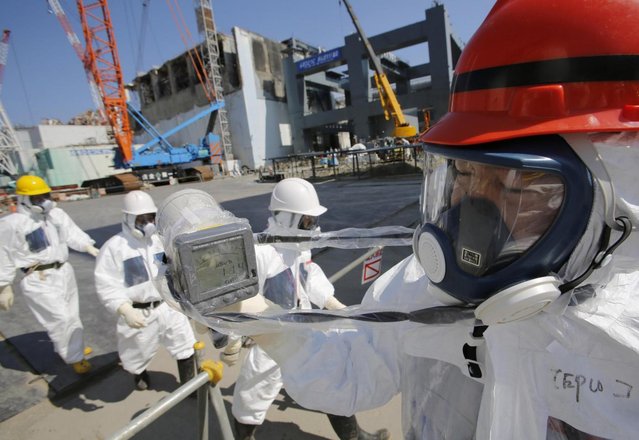
A radiation monitor indicates 114.00 microsieverts per hour near the building housing the plant's No. 4 reactor, center, and an under construction foundation, right, which will store the reactor's melted fuel rods at Tokyo Electric Power Co.'s tsunami-crippled Fukushima Dai-ichi nuclear power plant in Okuma, Fukushima prefecture, Wednesday, March 6, 2013, ahead of the second anniversary of the March 11, 2011 tsunami and earthquake. (Photo by Issei Kato/AP Photo/Pool)

A radiation monitor indicates 114.00 microsieverts per hour near the building housing the plant's No. 4 reactor, center, and an under construction foundation, right, which will store the reactor's melted fuel rods at Tokyo Electric Power Co.'s tsunami-crippled Fukushima Dai-ichi nuclear power plant in Okuma, Fukushima prefecture, Wednesday, March 6, 2013, ahead of the second anniversary of the March 11, 2011 tsunami and earthquake. Some 110,000 people living around the nuclear plant were evacuated after the massive March 11, 2011, earthquake and tsunami knocked out the plant's power and cooling systems, causing meltdowns in three reactors and spewing radiation into the surrounding air, soil and water. (Photo by Issei Kato/AP Photo/Pool)
Details
06 Mar 2013 13:19:00