Loading...
Done
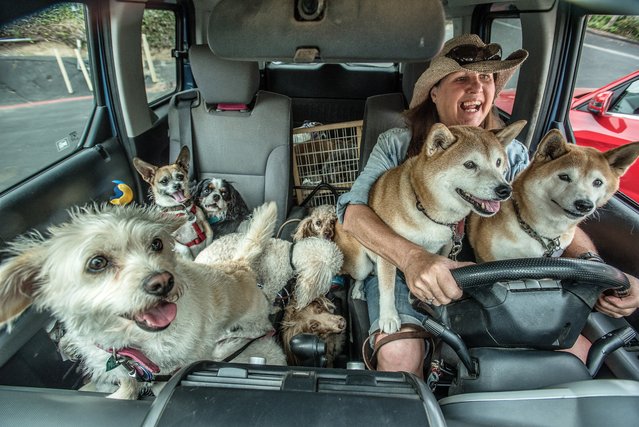
Dog Walker – 15:00. (Photo by Johanna Siegmann)

The CBRE Urban Photographer of the Year competition – now in its ninth year – encourages professional and amateur photographers to capture cities at work. Here: Dog Walker – 15:00. The competition allows photographers to enter up to 24 images, one representing each hour of the day. (Photo by Johanna Siegmann)
Details
17 Oct 2015 08:06:00
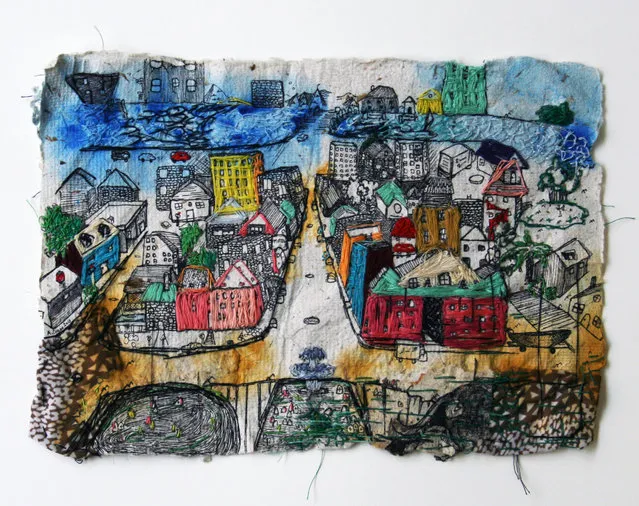
Textile Art By Anny Crane
“I am a fiber and process oriented artist based in Brooklyn, New York. My work utilizes influence from decisions and transitions. I am very interested in the consequences and ripple effects that are caused by choices we make. Most inspiration comes from vague &vivid memories, photographs, hand me down treasures &stories through my family, childhood stories, children’s books &illustrations, and travelling”. – Anny Crane
Details
24 Nov 2016 08:03:00
Ukrainian artist Dariya Marchenko works on a portrait of Russian President Vladimir Putin named “The Face of War” which is made out of 5,000 cartridges brought from the frontline in eastern Ukraine, in Kiev, July 23, 2015. The portrait will be presented along with a novel which will tell personal stories of six people involved in this project including Daria's own story and stories of people who helped her to collect shells from the frontline. (Photo by Gleb Garanich/Reuters)

Ukrainian artist Dariya Marchenko works on a portrait of Russian President Vladimir Putin named “The Face of War” which is made out of 5,000 cartridges brought from the frontline in eastern Ukraine, in Kiev, July 23, 2015. The portrait will be presented along with a novel which will tell personal stories of six people involved in this project including Daria's own story and stories of people who helped her to collect shells from the frontline. Daria Marchenko calls her art approach philosophic symbolism where every element has its hidden meaning. In her works cartridges mean human's life that was brutally ended. (Photo by Gleb Garanich/Reuters)
Details
28 Jul 2015 12:44:00
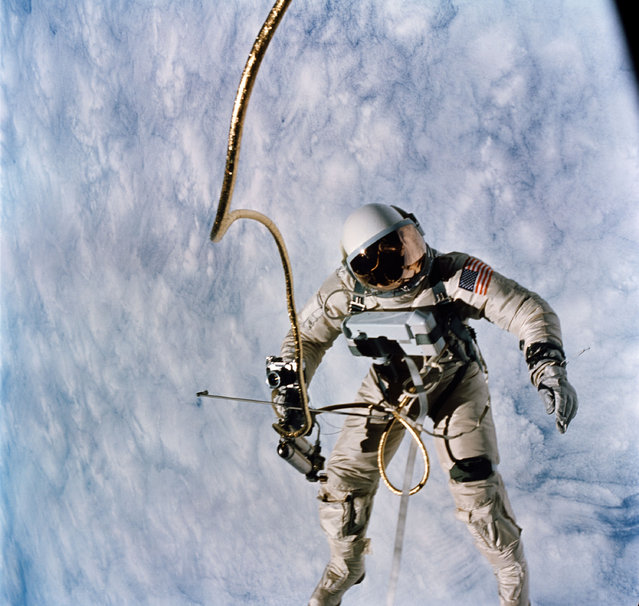
Astronaut Edward H. White II, pilot for the Gemini-Titan 4 (GT-4) spaceflight, floats in the zero-gravity of space during the third revolution of the GT-4 spacecraft on June 3, 1965. White wears a specially designed spacesuit. His face is shaded by a gold-plated visor to protect him from unfiltered rays of the sun. (Photo by NASA)

Astronaut Edward H. White II, pilot for the Gemini-Titan 4 (GT-4) spaceflight, floats in the zero-gravity of space during the third revolution of the GT-4 spacecraft on June 3, 1965. White wears a specially designed spacesuit. His face is shaded by a gold-plated visor to protect him from unfiltered rays of the sun. In his right hand he carries a Hand-Held Self-Maneuvering Unit (HHSMU) that gives him control over his movements in space. White also wears an emergency oxygen chest pack; and he carries a camera mounted on the HHSMU for taking pictures of the sky, Earth and the GT-4 spacecraft. He is secured to the spacecraft by a 25-feet umbilical line and a 23-feet tether line. Both lines are wrapped together in gold tape to form one cord. Astronaut James A. McDivitt, command pilot, remained inside the spacecraft during the extravehicular activity (EVA). Astronaut White died in the Apollo/Saturn 204 fire at Cape Kennedy on January 27, 1967. (Photo by NASA)
Details
22 Jul 2014 12:05:00
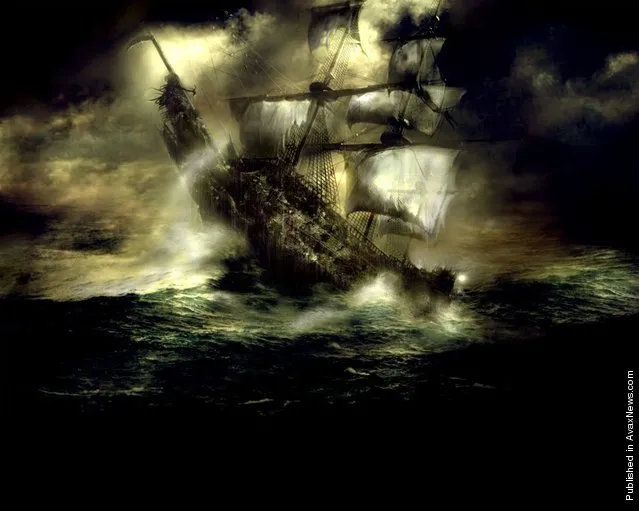
Ocean voyage

Do you think that history is a science? Well, not exactly. First, and foremost, history is the state's “legend of wars”, it’s official regalia. Of course, public historians are not interested in scientific truth – quite the opposite. In this respect, any attempt to present a state’s history as altruistic and benevolent as possible is welcomed and encouraged – as opposed to any revisionism attempts that may be more accurate. In this matter, Chinese have surpassed us all – they revised in highly creative manner (but rather shamelessly) the technology already invented by Europeans, a process that resulted in oldest state on the planet. Here is an interesting paradox: ask any sinologist about the Middle Kingdom during second century B.C., and he will describe it to you in such a vivid manner as if he has been living there all his life – but as soon as you will ask him to describe Chinese history in the 19-20th centuries… let's say, his eagerness will be greatly diminished. However, we will discuss China in a different article, and in the meantime we will try to understand how exactly historic “legend of wars” is formed and functions – based on a specific and well-known example. A great example is Ferdinand Magellan's first voyage around the world.

Details
14 Nov 2011 09:11:00
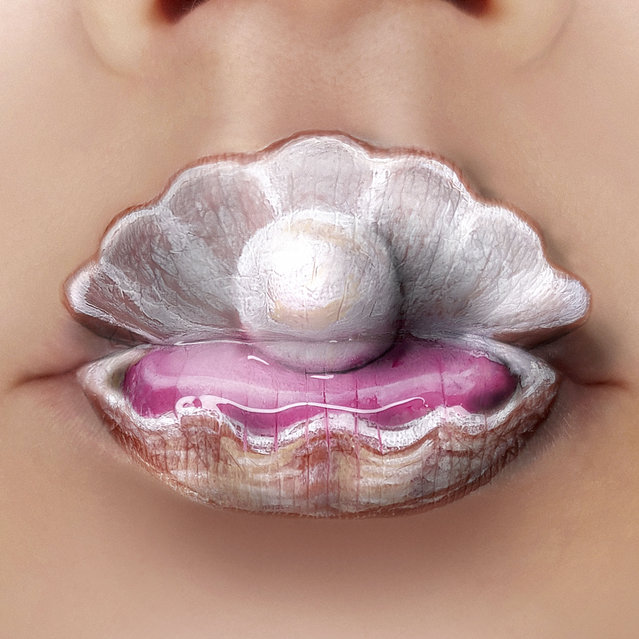
Tutushka's lipstick art work on her lips showing a clam. (Photo by Tutushka Matviienko/Caters News Agency)

This makeup artist is blowing minds with her stunning lip art. The incredible designs are 3D and include seashells, seashores, fruit, chocolate, pizza and even animals. The artist, Tutushka from Nikolaev, Ukraine, has been a professional makeup artist for 15 years and started her journey into makeup art by winning a lipstick-art contest. Tutushka has amassed thousands of likes on her pictures and has almost hit 50,000 followers by sharing her creative designs. (Photo by Tutushka Matviienko/Caters News Agency)
Details
21 Oct 2019 00:03:00
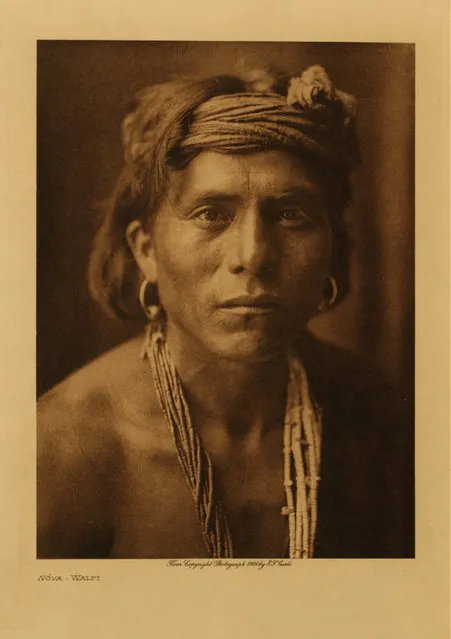
Nova, a Walpi, in 1906. (Photo by Edward S. Curtis)

At the beginning of the 20th century, Edward S. Curtis set out to document what he saw as a disappearing race: the Native American. From 1907 to 1930, Curtis took more than 2,000 photos of 80 tribes stretching from the Great Plains to the Pacific Northwest and Alaska. He then published and sold these photos, along with narrative text, in 20 volumes of work known as “The North American Indian”. It is one of the most significant collections of its kind, “probably the most important photographic document of its age and its topic,” said Jeffrey Garrett, associate university librarian for Special Libraries at Northwestern University. (Photo by Edward S. Curtis)
Details
07 Sep 2014 12:57:00
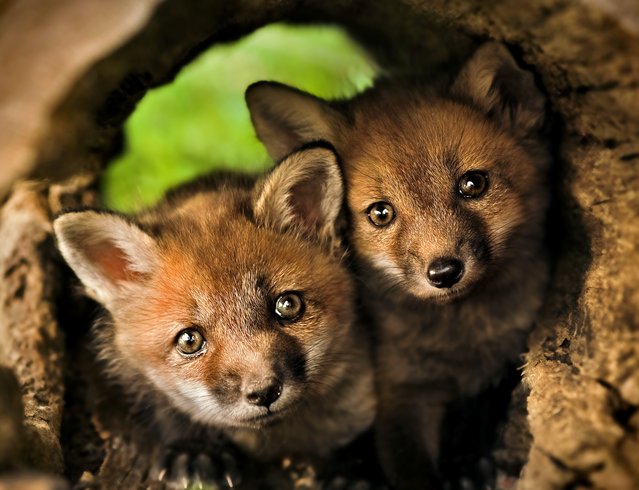
Red fox kits look out from a hollow log. (Photo by Kevin Fleming)

Wildlife photographer Kevin Fleming has covered the world as a photographer for National Geographic and has been recognized America’s Best Observer by Readers Digest. His assignments have taken him into war and famine in Somalia, to the Mediterranean for a re-creation of the voyage of Ulysses and put him on a dogsled crossing the Canadian arctic. Now Kevin is working on his 27th book. Here: Red fox kits look out from a hollow log. (Photo by Kevin Fleming)
Details
02 Oct 2014 10:28:00