Loading...
Done
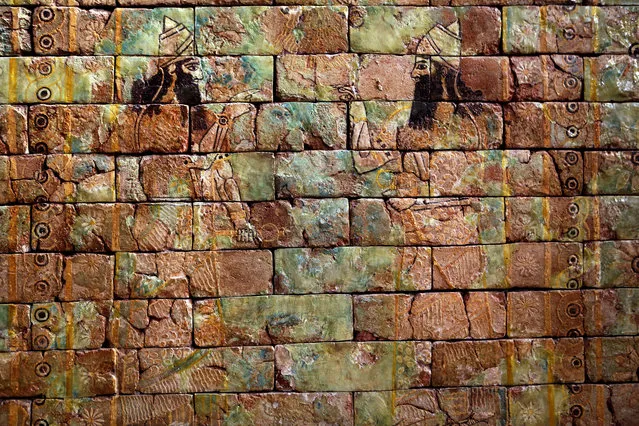
This Monday, September 15, 2014 photo shows glazed bricks displayed at the Iraqi National Museum in Baghdad. The Islamic State militants seek to purge society of all influences that don't conform with their strict, puritanical version of Islam. That means destroying not only relics seen as pagan but also Muslim sites they see as contradicting their ideology, particularly Sunni Muslim shrines they see as idolatrous as well as mosques used by Shiites, a branch of Islam they consider heretical. (Photo by Hadi Mizban/AP Photo)

This Monday, September 15, 2014 photo shows glazed bricks displayed at the Iraqi National Museum in Baghdad. The Islamic State militants seek to purge society of all influences that don't conform with their strict, puritanical version of Islam. That means destroying not only relics seen as pagan but also Muslim sites they see as contradicting their ideology, particularly Sunni Muslim shrines they see as idolatrous as well as mosques used by Shiites, a branch of Islam they consider heretical. (Photo by Hadi Mizban/AP Photo)
Details
21 Sep 2014 10:31:00
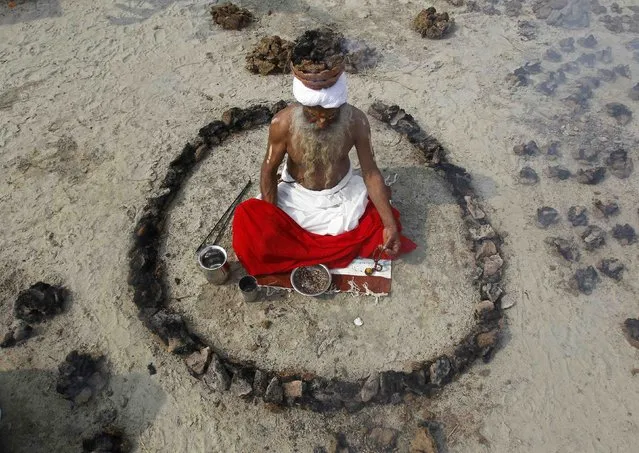
A Sadhu or a Hindu holy man offers prayers while sitting inside a circle of burning “Upale” (or dried cow dung cakes) on the occasion to mark the Basant or spring festival, on the banks of river Ganga in the northern Indian city of Allahabad January 24, 2015. Basant is celebrated mainly in the northern Indian states marking the start of the spring season. (Photo by Jitendra Prakash/Reuters)

A Sadhu or a Hindu holy man offers prayers while sitting inside a circle of burning “Upale” (or dried cow dung cakes) on the occasion to mark the Basant or spring festival, on the banks of river Ganga in the northern Indian city of Allahabad January 24, 2015. Basant is celebrated mainly in the northern Indian states marking the start of the spring season. (Photo by Jitendra Prakash/Reuters)
Details
25 Jan 2015 09:07:00
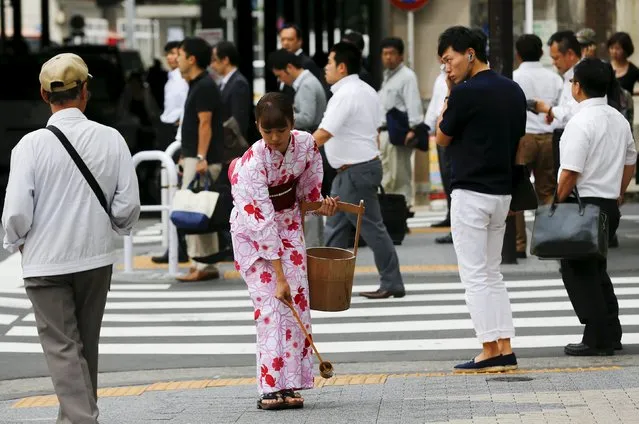
A woman wearing a kimono performs an uchimizu ritual outside a pachinko game parlor in Tokyo June 30, 2015. The splashing of water onto the hot asphalt in summer is an old Japanese tradition meant to cool down the air as the water evaporates. (Photo by Thomas Peter/Reuters)

A woman wearing a kimono performs an uchimizu ritual outside a pachinko game parlor in Tokyo June 30, 2015. The splashing of water onto the hot asphalt in summer is an old Japanese tradition meant to cool down the air as the water evaporates. (Photo by Thomas Peter/Reuters)
Details
19 Jul 2015 08:36:00
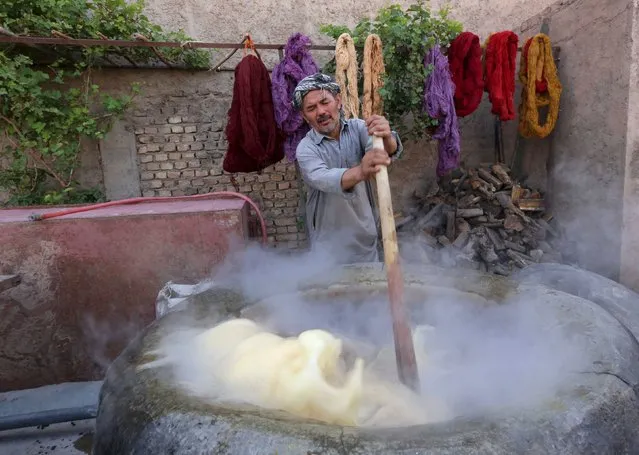
An Afghan man works at a traditional yarn factory in Heart province, Afghanistan July 28, 2015. (Photo by Mohammad Shoib/Reuters)

An Afghan man works at a traditional yarn factory in Heart province, Afghanistan July 28, 2015. (Photo by Mohammad Shoib/Reuters)
Details
14 Aug 2015 13:02:00
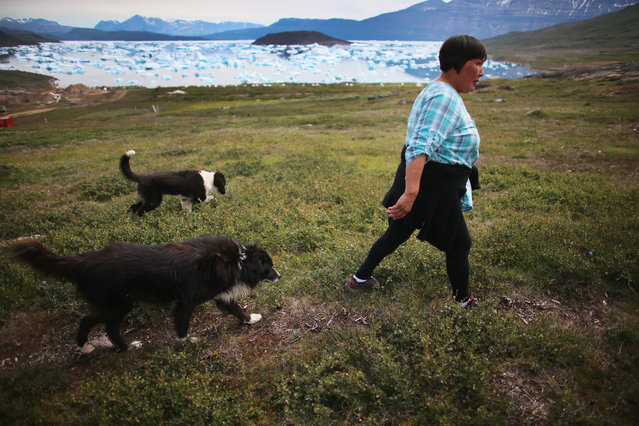
Arnaq Egede walks to the potato field on her family's farm on July 31, 2013 in Qaqortoq, Greenland. The farm, the largest in Greenland, has seen an extended crop growing season due to climate change. (Photo by Joe Raedle/Getty Images)

Arnaq Egede walks to the potato field on her family's farm on July 31, 2013 in Qaqortoq, Greenland. The farm, the largest in Greenland, has seen an extended crop growing season due to climate change. (Photo by Joe Raedle/Getty Images)
Details
22 Aug 2015 12:08:00
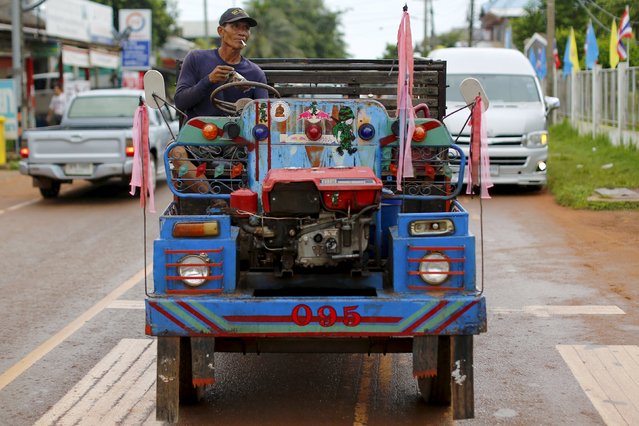
A farmer rides a truck in a village near Nong Khai, Thailand, September 16, 2015. (Photo by Jorge Silva/Reuters)

A farmer rides a truck in a village near Nong Khai, Thailand, September 16, 2015. (Photo by Jorge Silva/Reuters)
Details
22 Sep 2015 08:01:00
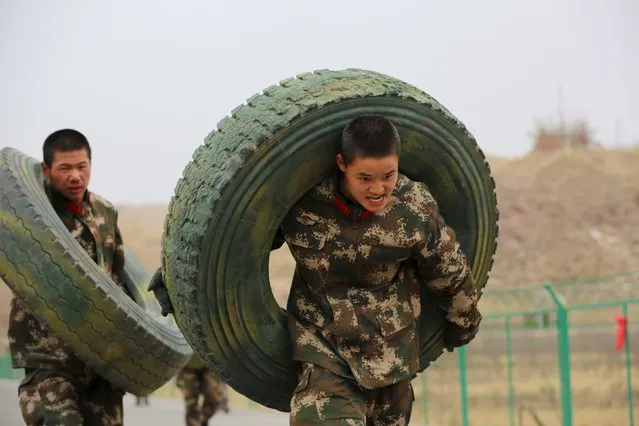
Paramilitary policemen carry tyres as they take part in a training session in Zhangye, Gansu Province, China, March 1, 2016. (Photo by Reuters/Stringer)

Paramilitary policemen carry tyres as they take part in a training session in Zhangye, Gansu Province, China, March 1, 2016. (Photo by Reuters/Stringer)
Details
09 Mar 2016 12:16:00
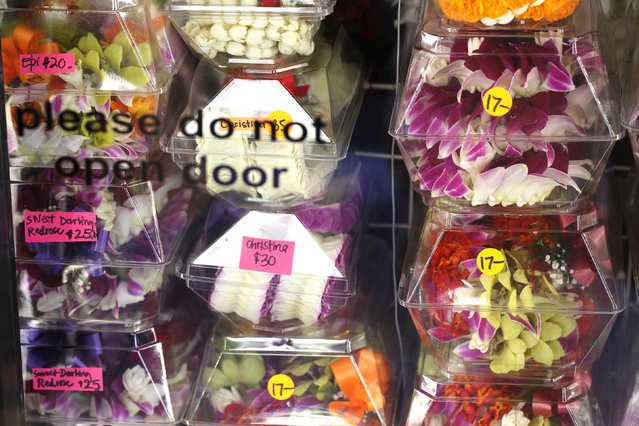
A selection of hand-made leis, traditional Hawaiian necklaces made of flowers and worn mostly on special occasions, fill a cooler at Lin's Lei Shop in the Chinatown district of Honolulu, Hawaii December 22, 2015. Hawaii, whose economy depends heavily on tourism, sees a brief lull in visitors each year in January and February. But in addition to the usual tourist destinations, the state shows a unique overlay of mainland U.S. culture atop tropical beauty year-round. (Photo by Jonathan Ernst/Reuters)

A selection of hand-made leis, traditional Hawaiian necklaces made of flowers and worn mostly on special occasions, fill a cooler at Lin's Lei Shop in the Chinatown district of Honolulu, Hawaii December 22, 2015. Hawaii, whose economy depends heavily on tourism, sees a brief lull in visitors each year in January and February. But in addition to the usual tourist destinations, the state shows a unique overlay of mainland U.S. culture atop tropical beauty year-round. (Photo by Jonathan Ernst/Reuters)
Details
16 Jan 2016 08:00:00