Loading...
Done
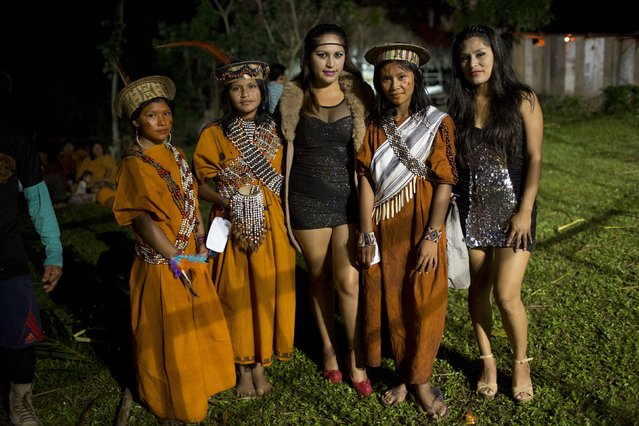
In this June 23, 2015 photo, Ashaninka Indian beauty contestants pose for a photo with members of a visiting music group, hired to perform during the annual founding anniversary festivities, in Otari Nativo, Pichari, Peru. The contestants wear the simple brown dresses of the Ashaninka woman, their faces dotted in a traditional design with a red dye extracted from a spice called achiote. (Photo by Rodrigo Abd/AP Photo)

In this June 23, 2015 photo, Ashaninka Indian beauty contestants pose for a photo with members of a visiting music group, hired to perform during the annual founding anniversary festivities, in Otari Nativo, Pichari, Peru. The contestants wear the simple brown dresses of the Ashaninka woman, their faces dotted in a traditional design with a red dye extracted from a spice called achiote. (Photo by Rodrigo Abd/AP Photo)
Details
16 Jul 2015 11:12:00
A woman dressed in an alien space suit carries an American flag and a sign that reads “Women's Revolution 1971” as she marches in a Women's Liberation demonstration on Fifth Avenue in New York, August 26, 1971. (Photo by Marty Lederhandler/AP Photo)

A woman dressed in an alien space suit carries an American flag and a sign that reads “Women's Revolution 1971” as she marches in a Women's Liberation demonstration on Fifth Avenue in New York, August 26, 1971. (Photo by Marty Lederhandler/AP Photo)
Details
27 Aug 2015 11:45:00
Ebrié Akan. Another series meanwhile goes behind the scenes of an Ivorian mannequin manufacturer, to highlight the construction of African beauty ideals. (Photo by Joana Choumali/The Guardian)

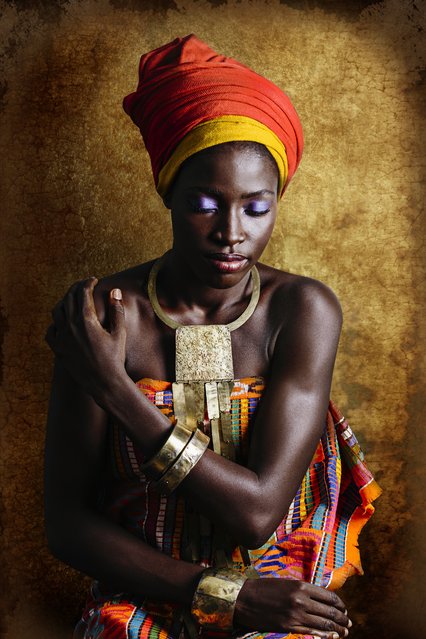
African women in their grandmothers' clothes: Joana Choumali’s portraits show modern African women swapping jeans for kente cloth – and diving into the dazzling cultural heritage of their families. (Photo by Joana Choumali/The Guardian)
Details
04 May 2016 11:43:00
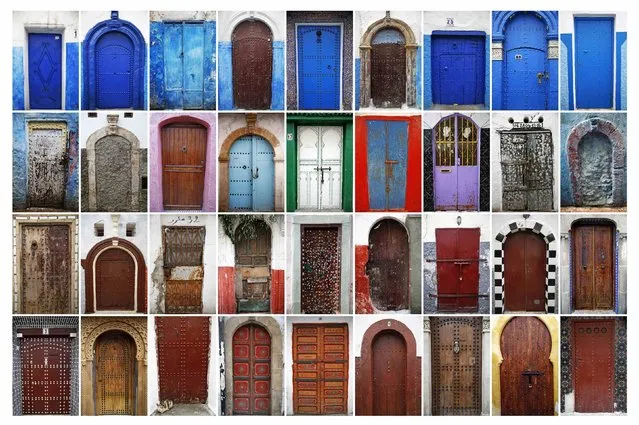
A combination photo shows some of the colourful doors seen in Rabat's Medina and Kasbah of the Udayas, September 2014. UNESCO made Rabat a World Heritage Site two years ago and media and tour operators call it a “must-see destination”. (Photo by Damir Sagolj/Reuters)

A combination photo shows some of the colourful doors seen in Rabat's Medina and Kasbah of the Udayas, September 2014. UNESCO made Rabat a World Heritage Site two years ago and media and tour operators call it a “must-see destination”. But it seems the tourist hordes have yet to find out. While visitors are getting squeezed through the better-known sites of Marrakesh and Fez, the old part of Rabat - with its beautiful Medina and Kasbah of the Udayas - remains an almost unspoiled oasis of calm. Smaller and more compact, its labyrinths of streets, passages and dead ends are a treasure trove of shapes and colours, of moments begging to be caught by the photographer's lens. (Photo by Damir Sagolj/Reuters)
Details
08 Oct 2014 12:08:00
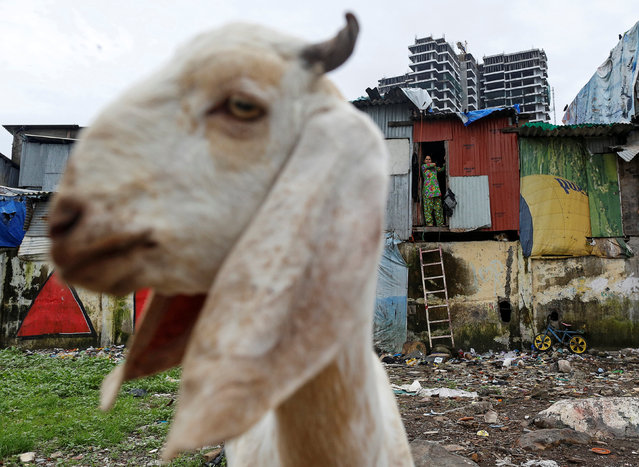
A woman stands at the door of her shanty at a slum in Mumbai, India July 20, 2016. (Photo by Danish Ismail/Reuters)

A woman stands at the door of her shanty at a slum in Mumbai, India July 20, 2016. (Photo by Danish Ismail/Reuters)
Details
21 Jul 2016 13:52:00
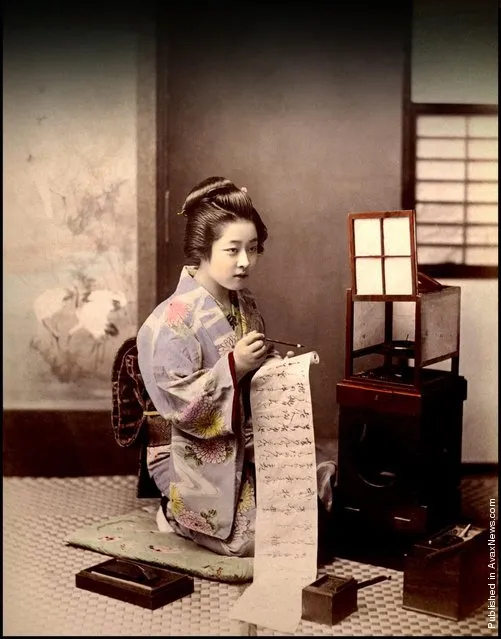
Writing Letter

“Kusakabe Kimbei (1841 – 1934) was a Japanese photographer. He usually went by his given name, Kimbei, because his clientele, mostly non-Japanese-speaking foreign residents and visitors, found it easier to pronounce than his family name. Kusakabe Kimbei worked with Felice Beato and Baron Raimund von Stillfried as a photographic colourist and assistant before opening his own workshop in Yokohama in 1881 in the Benten-dōri quarter, and from 1889 operating in the Honmachi quarter. He also opened a branch in the Ginza quarter of Tokyo”. – Wikipedia

Photo: Writing Letter. (Photo by Kusakabe Kimbei)
Details
21 Apr 2012 13:28:00
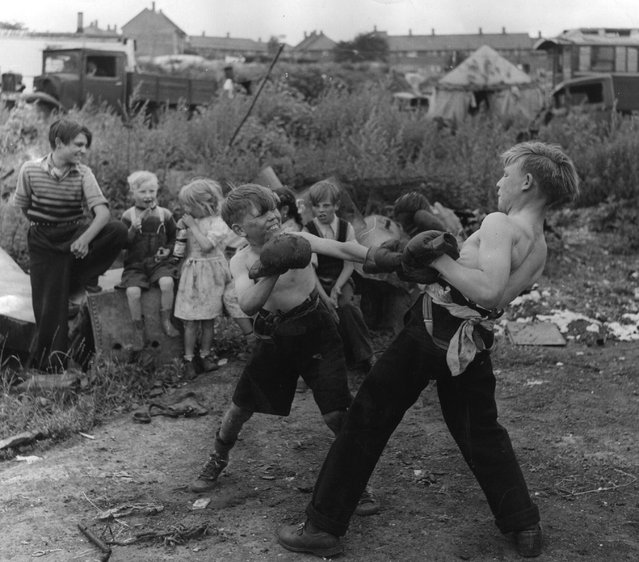
The unromantic gypsies. Children boxing in a gypsy camp in Kent, England on July 1, 1951. Like all boys these gypsy lads like to try their hand at boxing. Encouraged by their friends they fight it out on Corke's Meadow. Few Romanies now live a life of wandering romance. Most are like the three hundred squatters of Corke's Meadow, Kent, which is part of a “gypsy problem” that involves about 100,000 today. Of those about 25,000 can be rightly called gypsies, the rest are Mumpers and Posh-rats and Hobos. Corke's Meadow has both kinds. “Picture Post” cameraman Bert Hardy photographs the Corke's Meadow gypsies in their encampment. (Photo by Hulton-Deutsch Collection/Corbis via Getty Images)

The unromantic gypsies. Children boxing in a gypsy camp in Kent, England on July 1, 1951. Like all boys these gypsy lads like to try their hand at boxing. Encouraged by their friends they fight it out on Corke's Meadow. Few Romanies now live a life of wandering romance. Most are like the three hundred squatters of Corke's Meadow, Kent, which is part of a “gypsy problem” that involves about 100,000 today. Of those about 25,000 can be rightly called gypsies, the rest are Mumpers and Posh-rats and Hobos. Corke's Meadow has both kinds. “Picture Post” cameraman Bert Hardy photographs the Corke's Meadow gypsies in their encampment. (Photo by Hulton-Deutsch Collection/Corbis via Getty Images)
Details
12 Mar 2017 00:01:00
Sumo wrestler Kaiho eats a “chanko” meal in Nagoya, Japan on July 18, 2017. After ending practice at 10:30 a.m., the wrestlers mingle with fans, sign autographs and pose for photos before the first of their two daily meals. (Photo by Issei Kato/Reuters)

Sumo wrestler Kaiho eats a “chanko” meal in Nagoya, Japan on July 18, 2017. After ending practice at 10:30 a.m., the wrestlers mingle with fans, sign autographs and pose for photos before the first of their two daily meals. (Photo by Issei Kato/Reuters)
Details
20 Jul 2017 07:49:00