Loading...
Done
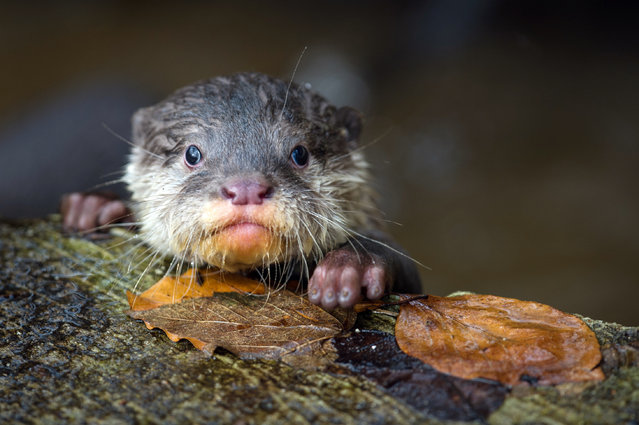
A young oriental small-clawed otter at the zoo in Neumuenster, Germany, March 5, 2014. The six young otters (one male, five female) were born on December 7, 2013. (Photo by Maja Hitij/EPA)

A young oriental small-clawed otter at the zoo in Neumuenster, Germany, March 5, 2014. The six young otters (one male, five female) were born on December 7, 2013. (Photo by Maja Hitij/EPA)
Details
08 Mar 2014 11:28:00
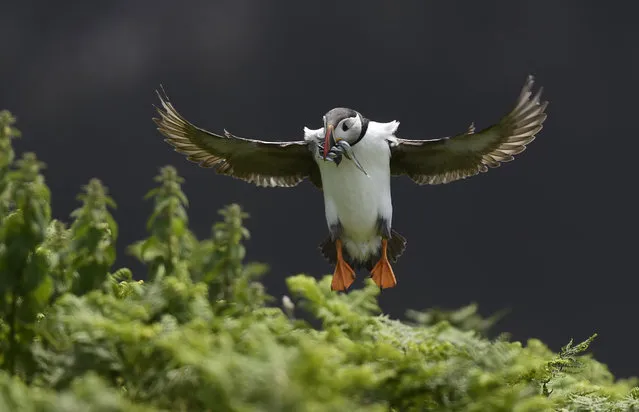
A Puffin jumps into its burrow with a mouthful of sea eels to feed its chick on Skomer Island, Pembrokeshire in Wales, Britain June 21, 2016. (Photo by Rebecca Naden/Reuters)

A Puffin jumps into its burrow with a mouthful of sea eels to feed its chick on Skomer Island, Pembrokeshire in Wales, Britain June 21, 2016. (Photo by Rebecca Naden/Reuters)
Details
26 Jun 2016 13:00:00
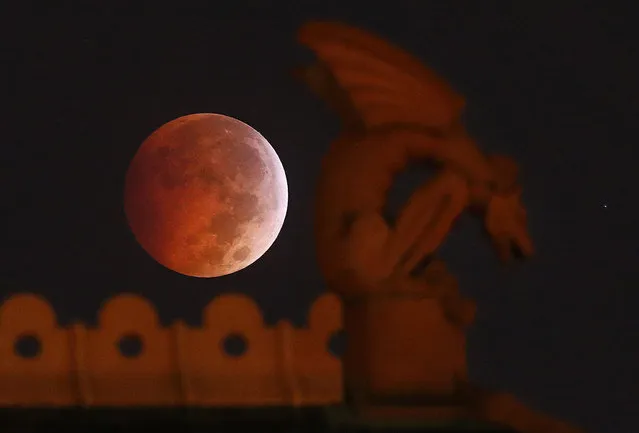
A lunar eclipse appears behind a gargoyle atop the old red Dallas County Courthouse early Wednesday morning, October 8, 2014. The moon appears orange or red, the result of sunlight scattering off Earth's atmosphere. This is known as the blood moon. (Photo by Tom Fox/AP Photo/The Dallas Morning News)

A lunar eclipse appears behind a gargoyle atop the old red Dallas County Courthouse early Wednesday morning, October 8, 2014. The moon appears orange or red, the result of sunlight scattering off Earth's atmosphere. This is known as the blood moon. (Photo by Tom Fox/AP Photo/The Dallas Morning News)
Details
11 Oct 2014 13:57:00
A visitor stands in the exhibition “I Am A Drop In The Ocean” dedicated to the artistic and visual expressions of the protests that shook the Ukraine from November 2013 until February 2014 at the Kuenstlerhaus gallery in Vienna, Austria, Thursday, April 10, 2014. The exhibition opens its doors from April 11 until May 23, 2014. (Photo by Ronald Zak/AP Photo)

A visitor stands in the exhibition “I Am A Drop In The Ocean” dedicated to the artistic and visual expressions of the protests that shook the Ukraine from November 2013 until February 2014 at the Kuenstlerhaus gallery in Vienna, Austria, Thursday, April 10, 2014. The exhibition opens its doors from April 11 until May 23, 2014. (Photo by Ronald Zak/AP Photo)
Details
12 Apr 2014 12:30:00
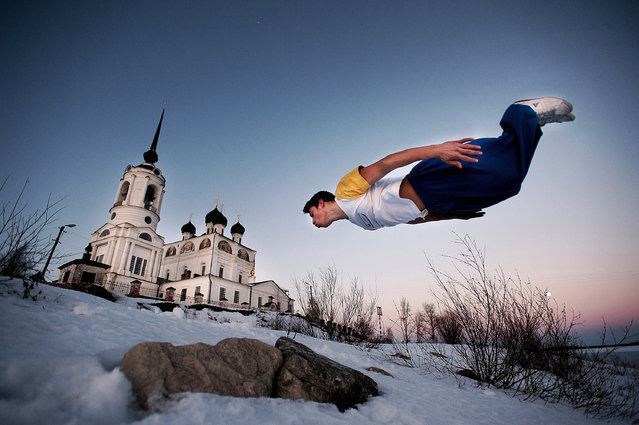
Anton Unitsyn, Russia. Shortlist, Professional , Daily Life. Parkour jumpers on their daily training. On the background – one of the main Solvychegodsk sights – Blagoveshchensky Cathedral. This church is among 3 churches, that survived soviet times. At the begining of 20th century there were 13 churches in Solvichegodsk. After breakdown of the communism, Solvichegodsk as many small towns in russia is stuck in it's past. Despite everything, people in Solvichegodsk still belive in their positive future, and wait for wind of change. (Photo by Anton Unitsyn/Sony World Photography Awards)

Anton Unitsyn, Russia. Shortlist, Professional , Daily Life. Parkour jumpers on their daily training. On the background – one of the main Solvychegodsk sights – Blagoveshchensky Cathedral. This church is among 3 churches, that survived soviet times. At the begining of 20th century there were 13 churches in Solvichegodsk. After breakdown of the communism, Solvichegodsk as many small towns in russia is stuck in it's past. Despite everything, people in Solvichegodsk still belive in their positive future, and wait for wind of change. (Photo by Anton Unitsyn/Sony World Photography Awards)
Details
25 Feb 2016 12:16:00
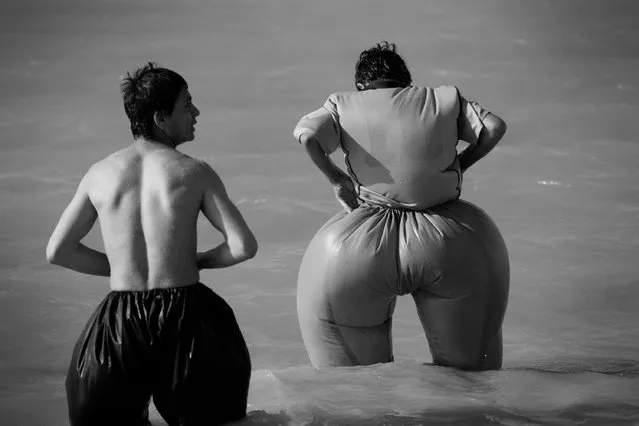
Afghan men escape increasing summer temperatures by wading in the Qarga reservoir on July 9, 2010 in a suburb of Kabul, Afghanistan. (Photo by Majid Saeedi/Getty Images)

“Life in War” (FotoEvidence Press) by Iranian photographer Majid Saeedi is probably the only book about Afghanistan that doesn’t show images of war. For ten years his camera photographed daily life in the context of war. His photographs reveal the humanity of a people living through decades of war. Here: Afghan men escape increasing summer temperatures by wading in the Qarga reservoir on July 9, 2010 in a suburb of Kabul, Afghanistan. (Photo by Majid Saeedi/Getty Images)
Details
17 Oct 2014 12:07:00
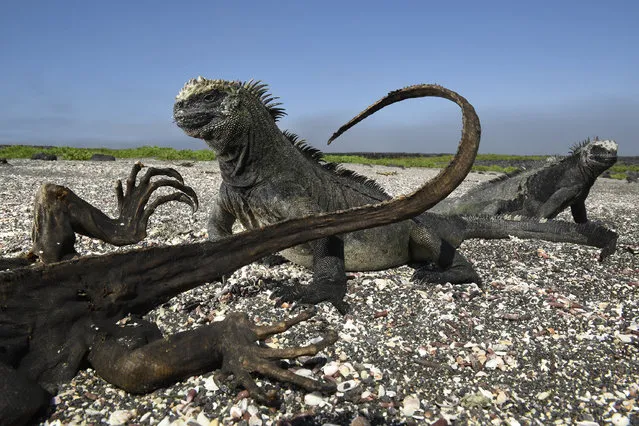
Galapagos – Rocking the Cradle: Four major ocean currents converge along the Galapagos archipelago, creating the conditions for an extraordinary diversity of animal life, April 25, 2016. The islands are home to at least 7,000 flora and fauna species, of which 97 percent of the reptiles, 80 percent of the land birds, 50 percent of the insects and 30 percent of the plants are endemic. The local ecosystem is highly sensitive to the changes in temperature, rainfall and ocean currents that characterize the climatic events known as El Niño and La Niña. These changes cause marked fluctuations in weather and food availability. Many scientists expect the frequency of El Niño and La Niña to increase as a result of climate change, making the Galapagos a possible early-warning location for its effects. (Photo by Thomas P. Peschak for National Geographic/World Press Photo)

Galapagos – Rocking the Cradle: Four major ocean currents converge along the Galapagos archipelago, creating the conditions for an extraordinary diversity of animal life, April 25, 2016. The islands are home to at least 7,000 flora and fauna species, of which 97 percent of the reptiles, 80 percent of the land birds, 50 percent of the insects and 30 percent of the plants are endemic. (Photo by Thomas P. Peschak for National Geographic/World Press Photo)
Details
16 Apr 2018 00:01:00
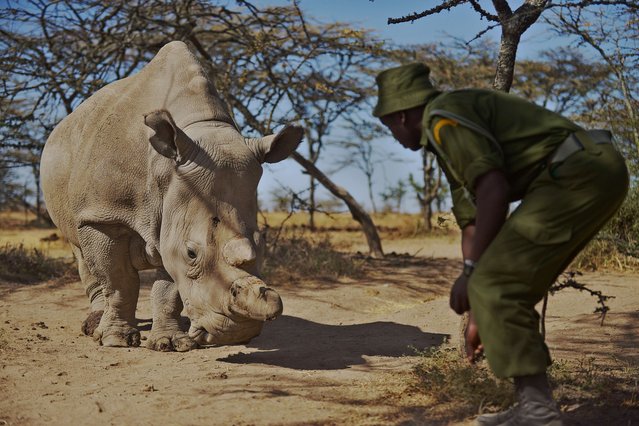
A park ranger stands next to a nothern white female rhinoceros named Najin at Ol Pejeta Conservancy, some 290 kms north of the Kenyan capital, Nairobi, on January 27, 2015. Najin is one of only five members of the sub-species left on the planet, three of which reside at Ol Pejeta Conservancy. (Photo by Tony Karumba/AFP Photo)

A park ranger stands next to a nothern white female rhinoceros named Najin at Ol Pejeta Conservancy, some 290 kms north of the Kenyan capital, Nairobi, on January 27, 2015. Najin is one of only five members of the sub-species left on the planet, three of which reside at Ol Pejeta Conservancy. Conservationists and scientists met in Kenya this week to come up with a last ditch plan to save the northern white rhinoceros from extinction. (Photo by Tony Karumba/AFP Photo)
Details
31 Jan 2015 14:07:00