Japanese monkeys snuggle to keep warm at a zoo in Tonosho in Kagawa Prefecture, western Japan on January 24, 2023. (Photo by Kyodo Photo via Newscom/Alamy Live News)
Men carry a dog on an inflated tube as they wade through floodwaters at Kongba in Imphal East on June 3, 2025. Flash floods and landslides after torrential monsoon rain over the last two days killed at least 30 people in India's northeast, officials said on June 1. (Photo by AFP Photo/Stringer)
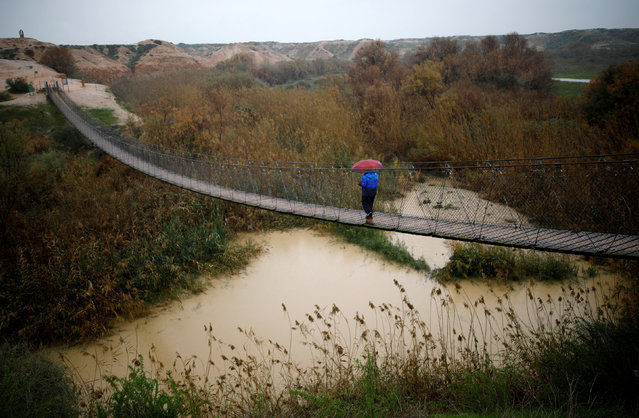
A man walks on a bridge crossing over the Besor stream on a rainy day, near Kibbutz Tze'elim in Israel's southern Negev desert February 16, 2017. (Photo by Amir Cohen/Reuters)
A salsa dancer performs in the “Salsodromo” parade, which marks the start of the Fair of Cali, Colombia, December 25, 2015. Picture taken December 25, 2015. (Photo by Jaime Saldarriaga/Reuters)
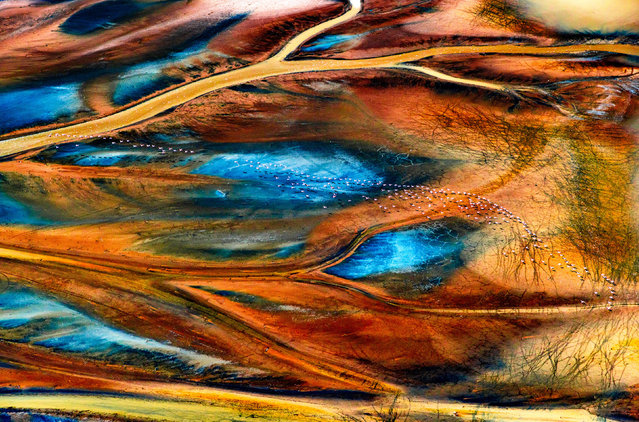
Hundreds of flamingos take flight in the Rift Valley in East Africa early September 2024. The birds gather in the region’s saline lakes to eat the blue-green algae that grows in abundance. The red-orange pigment in the algae is what gives them their distinctive pink plumage. They also use the site to breed. (Photo by Alexandre and Chloe Bes/Naturagency/Solent News)
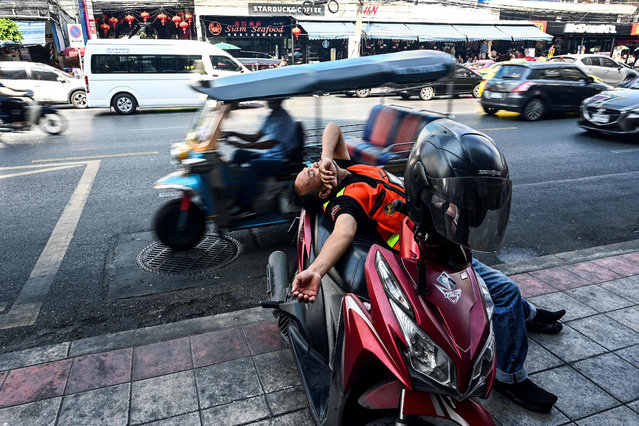
A motorcycle-taxi driver takes a nap while leaning on his bike along a street in Bangkok, Thailand on February 17, 2019. (Photo by Jewel Samad/AFP Photo)
Global wildlife populations will decline by 67% by 2020 unless urgent action is taken to reduce human impact on species and ecosystems, warns the biennial Living Planet Index report from WWF (World Wide Fund for Nature) and ZSL (Zoological Society of London). From elephants to eels, here are some of the wildlife populations most affected by human activity. Here: The maned wolf is among the large mammals in the Brazilian Cerrado that are threatened by the increasing conversion of grasslands into farmland for grazing and growing crops. (Photo by Ben Cranke/Nature Picture Library/Alamy Stock Photo)