Loading...
Done


“Dog meat refers to edible parts and the flesh derived from (predominantly domestic) dogs. Human consumption of dog meat has been recorded in many parts of the world, including ancient China, ancient Mexico, and ancient Rome. According to contemporary reports, dog meat is consumed in a variety of countries such as Switzerland, China, Vietnam, the Philippines, and Korea. In addition, dog meat has also been used as survival food in times of war and/or other hardships”. – Wikipedia

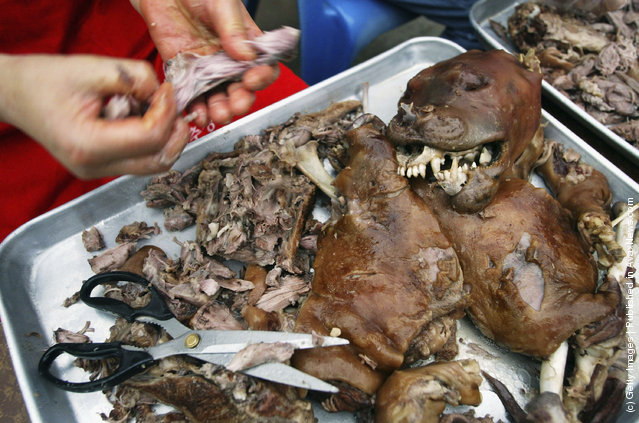
Photo: A chef prepares dog meat at a restaurant on July 4, 2005 in Gwacheon, South Korea. Dog meat is a traditional dish in Korea dating back to the Samkuk period (period of the three kingdoms BC 57 – AD 668). Although many recipes existed historically for dog meat, now chefs only make soups, or dishes using boiled or roasted meat. Koreans traditionally eat dog meat on the hottest day of the summer, for it's reputed benefits of virility, invigoration and health. (Photo by Chung Sung-Jun/Getty Images)
Details
24 Jul 2011 13:21:00
A Nepalese woman pours milk as she offers prayers to the setting Sun on the banks of the Bagmati River during the Chhath Puja festival in Kathmandu, Nepal, Sunday, November 6, 2016. During Chhath, an ancient Hindu festival, rituals are performed to thank the Sun God for sustaining life on earth. (Photo by Niranjan Shrestha/AP Photo)

A Nepalese woman pours milk as she offers prayers to the setting Sun on the banks of the Bagmati River during the Chhath Puja festival in Kathmandu, Nepal, Sunday, November 6, 2016. During Chhath, an ancient Hindu festival, rituals are performed to thank the Sun God for sustaining life on earth. (Photo by Niranjan Shrestha/AP Photo)
Details
08 Nov 2016 11:30:00
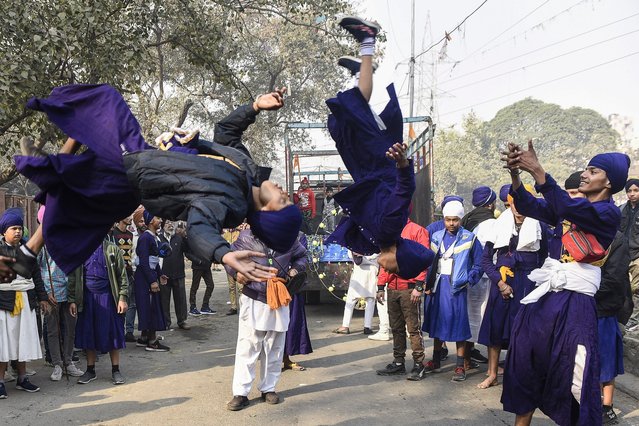
Sikh Nihang (Sikh warriors) perform “Gatka”, an ancient form of Sikh martial arts, during the “Nagar Kirtan” procession to mark the 339th birth anniversary of the Sikh warrior Shaheed Baba Deep Singh, in Amritsar on January 31, 2021. (Photo by Narinder Nanu/AFP Photo/Profimedia)

Sikh Nihang (Sikh warriors) perform “Gatka”, an ancient form of Sikh martial arts, during the “Nagar Kirtan” procession to mark the 339th birth anniversary of the Sikh warrior Shaheed Baba Deep Singh, in Amritsar on January 31, 2021. (Photo by Narinder Nanu/AFP Photo/Profimedia)
Details
09 Feb 2021 10:20:00
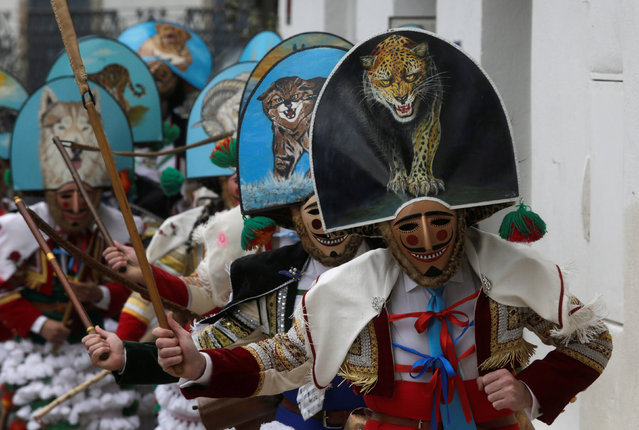
Carnival revellers dressed as “Peliqueiros” run along a street in the village of Laza, Spain February 26, 2017. “Peliqueiros”, or ancient tax collectors, pursued villagers through the streets ringing their cowbells and hitting villagers with their sticks. (Photo by Miguel Vidal/Reuters)

Carnival revellers dressed as “Peliqueiros” run along a street in the village of Laza, Spain February 26, 2017. “Peliqueiros”, or ancient tax collectors, pursued villagers through the streets ringing their cowbells and hitting villagers with their sticks. (Photo by Miguel Vidal/Reuters)
Details
28 Feb 2017 00:02:00
A rider on horseback competes in the Margalla Festival Tent Pegging Championship in Islamabad, Pakistan, June 5, 2016. Tent pegging is an equestrian sport popular in India and Pakistan, with a history going back to the cavalries of ancient armies. (Photo by Caren Firouz/Reuters)

A rider on horseback competes in the Margalla Festival Tent Pegging Championship in Islamabad, Pakistan, June 5, 2016. Tent pegging is an equestrian sport popular in India and Pakistan, with a history going back to the cavalries of ancient armies. (Photo by Caren Firouz/Reuters)
Details
06 Jun 2016 11:20:00
A Catholic faithful fancy dressed as a “talciguin” -character of the local folklore- takes part in the celebration of an ancient local tradition that marks the start of Holy Week, in Texistepeque, some 80 km west of San Salvador, on April 15, 2019. Talciguines are devils who “lash” Catholic faithfuls to cleanse their sins. (Photo by Marvin Recinos/AFP Photo)

A Catholic faithful fancy dressed as a “talciguin” -character of the local folklore- takes part in the celebration of an ancient local tradition that marks the start of Holy Week, in Texistepeque, some 80 km west of San Salvador, on April 15, 2019. Talciguines are devils who “lash” Catholic faithfuls to cleanse their sins. (Photo by Marvin Recinos/AFP Photo)
Details
18 Apr 2019 00:07:00
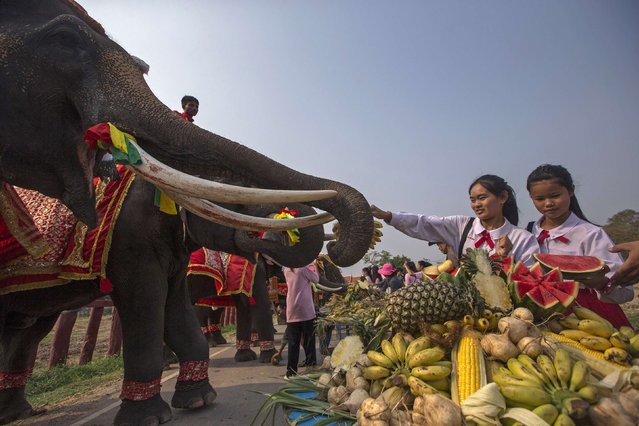
Students feed fruit to an elephant during Thailand's National Elephant Day in the ancient Thai capital Ayutthaya March 13, 2015. Thais honoured the elephant on Friday with special fruits and Buddhist ceremonies across the country to pay homage to their national animal. (Photo by Athit Perawongmetha/Reuters)

Students feed fruit to an elephant during Thailand's National Elephant Day in the ancient Thai capital Ayutthaya March 13, 2015. Thais honoured the elephant on Friday with special fruits and Buddhist ceremonies across the country to pay homage to their national animal. (Photo by Athit Perawongmetha/Reuters)
Details
14 Mar 2015 14:17:00
A tourist jumps inside an upside-down house at Fengjing Ancient Town, Jinshan District, south of Shanghai, May 1, 2014. The upside-down house was built as a tourist attraction using everyday household items and furniture. (Photo by Aly Song/Reuters)

A tourist jumps inside an upside-down house at Fengjing Ancient Town, Jinshan District, south of Shanghai, May 1, 2014. The upside-down house was built as a tourist attraction using everyday household items and furniture. (Photo by Aly Song/Reuters)
Details
02 May 2014 11:46:00