Loading...
Done
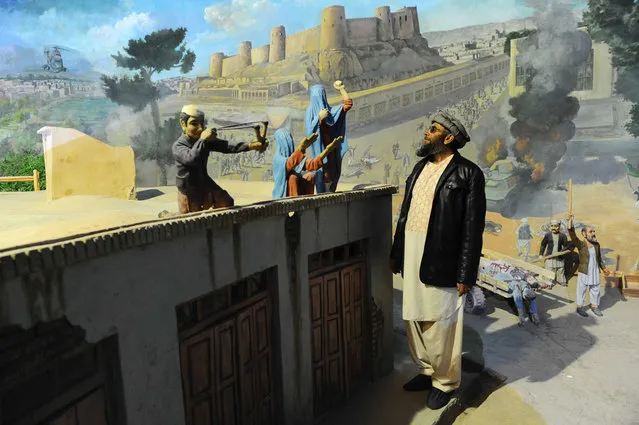
Museum assistant and former Soviet soldier, Sheikh Abdullah looks at a display in the Manzar-e Jahad, or Jihad Museum, which depicts the Soviet invasion of 1979 and the Afghan resistance, in Herat, on February 15, 2014. (Photo by Aref Karimi/AFP Photo via The Atlantic)

Museum assistant and former Soviet soldier, Sheikh Abdullah looks at a display in the Manzar-e Jahad, or Jihad Museum, which depicts the Soviet invasion of 1979 and the Afghan resistance, in Herat, on February 15, 2014. Sheikh Abdullah, who was a Soviet intelligence officer by the name of Khakimov Bakhrodin, was captured after being injured in battle with the Mujahideen. Abdullah stayed with his captors, converted to Islam and was renamed Abdullah. He never returned to his former homeland and now works at the Jihad Museum. (Photo by Aref Karimi/AFP Photo via The Atlantic)
Details
10 Mar 2014 09:08:00
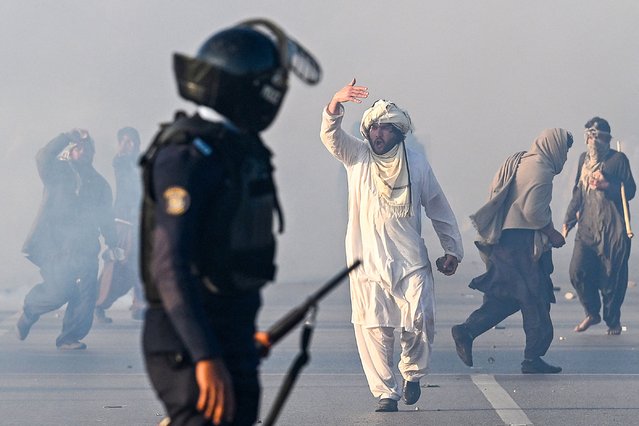
A supporter of Pakistan Tehreek-e-Insaf (PTI) party gestures after tear gas was fired by the police to disperse the crowd during a protest to demand the release of former prime minister Imran Khan in Islamabad on November 26, 2024. Thousands of protestors calling for the release of Pakistan's jailed ex-prime minister Imran Khan defied roadblocks and tear gas to march to the gates of the nation's capital on November 26. (Photo by Aamir Qureshi/AFP Photo)

A supporter of Pakistan Tehreek-e-Insaf (PTI) party gestures after tear gas was fired by the police to disperse the crowd during a protest to demand the release of former prime minister Imran Khan in Islamabad on November 26, 2024. Thousands of protestors calling for the release of Pakistan's jailed ex-prime minister Imran Khan defied roadblocks and tear gas to march to the gates of the nation's capital on November 26. (Photo by Aamir Qureshi/AFP Photo)
Details
11 Dec 2024 03:55:00
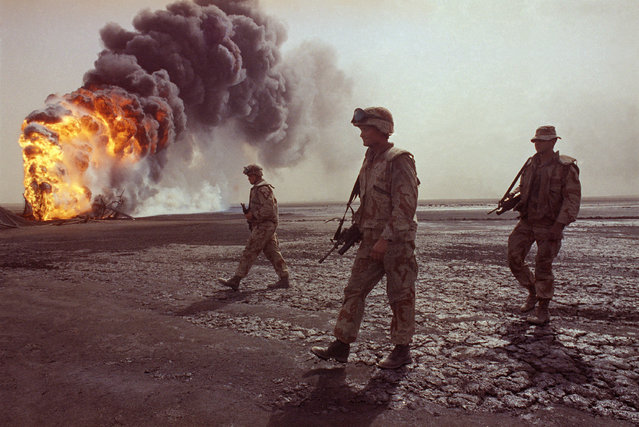
In this March 7, 1991 file photo, a U.S. Marine patrol walks across the charred oil landscape near a burning well during perimeter security patrol near Kuwait City. Twenty five years after the first U.S. Marines swept across the border into Kuwait in the 1991 Gulf War, American forces find themselves battling the extremist Islamic State group, born out of al-Qaida, in the splintered territories of Iraq and Syria. The Arab allies that joined the 1991 coalition are fighting their own conflicts both at home and abroad, as Iran vies for greater regional power following a nuclear deal with world powers. (Photo by John Gaps III/AP Photo)

In this March 7, 1991 file photo, a U.S. Marine patrol walks across the charred oil landscape near a burning well during perimeter security patrol near Kuwait City. Twenty five years after the first U.S. Marines swept across the border into Kuwait in the 1991 Gulf War, American forces find themselves battling the extremist Islamic State group, born out of al-Qaida, in the splintered territories of Iraq and Syria. The Arab allies that joined the 1991 coalition are fighting their own conflicts both at home and abroad, as Iran vies for greater regional power following a nuclear deal with world powers. (Photo by John Gaps III/AP Photo)
Details
23 Feb 2016 11:43:00
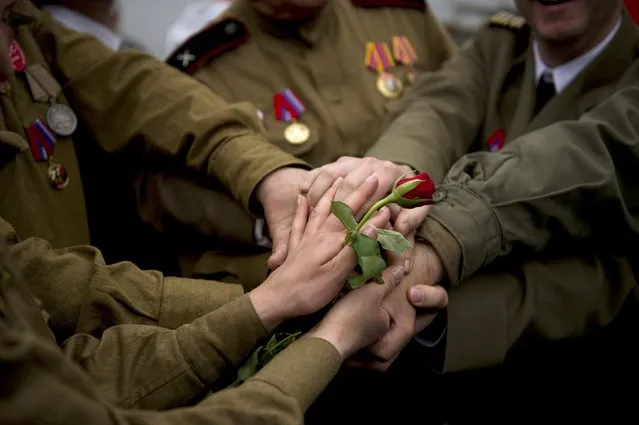
Members of a historical re-enactment group dressed as U.S. and Soviet Army soldiers take part in Elbe Day celebrations, in eastern German city of Torgau at the river Elbe, April 25, 2015. (Photo by Stefanie Loos/Reuters)

Members of a historical re-enactment group dressed as U.S. and Soviet Army soldiers take part in Elbe Day celebrations, in eastern German city of Torgau at the river Elbe, April 25, 2015. Elbe Day commemorates the encounter of the Allies 70 years ago, on the 25th of April 1945 when American and Soviet army units joined together on the destroyed bridge over the river Elbe. The photograph of the meaningful handshake made its way around the world and became a symbol of the near end of World War II in Europe. (Photo by Stefanie Loos/Reuters)
Details
26 Apr 2015 08:58:00


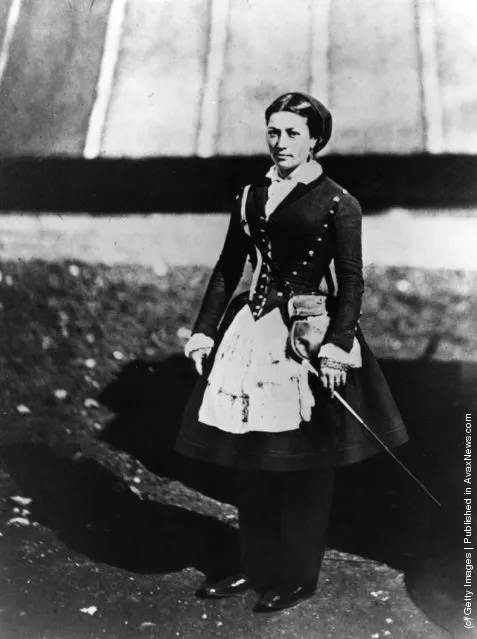
“The Crimean War (October 1853 – February 1856) was a conflict fought between the Russian Empire and an alliance of the French Empire, the British Empire, the Ottoman Empire, and the Kingdom of Sardinia. The war was part of a long-running contest between the major European powers for influence over territories of the declining Ottoman Empire. Most of the conflict took place on the Crimean Peninsula, but there were smaller campaigns in western Anatolia, Caucasus, the Baltic Sea, the Pacific Ocean and the White Sea”. – Wikipedia

Photo: A vivandiere, a female soldier selling provisions and spirits, with the Allied forces during the Crimean War. (Photo by Hulton Archive/Getty Images)
Details
18 Jul 2011 11:57:00
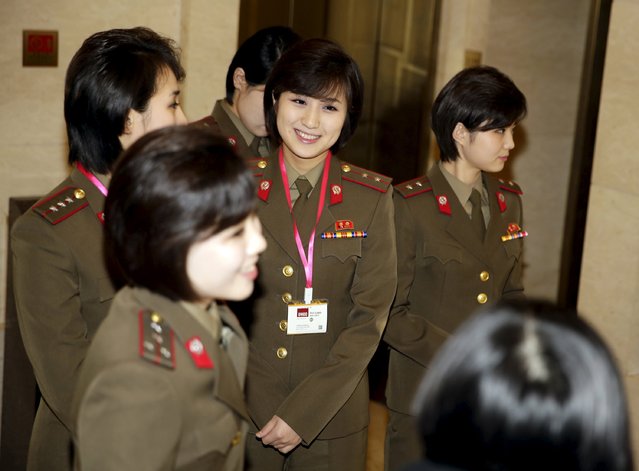
Members of the Moranbong Band from North Korea wait inside the lobby of a hotel in central Beijing, China, December 11, 2015. (Photo by Reuters/Stringer)

Members of the Moranbong Band from North Korea wait inside the lobby of a hotel in central Beijing, China, December 11, 2015. North Korea's premier pop group, the all-girl Moranbong band formed by leader Kim Jong-Un, is electrifying audiences in China in shows aimed at harmonising out-of-tune ties between the traditional allies, reports and the venue said on December 9 – but tickets are not available to the public. (Photo by Reuters/Stringer)
Details
13 Dec 2015 08:04:00
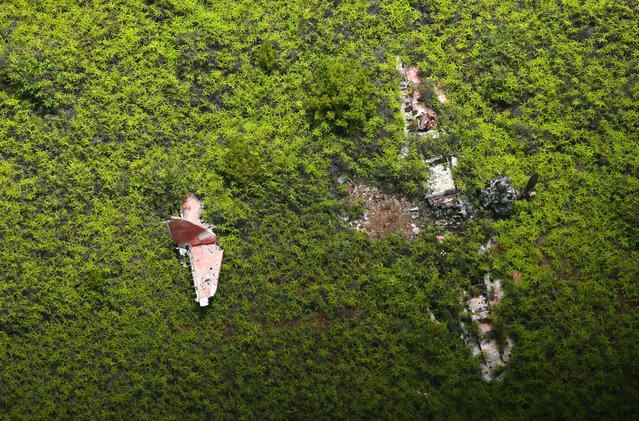
In this aerial image, debris of the Japanese Imperial Navy fighter A6M “Zero” is seen in the field on August 29, 2016 in Babeldaob Island, Palau. (Photo by The Asahi Shimbun via Getty Images)

In this aerial image, debris of the Japanese Imperial Navy fighter A6M “Zero” is seen in the field on August 29, 2016 in Babeldaob Island, Palau. The war was opened up 75 years ago by Imperial Japan against the allied forces, including the United States, by the Pearl Harbour attack on December 7, 1941, claimed more than 2 million lives until Japan's surrender in 1945. (Photo by The Asahi Shimbun via Getty Images)
Details
07 Dec 2016 12:10:00
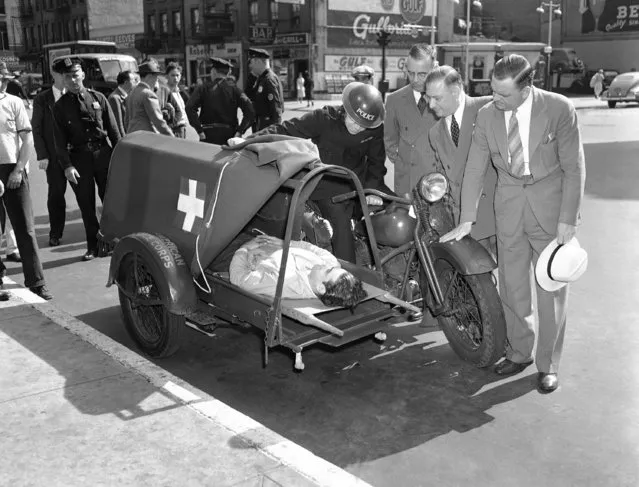
Developed for the British American Ambulance Corps, this new motorcycle ambulance is capable of speeding wounded soldiers 90 miles an hour from the front lines to field hospitals. Its springs are synchronized with the patient?s heartbeat to avoid increasing fever when traveling over various Terrain. Viewing it in New York  August 27, 1941, are left to right: constable Herbert Scott of England, driver; William E. Detlor, whose firm developed the vehicle; M. W. Stand, inspector-general of Civilian Defense, and Maj. Edward Riekert, also. (Photo by AP Photo)

Developed for the British American Ambulance Corps, this new motorcycle ambulance is capable of speeding wounded soldiers 90 miles an hour from the front lines to field hospitals. Its springs are synchronized with the patient's heartbeat to avoid increasing fever when traveling over various Terrain. Viewing it in New York August 27, 1941, are left to right: constable Herbert Scott of England, driver; William E. Detlor, whose firm developed the vehicle; M. W. Stand, inspector-general of Civilian Defense, and Maj. Edward Riekert, also. (Photo by AP Photo)
Details
28 Aug 2015 11:51:00