Loading...
Done
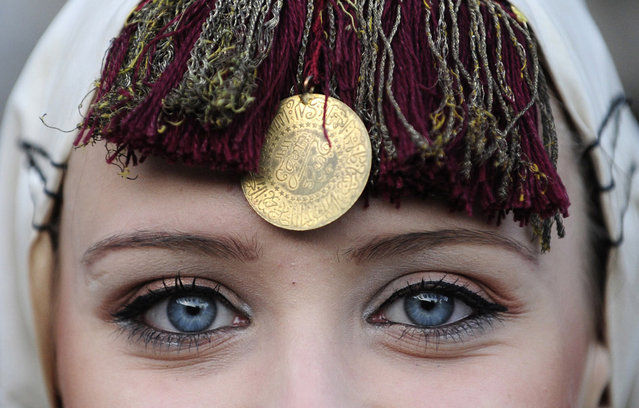
Women dressed in folk costumes take part in a traditional wedding ceremony in the village of Galicnik, west of Macedonia's capital Skopje, July 12, 2014. The Galicnik Wedding, a three-day traditional Macedonian wedding celebration held each “Petrovden” or St. Peter's Day, involves traditional customs, costumes, and rituals and dances that have been passed down over the centuries. (Photo by Ognen Teofilovski/Reuters)

Women dressed in folk costumes take part in a traditional wedding ceremony in the village of Galicnik, west of Macedonia's capital Skopje, July 12, 2014. The Galicnik Wedding, a three-day traditional Macedonian wedding celebration held each “Petrovden” or St. Peter's Day, involves traditional customs, costumes, and rituals and dances that have been passed down over the centuries. (Photo by Ognen Teofilovski/Reuters)
Details
19 Jul 2014 10:11:00
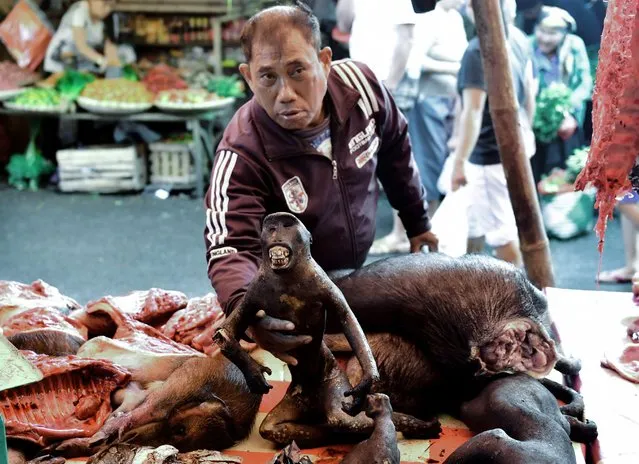
This picture taken on February 18, 2017 shows a customer holding a crested black macaque in Tomohon market in northern Sulawesi, Indonesia. (Photo by Bay Ismoyo/AFP Photo)

This picture taken on February 18, 2017 shows a customer holding a crested black macaque in Tomohon market in northern Sulawesi, Indonesia. Authorities and activists are stepping up efforts to persuade villagers on Sulawesi island to stop consuming the critically endangered crested black macaques, one of many exotic creatures that form part of the local indigenous community' s diet. The macaque' s meat is prized by the ethnic Minahasan people, a largely Christian group in the world' s most populous Muslim- majority country, who have no reservation about eating exotic animals, unlike Indonesia' s Islamic communities. (Photo by Bay Ismoyo/AFP Photo)
Details
04 Apr 2017 10:01:00
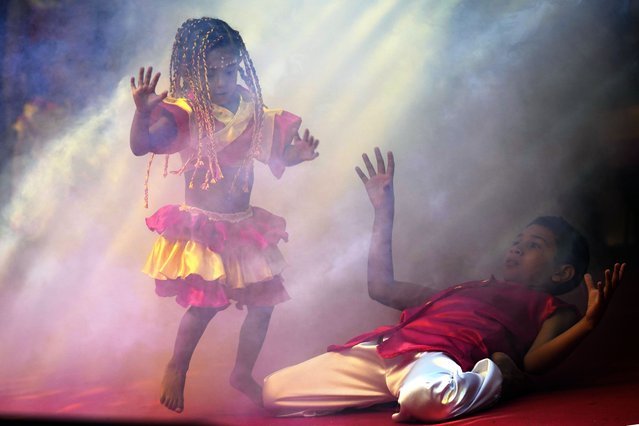
Members of the Paraguay-African cultural group Kamba Cua dance during celebrations in honor of Saint Balthazar, one of the Three Kings, on Epiphany in Fernando de la Mora, Paraguay, late Saturday, January 8, 2022, just days after the official holiday. The annual procession is a tradition that keeps Paraguay's Afro-descendants connected with their African roots through ancestral dance, drumming and customs. (Photo by Jorge Saenz/AP Photo)

Members of the Paraguay-African cultural group Kamba Cua dance during celebrations in honor of Saint Balthazar, one of the Three Kings, on Epiphany in Fernando de la Mora, Paraguay, late Saturday, January 8, 2022, just days after the official holiday. The annual procession is a tradition that keeps Paraguay's Afro-descendants connected with their African roots through ancestral dance, drumming and customs. (Photo by Jorge Saenz/AP Photo)
Details
29 Jan 2022 07:01:00
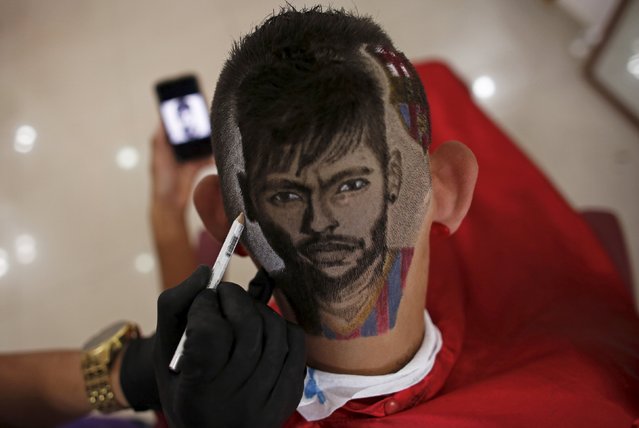
Hair artist and barber Nariko, 27, etches an image of Barcelona's Neymar on the head of customer Luiz Fernadez, 15, before the Champions League semifinal first leg soccer match between Barcelona and Bayern Munich, at his barbershop in Sao Vicente, near Santos, in Sao Paulo state May 6, 2015. (Photo by Nacho Doce/Reuters)

Hair artist and barber Nariko, 27, etches an image of Barcelona's Neymar on the head of customer Luiz Fernadez, 15, before the Champions League semifinal first leg soccer match between Barcelona and Bayern Munich, at his barbershop in Sao Vicente, near Santos, in Sao Paulo state May 6, 2015. Nariko, who was motivated to get into the profession by his grandfather and uncle, has been etching profiles of the famous onto the sides and backs of heads for about a year or so. (Photo by Nacho Doce/Reuters)
Details
08 May 2015 12:52:00
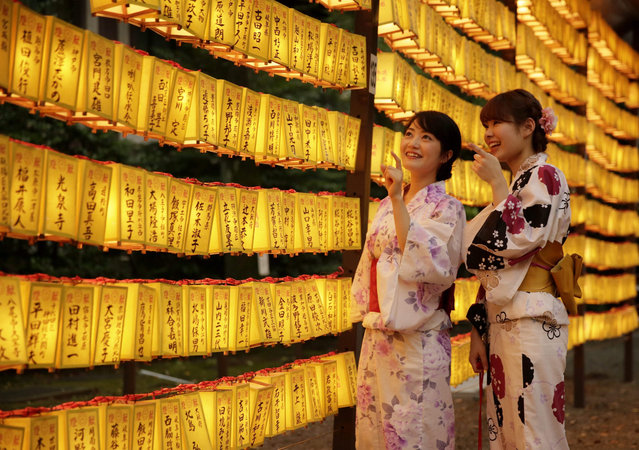
Two office workers wearing summer kimonos Yukata look at paper lanterns as they visit on the eve of Mitama Matsuri, a summer festival at Yasukuni Shrine in Tokyo, Japan, 13 July 2015. About 300,000 people visit the shrine decorated with about 30,000 lanterns during the three-day summer festival aiming at comforting souls of dead, especially for the war dead. The festival is after Japan's Buddhist custom to honor and comfort souls of family's ancestors. (Photo by Kimimasa Mayama/EPA)

Two office workers wearing summer kimonos Yukata look at paper lanterns as they visit on the eve of Mitama Matsuri, a summer festival at Yasukuni Shrine in Tokyo, Japan, 13 July 2015. About 300,000 people visit the shrine decorated with about 30,000 lanterns during the three-day summer festival aiming at comforting souls of dead, especially for the war dead. The festival is after Japan's Buddhist custom to honor and comfort souls of family's ancestors. (Photo by Kimimasa Mayama/EPA)
Details
14 Jul 2015 13:59:00
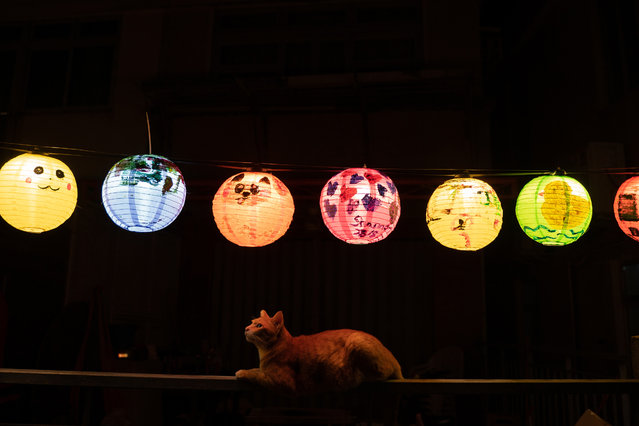
A cat sits underneath lanterns displayed at Tai O fishing village on September 07, 2022 in Hong Kong, China. Hong Kong prepares ahead to celebrate the mid-autumn festival which is an occasion for a children's night out and family gathering with the customs of moon contemplating, a procession of star and moon-shaped lanterns, lion dance, as well as holding parties with moon cakes and fruits. (Photo by Anthony Kwan/Getty Images)

A cat sits underneath lanterns displayed at Tai O fishing village on September 07, 2022 in Hong Kong, China. Hong Kong prepares ahead to celebrate the mid-autumn festival which is an occasion for a children's night out and family gathering with the customs of moon contemplating, a procession of star and moon-shaped lanterns, lion dance, as well as holding parties with moon cakes and fruits. (Photo by Anthony Kwan/Getty Images)
Details
14 Sep 2022 05:12:00
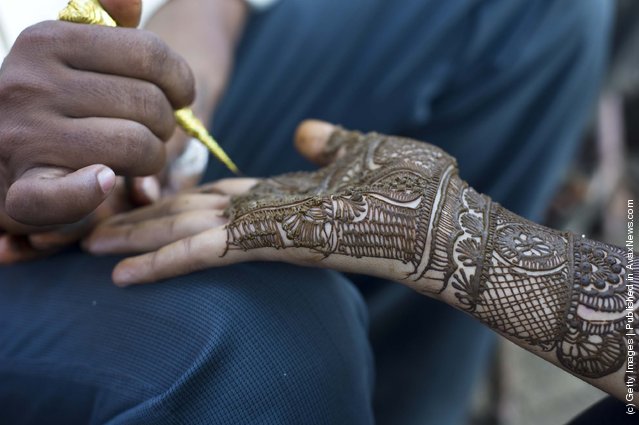
Application of henna or “Mehndi”  to a girls hand in a market in Jaipur, India

“Mehndi or menhdi is the application of henna as a temporary form of skin decoration in India, as well as by expatriate communities from the country. The word mehndi is derived from the Sanskrit word mendhikā. The use of mehndi and turmeric is described in the earliest Vedic ritual books. Haldi (Staining oneself with turmeric paste) as well as mehndi are important Vedic customs as a symbolic representation of the Outer and the Inner Sun. Vedic customs are meant to awaken the “inner light” and so the gold of the inner Sun has an important symbolic function”. – Wikipedia

Photo: Application of henna or “Mehndi” to a girls hand in a market on October 18, 2010 in Jaipur, India. (Photo by Simon de Trey-White/Getty Images)
Details
23 Nov 2011 13:33:00
An erotic danser picks up fake 2-dollar bills during a private dance with a Yakuza customer in a strip tease bar in Kabukicho, a bar which is controlled by the ODO family – 2010. (Photo and caption by Anton Kusters)

The Belgian photographer Anton Kusters spent two years photographing the Yakuza, Japan’s most notorious gang. He returned with some amazing images that he made into a book called “Odo Yakuza Tokyo”. (Odo means “the way of the cherry blossom” and is the credo of the Yakuza family he followed. Photo: An erotic danser picks up fake 2-dollar bills during a private dance with a Yakuza customer in a strip tease bar in Kabukicho, a bar which is controlled by the ODO family – 2010. (Photo and caption by Anton Kusters)
Details
31 Aug 2014 08:42:00