Loading...
Done
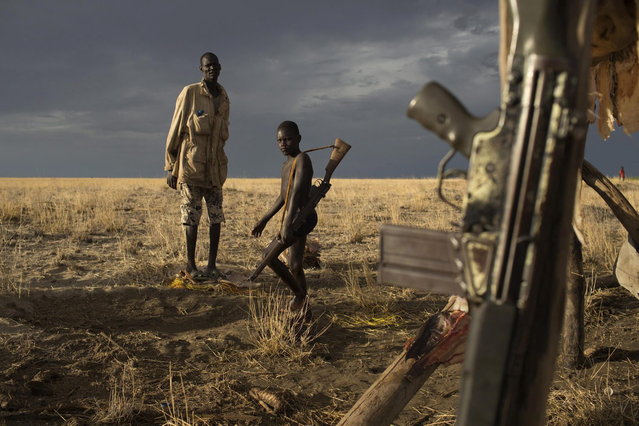
A Turkana man and a boy carrying a gun look on as a G3 battle rifle hangs from a structure used to dry fish at a fishing camp on the shores of Lake Turkana, some kilometres from Todonyang near the Kenya-Ethiopia border in northwestern Kenya October 12, 2013. (Photo by Siegfried Modola/Reuters)

A Turkana man and a boy carrying a gun look on as a G3 battle rifle hangs from a structure used to dry fish at a fishing camp on the shores of Lake Turkana, some kilometres from Todonyang near the Kenya-Ethiopia border in northwestern Kenya October 12, 2013The Turkana are traditionally nomadic pastoralists, but they have seen the pasture that they need to feed their herds suffer from recurring droughts and many have turned to fishing. However, Lake Turkana is overfished, and scarcity of food and pastureland is fuelling long-standing conflict with Ethiopian indigenous Dhaasanac, who have seen grazing grounds squeezed by large-scale government agricultural schemes in southern Ethiopia. The Dhaasanac now venture ever deeper into Kenyan territory in search of fish and grass, clashing with neighbours. Fighting between the communities has a long history, but the conflict has become ever more fatal as automatic weapons from other regional conflicts seep into the area. While the Turkana region is short of basics like grass and ground-water, it contains other resources including oil reserves and massive, newly discovered underground aquifers. (Photo by Siegfried Modola/Reuters)
Details
05 Dec 2013 12:08:00
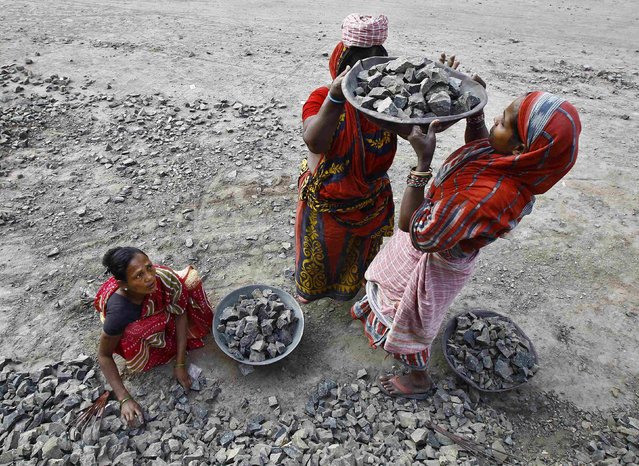
Women labourers work at the construction site of a road in Kolkata January 8, 2015. Across towns and cities in India, it is not uncommon to see women cleaning building sites, carrying bricks and or shoveling gravel - helping construct the infrastructure necessary for the country's economic and social development. (Photo by Rupak De Chowdhuri/Reuters)

Women labourers work at the construction site of a road in Kolkata January 8, 2015. Across towns and cities in India, it is not uncommon to see women cleaning building sites, carrying bricks and or shoveling gravel – helping construct the infrastructure necessary for the country's economic and social development. They help build roads, railway tracks, airports, and offices. They lay pipes for clean water supplies, cables for telecommunications, and dig the drains for sewage systems. But although women make up at least 20 percent of India's 40 million construction workers, they are less recognized than male workers with lower pay and often prone to safety hazards and sexual harassment. They are often unaware of their rights or scared to complain, say activists now trying to campaign for better treatment of women in the construction industry. (Photo by Rupak De Chowdhuri/Reuters)
Details
15 Jan 2015 13:47:00
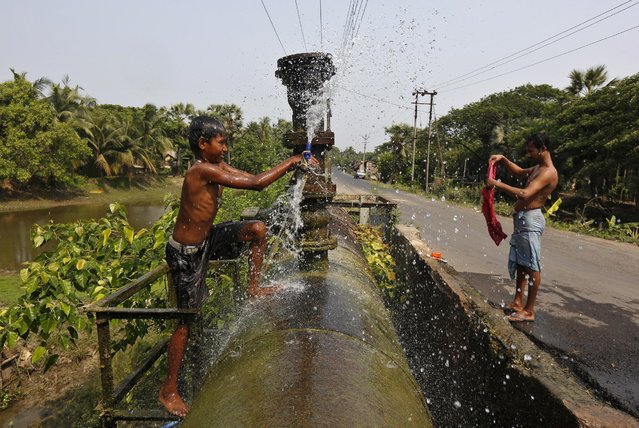
People wash in water from a broken water pipeline on the outskirts of Kolkata, India, March 30, 2016. (Photo by Rupak De Chowdhuri/Reuters)

People wash in water from a broken water pipeline on the outskirts of Kolkata, India, March 30, 2016. (Photo by Rupak De Chowdhuri/Reuters)
Details
01 Apr 2016 11:48:00
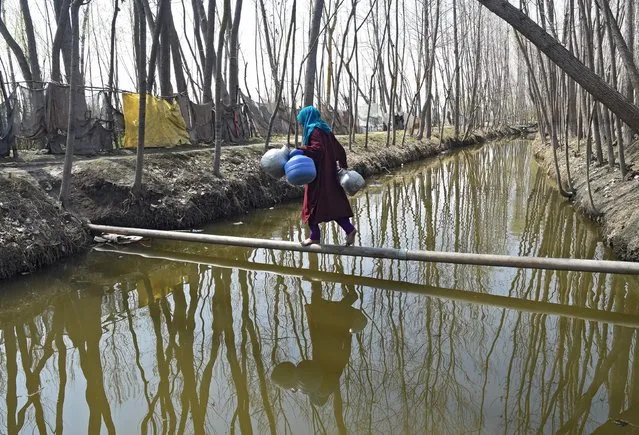
A Kashmiri Muslim woman balances on a water pipe before collecting water at Dasilpora village on March 22, 2018. World Water Day is held annually on 22 March as a means of focusing attention on the importance of freshwater and advocating for the sustainable management of freshwater resources. (Photo by Tauseef Mustafa/AFP Photo)

A Kashmiri Muslim woman balances on a water pipe before collecting water at Dasilpora village on March 22, 2018. World Water Day is held annually on 22 March as a means of focusing attention on the importance of freshwater and advocating for the sustainable management of freshwater resources. (Photo by Tauseef Mustafa/AFP Photo)
Details
24 Mar 2018 06:20:00
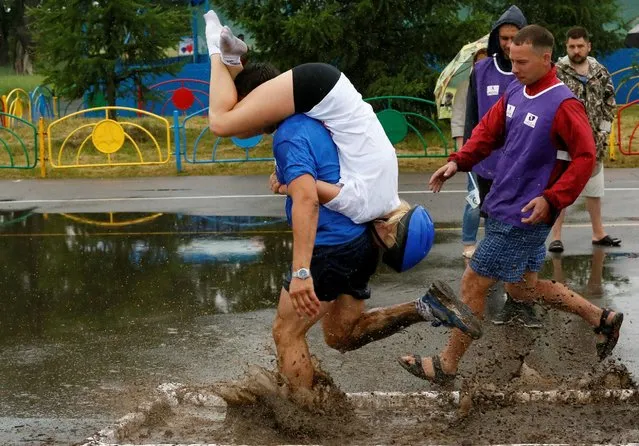
A man carries his wife over an obstacle while competing in the Wife Carrying Championship to mark City Day in Krasnoyarsk, Siberia, Russia, June 25, 2016. (Photo by Ilya Naymushin/Reuters)

A man carries his wife over an obstacle while competing in the Wife Carrying Championship to mark City Day in Krasnoyarsk, Siberia, Russia, June 25, 2016. (Photo by Ilya Naymushin/Reuters)
Details
26 Jun 2016 13:11:00
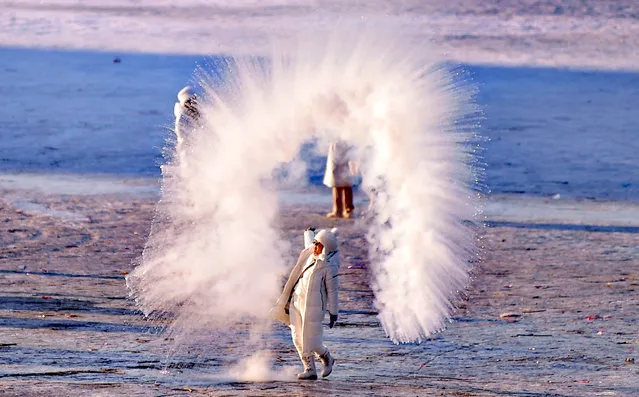
A tourist splashes water on the frozen Songhua River on December 18, 2023 in Harbin, Heilongjiang Province of China. The water immediately freezes into ice in the frigid air. (Photo by VCG/VCG via Getty Images)

A tourist splashes water on the frozen Songhua River on December 18, 2023 in Harbin, Heilongjiang Province of China. The water immediately freezes into ice in the frigid air. (Photo by VCG/VCG via Getty Images)
Details
26 Dec 2023 20:21:00
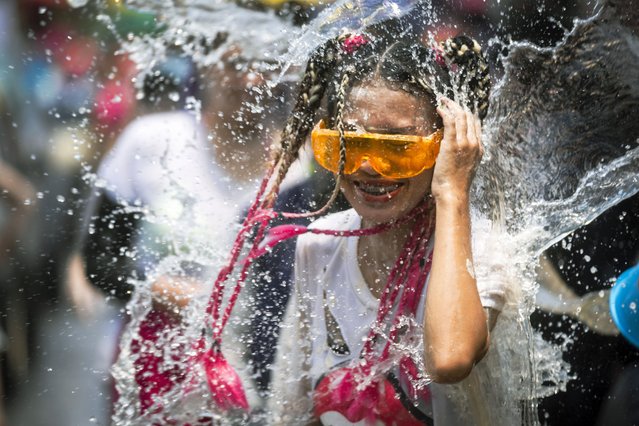
A bucket of water is splashed on a woman during the Songkran water festival to celebrate the Thai New Year, in Prachinburi Province, Thailand, April 13, 2024. (Photo by Wason Wanichakorn/AP Photo)

A bucket of water is splashed on a woman during the Songkran water festival to celebrate the Thai New Year, in Prachinburi Province, Thailand, April 13, 2024. (Photo by Wason Wanichakorn/AP Photo)
Details
02 Aug 2025 03:38:00
Cenote In Mexico

A cenote is a natural phenomenon, a sinkhole in the Earth’s surface. The Yucatan Peninsula in Mexico has an estimated 7,000 cenotes because it is primarily made up of porous limestone. For millions of years, rainfall slowly ate away at the limestone and a huge system of underground caves and caverns was formed. Many filled with water from rain or from the underground water table. When the roof of a water filled cave collapses, a cenote is born. The water found in a cenote may be fresh water, salt water, or both. Structurally it may be completely open, like a lake, almost completely closed with just a small opening at the top, or somewhere in between.
Details
06 Oct 2013 09:45:00