Loading...
Done


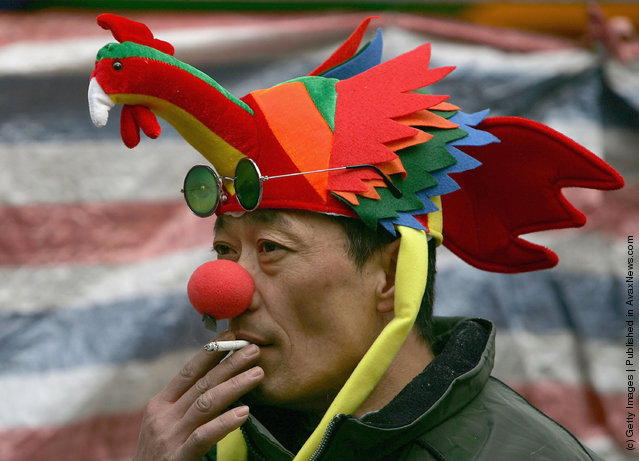
A Chinese vendor wears a rooster hat as he smokes a cigarette at his souvenir stall at a fair at Temple of Earth, on the eve of Chinese New Year February 8, 2005 in Beijing, China. Chinese started February 8, to celebrate the New Year of the Rooster. (Photo by Andrew Wong/Getty Images)
Details
14 May 2011 13:54:00
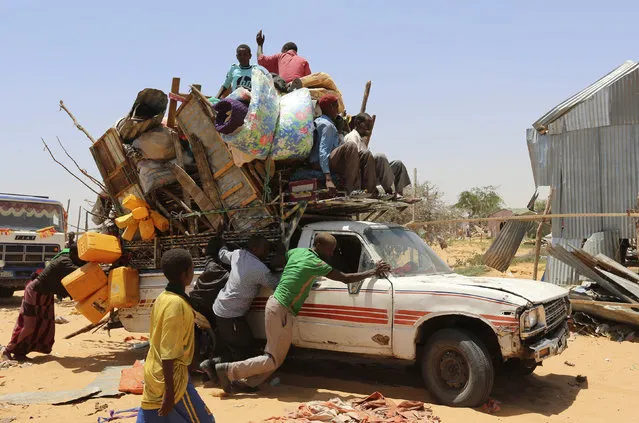
More than 6 billion people live in countries where serious levels of public sector corruption are fueling inequality and exploitation, according to Transparency International's 2015 index of perceived public sector corruption. The group's annual report measures perceptions of corruption due to the secrecy surrounding most corrupt dealings. Two thirds of the 168 countries assessed were identified as having a serious corruption problem. Somalia, which has been mired in conflict since civil war broke out in 1991, ranks bottom of the list. (Photo by Feisal Omar/Reuters)

More than 6 billion people live in countries where serious levels of public sector corruption are fueling inequality and exploitation, according to Transparency International's 2015 index of perceived public sector corruption. The group's annual report measures perceptions of corruption due to the secrecy surrounding most corrupt dealings. Two thirds of the 168 countries assessed were identified as having a serious corruption problem. Somalia, which has been mired in conflict since civil war broke out in 1991, ranks bottom of the list. (Photo by Feisal Omar/Reuters)
Details
13 May 2016 12:10:00
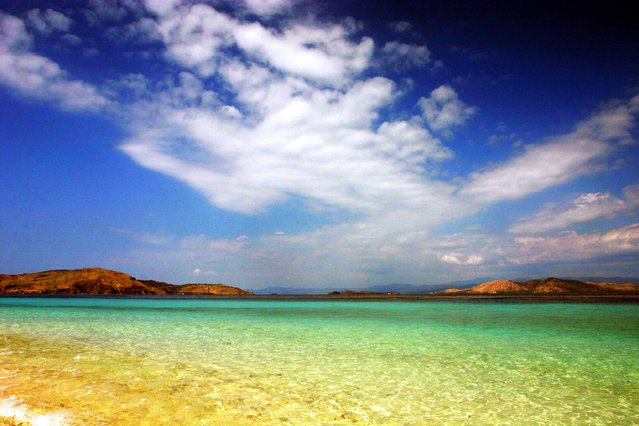
Komodo National Park

The Komodo National Park is a national park in Indonesia located within the Lesser Sunda Islands in the border region between the provinces of East Nusa Tenggara and West Nusa Tenggara. The park includes the three larger islands Komodo, Padar and Rinca, and 26 smaller ones, with a total area of 1,733 km² (603 km² of it land). The national park was founded in 1980 to protect the Komodo dragon, the world's largest lizard. Later it was dedicated to protecting other species, including marine species. In 1991 the national park was declared a UNESCO World Heritage Site and later as Man and Biosphere Reserve.
Details
12 Aug 2013 12:28:00
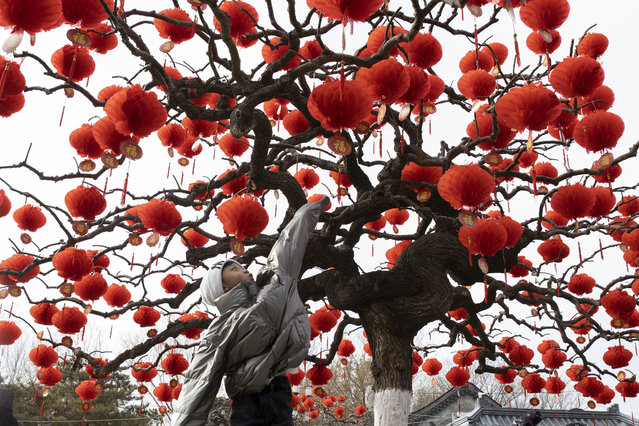
A child jumps to touch lanterns hung on a tree ahead of the Chinese Lunar New Year celebrations in Beijing on Thursday, January 16, 2020. The world's largest annual migration begins this week in China with millions of Chinese traveling to their hometowns to celebrate the Lunar New Year on Jan. 25 this year which marks the Year of the Rat on the Chinese zodiac. (Photo by Ng Han Guan/AP Photo)

A child jumps to touch lanterns hung on a tree ahead of the Chinese Lunar New Year celebrations in Beijing on Thursday, January 16, 2020. The world's largest annual migration begins this week in China with millions of Chinese traveling to their hometowns to celebrate the Lunar New Year on Jan. 25 this year which marks the Year of the Rat on the Chinese zodiac. (Photo by Ng Han Guan/AP Photo)
Details
22 Jan 2020 00:01:00
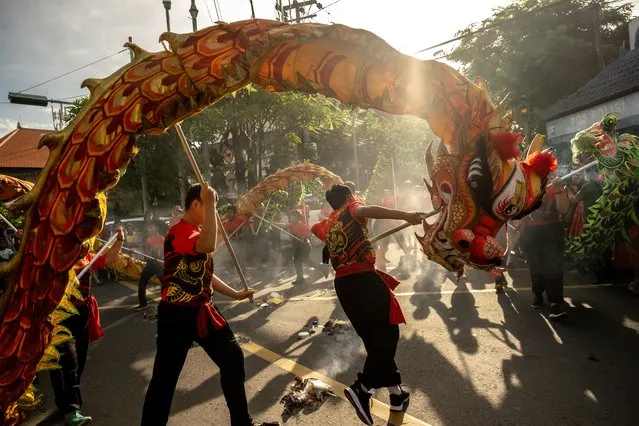
Balis Chinese community perform the dragon dance during Chinese New Year called Ngelawang ceremony on January 21, 2023 in Kuta, Bali, Indonesia. The Chinese diaspora of Southeast Asia is celebrating Lunar New Year, as COVID-19 restrictions have been removed, it is traditionally a time for people to meet their relatives and take part in celebrations with families. In Indonesia, ethnic Chinese families visited temples to celebrate the Year of the Rabbit on January 22. The Chinese community in Bali observes Chinese New Year in accordance with Balinese customs. In multiculturalism, the Balis-Chinese community believes that the performance of the dragon dance, the lion dance called Barong Sai, and offerings to the unseen world will safeguard the community from calamity and balance between the seen and unseen world. (Photo by Agung Parameswara/Getty Images)

Balis Chinese community perform the dragon dance during Chinese New Year called Ngelawang ceremony on January 21, 2023 in Kuta, Bali, Indonesia. The Chinese diaspora of Southeast Asia is celebrating Lunar New Year, as COVID-19 restrictions have been removed, it is traditionally a time for people to meet their relatives and take part in celebrations with families. In Indonesia, ethnic Chinese families visited temples to celebrate the Year of the Rabbit on January 22. (Photo by Agung Parameswara/Getty Images)
Details
29 Jan 2023 00:38:00


“Rudolf Khametovich Nureyev was a Russian Tatar dancer from the former Soviet Union, primarily known for his work in ballet. Nureyev's artistic skills explored expressive areas of the dance, providing a new role to the male ballet dancer who once served only as support to the women. He defected to the West, despite KGB efforts to stop him. According to KGB archives studied by Peter Watson, Nikita Khrushchev personally signed an order to have Nureyev killed”.

Photo: British ballerina Margot Fonteyn (Margaret Hookham) (1919 – 1991) and her professional partner during his tenure with the Royal Ballet Rudolf Nureyev. (Photo by Potter/Express/Getty Images). 12th December 1965. (Photo by Central Press/Getty Images)
Details
16 Mar 2011 09:10:00
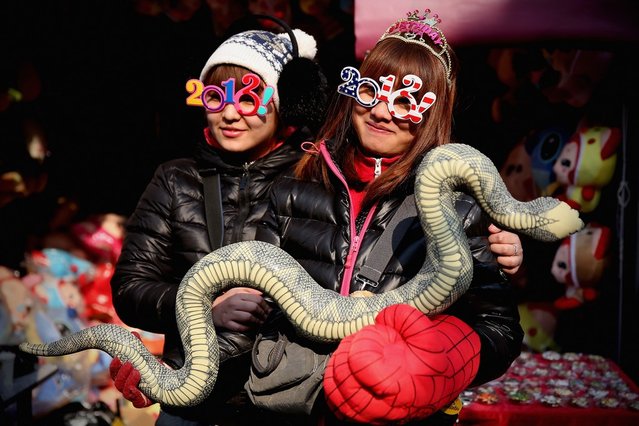
The vendors show the toy of snake at the Spring Festival Temple Fair for celebrating Chinese Lunar New Year of Snake at the Temple of Earth park on February 9, 2013 in Beijing, China. The Chinese Lunar New Year of Snake also known as the Spring Festival, which is based on the Lunisolar Chinese calendar, is celebrated from the first day of the first month of the lunar year and ends with Lantern Festival on the Fifteenth day.  (Photo by Feng Li)

The vendors show the toy of snake at the Spring Festival Temple Fair for celebrating Chinese Lunar New Year of Snake at the Temple of Earth park on February 9, 2013 in Beijing, China. The Chinese Lunar New Year of Snake also known as the Spring Festival, which is based on the Lunisolar Chinese calendar, is celebrated from the first day of the first month of the lunar year and ends with Lantern Festival on the Fifteenth day. (Photo by Feng Li)
Details
10 Feb 2013 13:03:00
Detian Waterfall - China

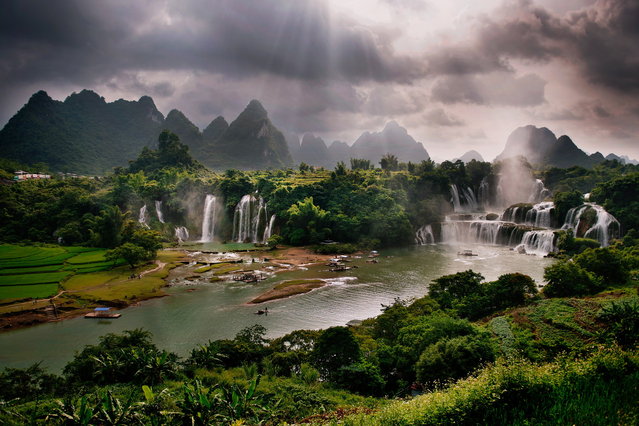
Ban Gioc – Detian Falls are two waterfalls on the Quây Sơn River, in Chinese Guichun River, straddling the Sino-Vietnamese border, located in the Karst hills of Daxin County, Guangxi (Chinese side), and in Trùng Khánh District, Cao Bằng province on the Vietnamese side, 272 km (169 mi) north of Hanoi. In Vietnamese, the two falls are considered as two parts of one waterfall with the sole name Bản Giốc. The two parts are called as: thác chính (Main waterfall) and thác phụ (Subordinate waterfall). Chinese texts sometimes name both falls from the Détiān falls on the Chinese side. During the summer rains the two waterfalls may join together.
Details
21 Nov 2013 12:37:00