Loading...
Done
Deconstructed Objects By Todd McLellan

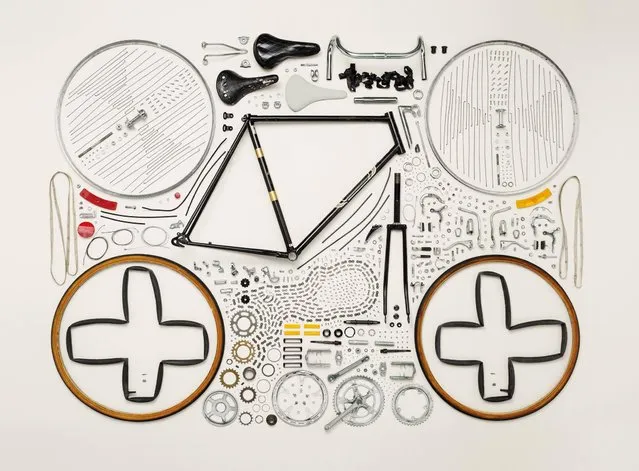
It is simply staggering how complicated some items really are. We never think about it, but some items that we use every day consist of hundreds of parts meticulously put together and working perfectly. Todd McLellan is a photographer who based his newest book “Things Come Apart” on the complexity of various old and new tech. By carefully taking apart various items and arranging all of the parts in perfect order, Todd has allowed us not only to look inside various appliances, but also to appreciate the astounding complexity of these items. Just like the human mind, we are so used to seeing and talking with people that we forget just how complicated their minds really are. It would be great if we could “take apart” the human mind in order to gain some insight into the person’s thoughts and desires. However, very few people are capable of doing it, while the rest will remain blind to the obvious. (Photo by Todd McLellan)
Details
15 Nov 2014 12:30:00
Upside-Down Portrait Photos By Anelia Loubser

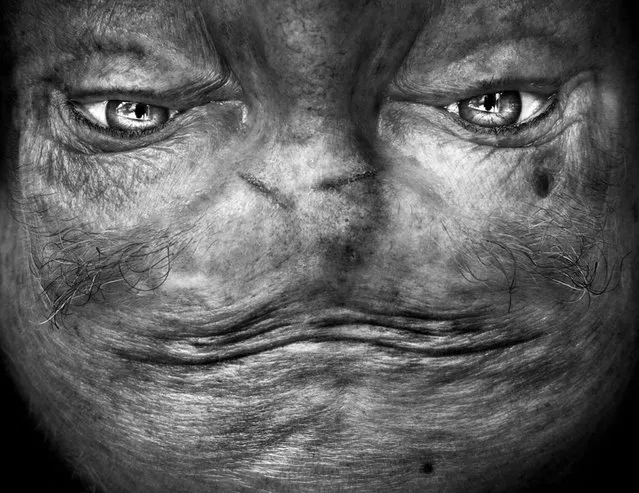
This latest photo series by Anelia Loubser, a photographer in Cape Town, reminds us that even the simplest change in perspective can change how things look drastically. By selectively cropping and flipping the dark portraits in her “Alienation” series, Loubser makes basic human portraits look like creepy alien close-ups.
Details
12 Sep 2014 16:54:00
Judging America By Joel Pares

In his new powerful photo series "Judging America," photographer Joel Pares seamlessly fades photos of an unfounded ethnic stereotype with people's real professions. Starting with a simple photo that's based on the stereotypes associated with a person's appearance, Pares fades to their real profession to make us realize how deceiving looks can truly be.
Details
13 Oct 2014 20:03:00
Feather Paintings By Julie Thompson

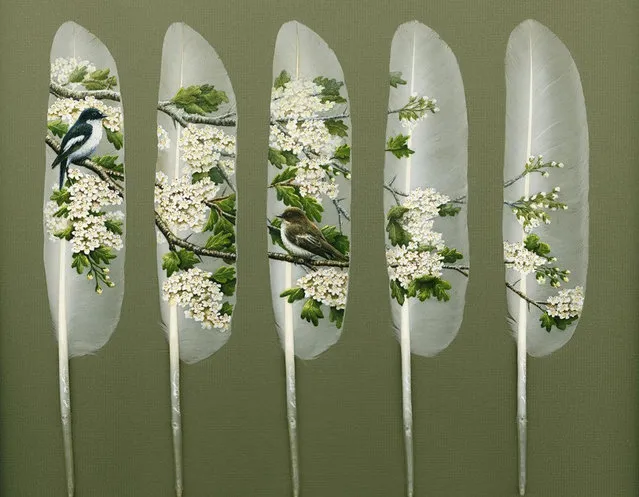
Many people have seen feathers as decorative items before. Today, ostrich, peacock and bird of paradise feathers can be seen in haute couture and in the costumes of indigenous peoples. They can be colorful and spectacular in their own right, but how much more stunning might they be when used as canvases for artists, eager to demonstrate their talent for the unusual? Alaskan-born and -bred artist Julie Thompson is an astounding exponent of this incredible art
form.
Details
10 Apr 2013 10:31:00
Australian photographer Brendan Fitzpatrick’s X-ray photographs expose the inner workings of toys. Fitzpatrick’s photographs are both whimsical and mechanical, evoking the curiosity of childhood and the desire to discover how things look and work from other perspectives. (Photo by Brendan Fitzpatrick)

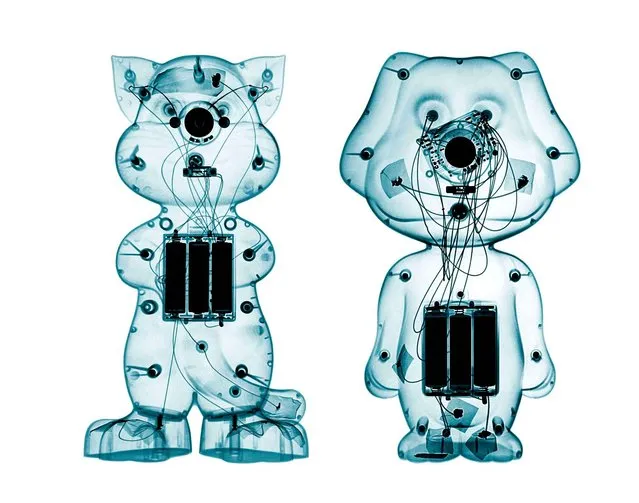
Australian photographer Brendan Fitzpatrick’s X-ray photographs expose the inner workings of toys. Fitzpatrick’s photographs are both whimsical and mechanical, evoking the curiosity of childhood and the desire to discover how things look and work from other perspectives. The strategic placement of wires, batteries, and screws are revealed, the complexity of the inside contrasting with the seemingly simplistic design of the outside. Fitzpatrick uses chest X-ray and mammogram machines to photograph flowers, toys, and creatures, then enhances the color in the images in order to more effectively distinguish the various parts that have been exposed. This photographs are part of series he calls “Invisible Light”. (Photo by Brendan Fitzpatrick)
Details
08 Aug 2014 10:59:00
Coloured X-ray of a barn owl. A physicist has used X-ray to create an extraordinary collection of artwork. Arie van't Riets pictures reveal birds, fish, monkeys and flowers in an incredible new light. The 66-year-old, from Bathmen in the Netherlands, began X-raying flowers as a means to teach radiographers and physicians how the machine worked. But after adding a bit of colour to the pictures, the retired medical physicist realised the potential for an exciting new collection of art. (Photo by Arie van't Riet/Barcroft Media)

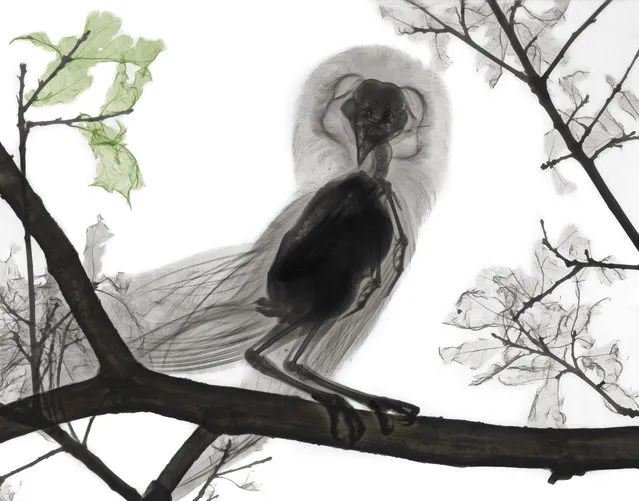
Coloured X-ray of a barn owl. A physicist has used X-ray to create an extraordinary collection of artwork. Arie van't Riets pictures reveal birds, fish, monkeys and flowers in an incredible new light. The 66-year-old, from Bathmen in the Netherlands, began X-raying flowers as a means to teach radiographers and physicians how the machine worked. But after adding a bit of colour to the pictures, the retired medical physicist realised the potential for an exciting new collection of art. (Photo by Arie van't Riet/Barcroft Media)
Details
08 Jul 2014 13:25:00
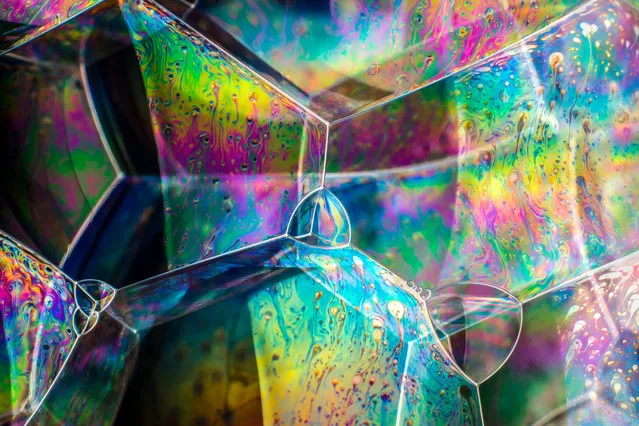
Soap Bubble Structures by Kym Cox. Bubbles optimise space and minimise their surface area for a given volume of air. This phenomenon makes them a useful tool in many areas of research, in particular, materials science and ‘packing’ – how things fit together. Bubble walls drain under gravity, thin at the top, thick at the bottom, which interferes with travelling lightwaves to create bands of colour. Black spots show the wall is too thin for interference colours, indicating the bubble is about to burst. (Photo by Kym Cox/2019 Science Photographer of the Year/RPS)

Soap Bubble Structures by Kym Cox. Bubbles optimise space and minimise their surface area for a given volume of air. This phenomenon makes them a useful tool in many areas of research, in particular, materials science and “packing” – how things fit together. Bubble walls drain under gravity, thin at the top, thick at the bottom, which interferes with travelling lightwaves to create bands of colour. Black spots show the wall is too thin for interference colours, indicating the bubble is about to burst. (Photo by Kym Cox/2019 Science Photographer of the Year/RPS)
Details
15 Aug 2019 00:03:00
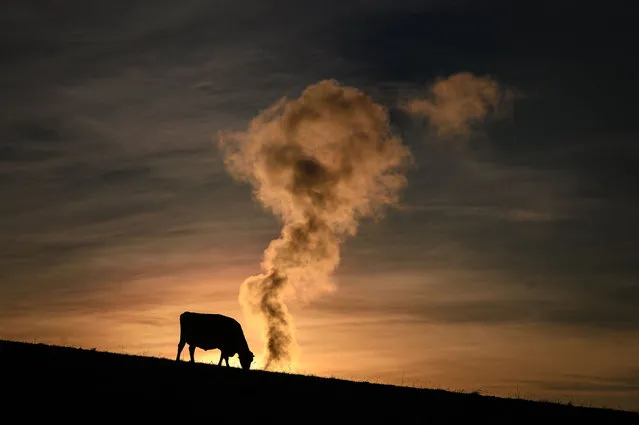
A cow is silhouetted grazing next the smoke of a chimney of an incineration plant in Lausanne at sunrise on November 19, 2021. (Photo by Fabrice Coffrini/AFP Photo)

A cow is silhouetted grazing next the smoke of a chimney of an incineration plant in Lausanne at sunrise on November 19, 2021. (Photo by Fabrice Coffrini/AFP Photo)
Details
18 Dec 2021 05:57:00