Loading...
Done
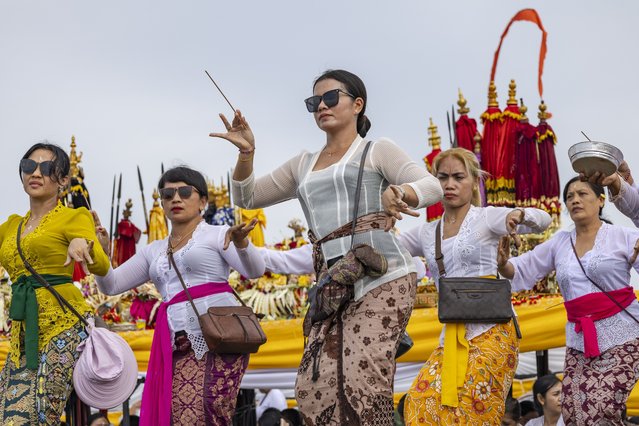
Balinese Hindu people take part in a cleansing ceremony called 'Melasti', in Denpasar, Bali, Indonesia, 25 March 2025. Melasti is a purification ritual where Balinese Hindus cleanse themselves and their sacred objects in the ocean to purify and renew spiritually, symbolizing the washing away of impurities and starting anew. It typically precedes Nyepi, the Day of Silence, marking the Balinese New Year. Balinese will celebrate Nyepi Day on 29 March 2025, during which Hindus on the island of Bali are not allowed to travel, work, light lamps, cook, or do any other activities. (Photo by Made Nagi/EPA)

Balinese Hindu people take part in a cleansing ceremony called “Melasti”, in Denpasar, Bali, Indonesia, 25 March 2025. Melasti is a purification ritual where Balinese Hindus cleanse themselves and their sacred objects in the ocean to purify and renew spiritually, symbolizing the washing away of impurities and starting anew. It typically precedes Nyepi, the Day of Silence, marking the Balinese New Year. Balinese will celebrate Nyepi Day on 29 March 2025, during which Hindus on the island of Bali are not allowed to travel, work, light lamps, cook, or do any other activities. (Photo by Made Nagi/EPA)
Details
07 Apr 2025 02:47:00
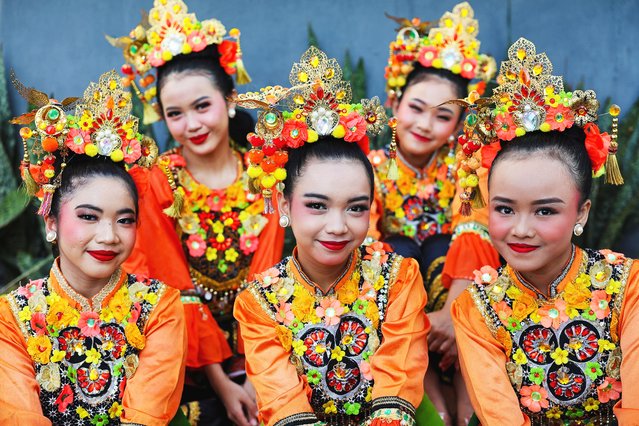
Dancers pose for a photo as they prepare during Festival Cilung or “Love the Environment” Festival, where boats made from recycled materials, mostly plastic bottles, sail on the Ciliwung River, one of the most polluted rivers in the world, to raise public awareness about river pollution, in Jakarta, Indonesia, on September 28, 2025. (Photo by Willy Kurniawan/Reuters)

Dancers pose for a photo as they prepare during Festival Cilung or “Love the Environment” Festival, where boats made from recycled materials, mostly plastic bottles, sail on the Ciliwung River, one of the most polluted rivers in the world, to raise public awareness about river pollution, in Jakarta, Indonesia, on September 28, 2025. (Photo by Willy Kurniawan/Reuters)
Details
08 Nov 2025 04:13:00
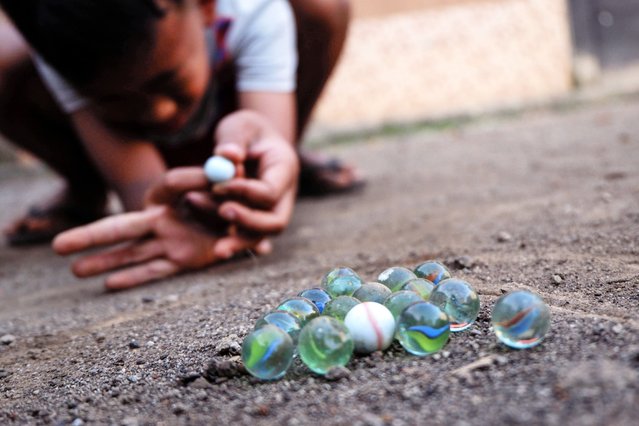
Children play marbles on the dirt in Garut, West Java, Indonesia on October 17, 2025. This traditional game, which was popular in the 1980s, is now rarely played by children due to the increasing popularity of modern games with advanced technology. According to a survey by the Indonesian Child Protection Commission (KPAI), more than 71.3% of school-age children own gadgets and play them for a considerable amount of time each day, and as many as 79% of child respondents are allowed to play gadgets for purposes other than learning. (Photo by Algi Febri Sugita/ZUMA Press Wire/Rex Features/Shutterstock)

Children play marbles on the dirt in Garut, West Java, Indonesia on October 17, 2025. This traditional game, which was popular in the 1980s, is now rarely played by children due to the increasing popularity of modern games with advanced technology. According to a survey by the Indonesian Child Protection Commission (KPAI), more than 71.3% of school-age children own gadgets and play them for a considerable amount of time each day, and as many as 79% of child respondents are allowed to play gadgets for purposes other than learning. (Photo by Algi Febri Sugita/ZUMA Press Wire/Rex Features/Shutterstock)
Details
26 Nov 2025 03:06:00
Snakes are collected and rolled before putting into the oven on March 2, 2014 in the village of Kertasura, Cirebon, Indonesia. (Photo by Nurcholis Anhari Lubis/Getty Images)

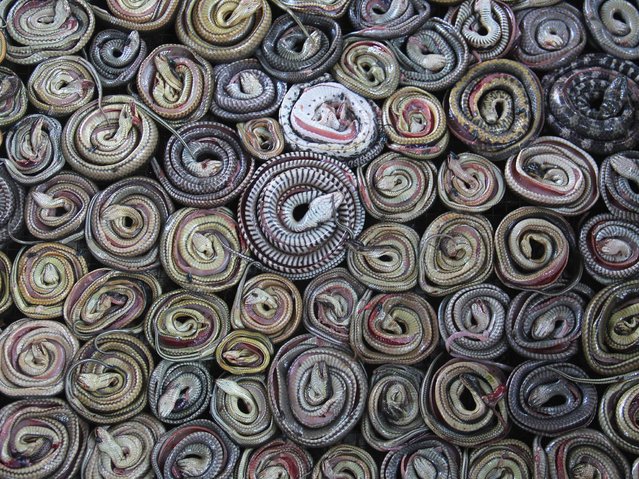
Snakes are collected and rolled before putting into the oven on March 2, 2014 in the village of Kertasura, Cirebon, Indonesia. At slaughter house snake skins measuring in the hundreds of metres, are sold to bag factories in the West and Central Java provinces on a monthly basis. From snake skin was manufactured into bags, shoes, wallets and belts. The price of a bag made from snake skin costs between 150,000 rupiah ($15 USD) and 300,000 rupiah ($30 USD), depending on its size. When snake skins reach Western fashion houses their price can increase dramatically and sell for up to $4,000 USD. (Photo by Nurcholis Anhari Lubis/Getty Images)
Details
05 Mar 2014 07:31:00
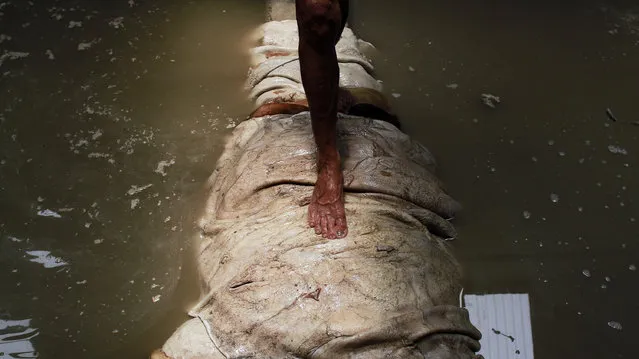
A man walks across a vat of water used to wash the hide. (Photo by Rezza Estily/JG Photo)

Sukaregang in Garut district, West Java, has long been a bustling center for Indonesia's leather trade, with some shops producing and selling various goods – including bags, shoes and jackets – since the 1940s. The industrial area is also a major supplier for high-end brands from across the globe, catering to the fashion, auto and motor-sports industry. Here: a man walks across a vat of water used to wash the hide. (Photo by Rezza Estily/JG Photo)
Details
31 Mar 2015 13:29:00
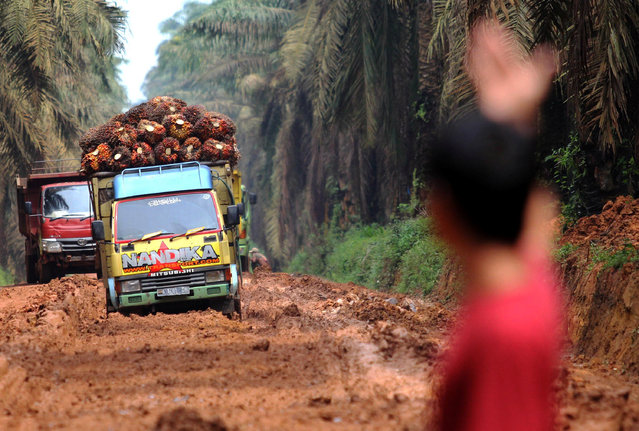
A man assist trucks carry palm oil fruit on a damaged road at Mesuji Raya village in Ogan Komering Ilir, South Sumatra province, Indonesia, January 11, 2017. (Photo by Budi Candra Setya/Reuters/Antara Foto)

A man assist trucks carry palm oil fruit on a damaged road at Mesuji Raya village in Ogan Komering Ilir, South Sumatra province, Indonesia, January 11, 2017. (Photo by Budi Candra Setya/Reuters/Antara Foto)
Details
13 Jan 2017 08:32:00
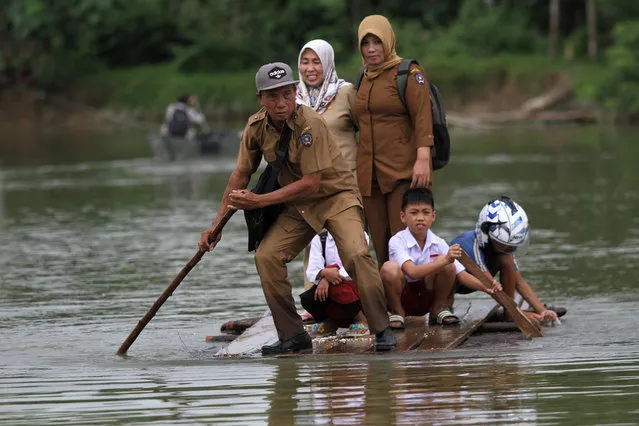
A group of teachers and their student use makeshift raft as they cross the street during flood that hit Ranomeeto Barat village in Konawe Selatan, Sulawesi island, Indonesia, July 10, 2018. (Photo by Jojon/Reuters/Antara Foto)

A group of teachers and their student use makeshift raft as they cross the street during flood that hit Ranomeeto Barat village in Konawe Selatan, Sulawesi island, Indonesia, July 10, 2018. (Photo by Jojon/Reuters/Antara Foto)
Details
12 Jul 2018 00:03:00
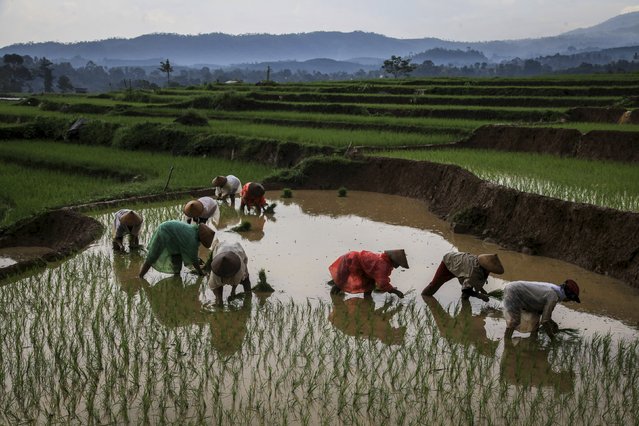
Farmers plant rice seedlings in a paddy in Karanganyar, near Solo, Central Java, Indonesia in this April 13, 2016 photo taken by Antara Foto. (Photo by Maulana Surya/Reuters/Antara Foto)

Farmers plant rice seedlings in a paddy in Karanganyar, near Solo, Central Java, Indonesia in this April 13, 2016 photo taken by Antara Foto. (Photo by Maulana Surya/Reuters/Antara Foto)
Details
17 May 2016 12:31:00