Loading...
Done


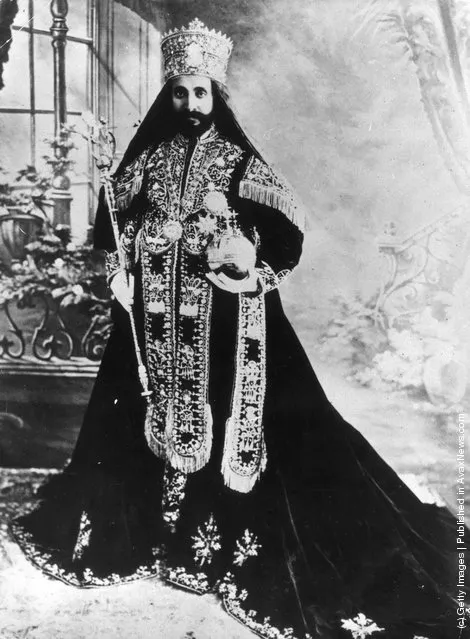
“Haile Selassie I (23 July 1892 – 27 August 1975), born Tafari Makonnen, was Ethiopia's regent from 1916 to 1930 and Emperor of Ethiopia from 1930 to 1974. The heir to a dynasty that traced its origins to the 13th century, and from there by tradition back to King Solomon and Queen Makeda, Empress of Axum, known in the Abrahamic tradition as the Queen of Sheba. Haile Selassie is a defining figure in both Ethiopian and African history.

Haile Selassie is revered as the returned Messiah of the Bible, God incarnate, among the Rastafari movement, the number of followers of which is estimated between 200,000 and 800,000. Begun in Jamaica in the 1930s, the Rastafari movement perceives Haile Selassie as a messianic figure who will lead a future golden age of eternal peace, righteousness, and prosperity. He himself remained an Ethiopian Orthodox Christian throughout his life”. – Wikipedia

Photo: Negusa Negasti, Emperor of Ethiopia Haile Selassie I, known as “Lord of Lords”, “The Conquering Lion of the tribe of Judah”, “Light of the world”, “Elect of God”, in full ceremonial regalia following his coronation. (Photo by Hulton Archive/Getty Images)
Details
21 Jun 2011 11:04:00
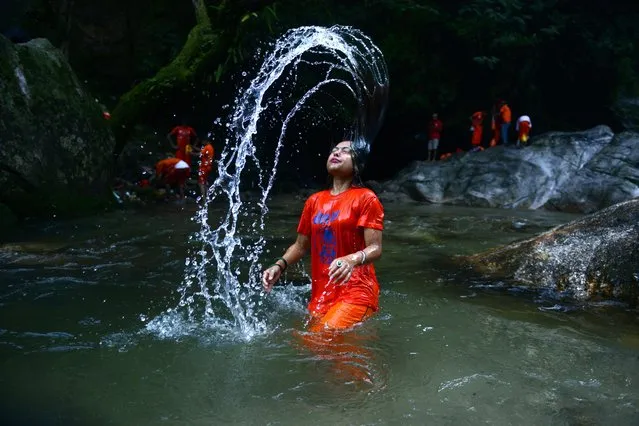
A Nepalese Hindu devotee bathes in the Bagmati River on her way to the Pashupatinath Temple to offer prayers to Lord Shiva, Hindu god of destruction during Shravan festivities in Sundarijal, on the outskirts of Kathmandu on August 3, 2015. According to the Nepali calendar, Shravan is considered the holiest month of the year with each Monday of the month known as Shravan Somvar when worshippers offer prayers for a happy and prosperous life. (Photo by Prakash Mathema/AFP Photo)

A Nepalese Hindu devotee bathes in the Bagmati River on her way to the Pashupatinath Temple to offer prayers to Lord Shiva, Hindu god of destruction during Shravan festivities in Sundarijal, on the outskirts of Kathmandu on August 3, 2015. According to the Nepali calendar, Shravan is considered the holiest month of the year with each Monday of the month known as Shravan Somvar when worshippers offer prayers for a happy and prosperous life. (Photo by Prakash Mathema/AFP Photo)
Details
04 Aug 2015 12:46:00
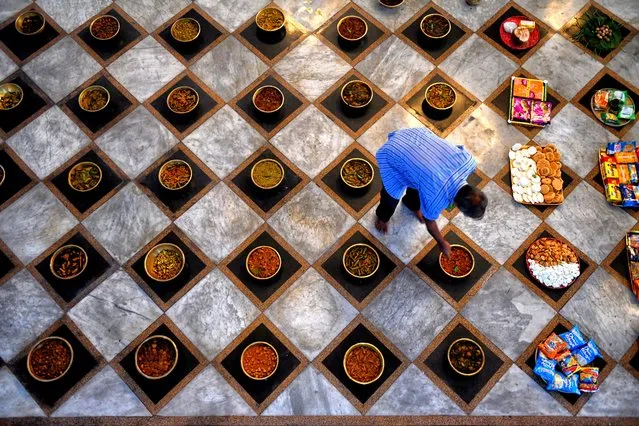
A Hindu devotee prepares for Annakut or Goverdhan puja at Naba Brindaban temple in Kolkata on November 14, 2023. Annakut or Govardhan Puja is a Hindu festival in which devotees prepare and offer a large variety of vegetarian food to Lord Krishna as a sign of gratitude for saving them from floods as per Hindu Mythology. (Photo by Avishek Das/SOPA Images/Rex Features/Shutterstock)

A Hindu devotee prepares for Annakut or Goverdhan puja at Naba Brindaban temple in Kolkata on November 14, 2023. Annakut or Govardhan Puja is a Hindu festival in which devotees prepare and offer a large variety of vegetarian food to Lord Krishna as a sign of gratitude for saving them from floods as per Hindu Mythology. (Photo by Avishek Das/SOPA Images/Rex Features/Shutterstock)
Details
29 Nov 2023 00:00:00
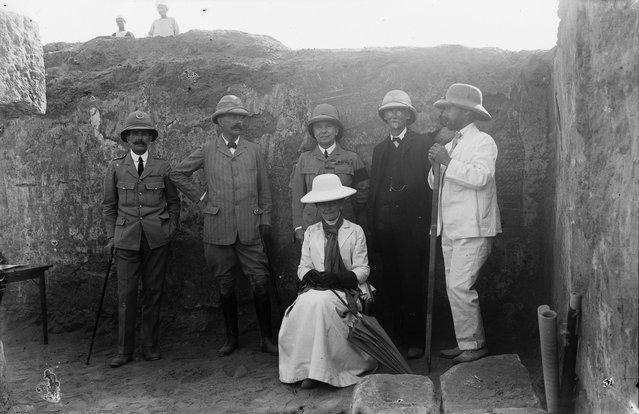
Remarkable discoveries were made, like the decapitated head of a bronze statue of Roman emperor Augustus, sacked from a raid on Roman garrisons further north in Egypt. Here: A group visiting the excavations at Meroë, including (from left) Midwinter Bey, director of Sudan Railways; Lord Kitchener; General Sir Francis Reginald Wingate, Sirdar of the Egyptian Army; Professor Archibald Sayce; John Garstang; and Lady Catherine Wingate, 1911. (Photo by Garstang Museum of Archaeology)

The city of Meroë laid undiscovered for two millennia before British archaeologist John Garstang excavated it in the early 20th century. Garstang took the radical decision to document his discoveries with photography – and immortalised an ancient world. “Meroë: Africa’s Forgotten Empire” is being shown until 14 September at Garstang Museum of Archaeology, Liverpool. Here: A group visiting the excavations at Meroë, including (from left) Midwinter Bey, director of Sudan Railways; Lord Kitchener; General Sir Francis Reginald Wingate, Sirdar of the Egyptian Army; Professor Archibald Sayce; John Garstang; and Lady Catherine Wingate, 1911. (Photo by Garstang Museum of Archaeology)
Details
15 Jun 2016 14:49:00
An Indian child artisan carries an idol of elephant-headed Hindu God Ganesha at a workshop ahead of Ganesh Chaturthi festival in Chennai, India, Saturday, September 7, 2013. Ganesh Chaturthi, which begins from September 9, is celebrated as the birthday of Lord Ganesha who is widely worshiped by Hindus as the God of wisdom, prosperity and good fortune. (Photo by Arun Sankar K./AP Photo)

An Indian child artisan carries an idol of elephant-headed Hindu God Ganesha at a workshop ahead of Ganesh Chaturthi festival in Chennai, India, Saturday, September 7, 2013. Ganesh Chaturthi, which begins from September 9, is celebrated as the birthday of Lord Ganesha who is widely worshiped by Hindus as the God of wisdom, prosperity and good fortune. (Photo by Arun Sankar K./AP Photo)
Details
09 Sep 2013 08:07:00
A Hindu devotee in a trance on their pilgrimage to the Batu Caves temple in Kuala Lumpur, Malaysia on January 28, 2018. Malaysian Hindu participate in the annual Hindu thanksgiving festival in which devotees subject themselves to painful rituals in a demonstration of faith and penance held in honour of Lord Murugan, Hindu in Malaysia celebrated Thaipusam begin on Jan 28 until 31 this year. (Photo by Aflo/Rex Features/Shutterstock)

A Hindu devotee in a trance on their pilgrimage to the Batu Caves temple in Kuala Lumpur, Malaysia on January 28, 2018. Malaysian Hindu participate in the annual Hindu thanksgiving festival in which devotees subject themselves to painful rituals in a demonstration of faith and penance held in honour of Lord Murugan, Hindu in Malaysia celebrated Thaipusam begin on Jan 28 until 31 this year. (Photo by Aflo/Rex Features/Shutterstock)
Details
30 Jan 2018 09:22:00
Revelers throw a woman to the air during the opening and the firing of the “Chupinazo” rocket which starts the 2014 Festival of the San Fermin Running of the Bulls on July 6, 2014 in Pamplona, Spain. The annual Fiesta de San Fermin, made famous by the 1926 novel of US writer Ernest Hemmingway entitled “The Sun Also Rises”, involves the daily running of the bulls through the historic heart of Pamplona to the bull ring. (Photo by Pablo Blazquez Dominguez/Getty Images)

Revelers throw a woman to the air during the opening and the firing of the “Chupinazo” rocket which starts the 2014 Festival of the San Fermin Running of the Bulls on July 6, 2014 in Pamplona, Spain. The annual Fiesta de San Fermin, made famous by the 1926 novel of US writer Ernest Hemmingway entitled “The Sun Also Rises”, involves the daily running of the bulls through the historic heart of Pamplona to the bull ring. (Photo by Pablo Blazquez Dominguez/Getty Images)
Details
12 Jul 2014 16:00:00
A woman attends a boxing class at Princess Women's Boxing Club in Shanghai December 3, 2014. Women have boxed as long as the sport has existed but for years they were relegated out of national and international competitions in many countries around the world. Female boxers entered the ring in an exhibition match at the 1904 Olympic Games, but it was more than a century later when they were given the green light to make their Olympic debut in London in 2012. (Photo by Carlos Barria/Reuters)

A woman attends a boxing class at Princess Women's Boxing Club in Shanghai December 3, 2014. Women have boxed as long as the sport has existed but for years they were relegated out of national and international competitions in many countries around the world. Female boxers entered the ring in an exhibition match at the 1904 Olympic Games, but it was more than a century later when they were given the green light to make their Olympic debut in London in 2012. (Photo by Carlos Barria/Reuters)
Details
10 Dec 2014 12:46:00